


5 Rookie Mistakes to Avoid When Building a Tent Deck or Platform
While staking and guylines straight into the ground give you maximum campsite durability, setting up your canvas tent on a wooden deck or raised platform is a fantastic route for permanent setups because it keeps your tent dry, warm, and safe from ground water.
However, building a platform locks you into one exact spot on your property. If you aren’t 100% sure about the location, test out the area by setting up your tent on the ground first before investing time and money into lumber.

If you are ready to build, watch out for these common newbie mistakes:
1. Forgetting to Test the Location First
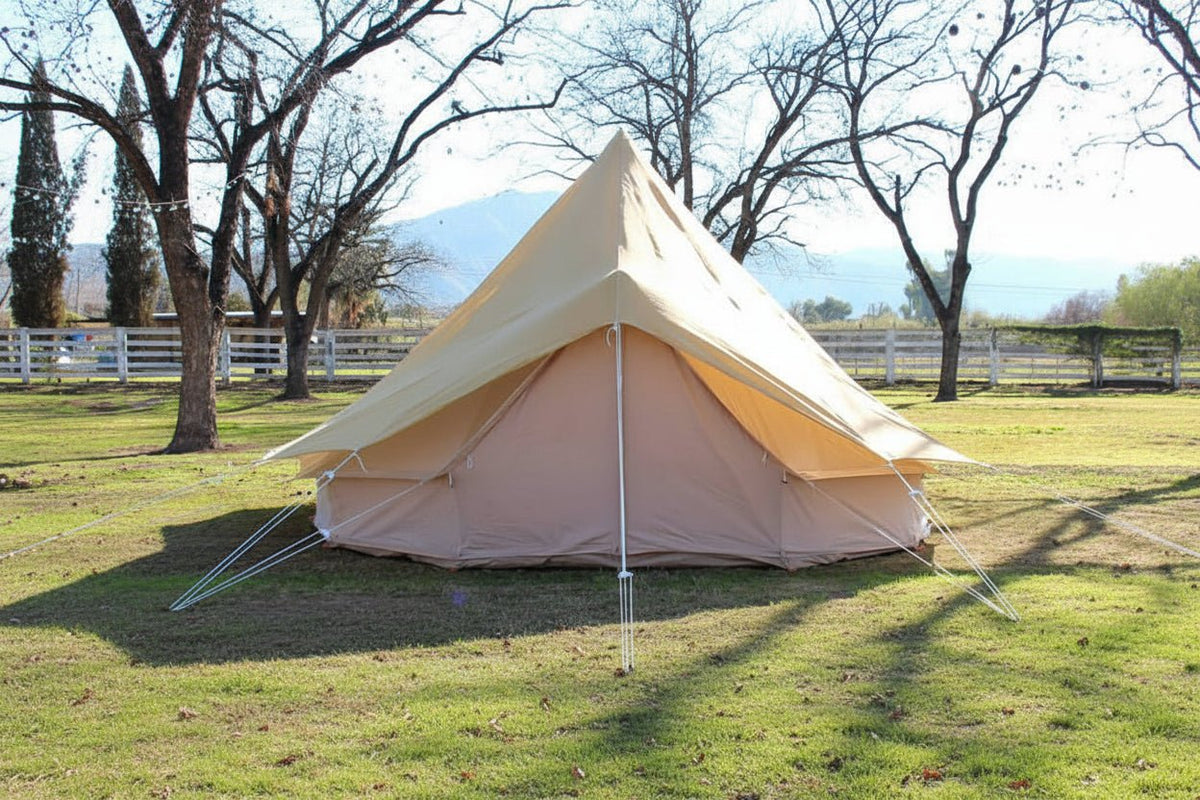
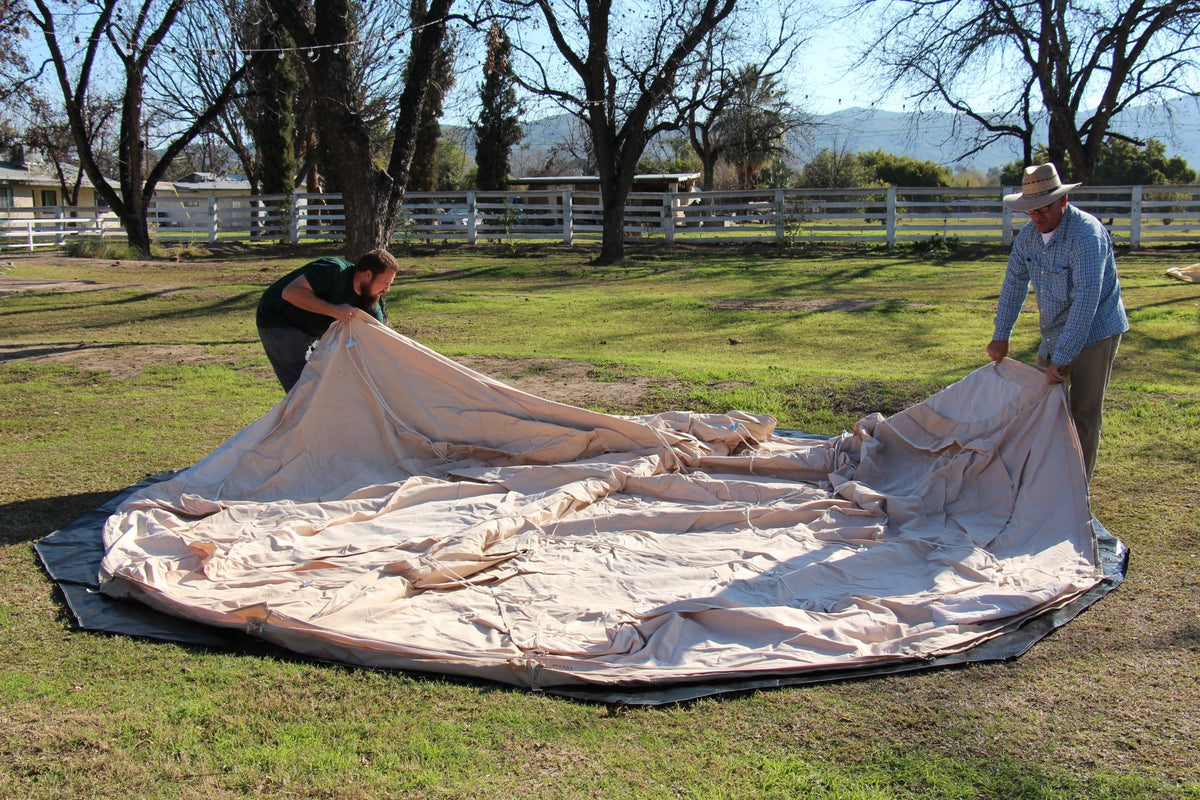
As mentioned above, a deck completely locks you into a single footprint. Campers often build a platform only to realize it blocks a great view, doesn't get enough shade, or catches the worst of the wind. Pitch your tent on the raw ground for a weekend before cutting any boards. It also helps to get aquainted with how your tent performs when staked into the ground so that you understand how to make proper adjustments when setting it up on a platform.
2. Ignoring Downward Pressure on Guylines
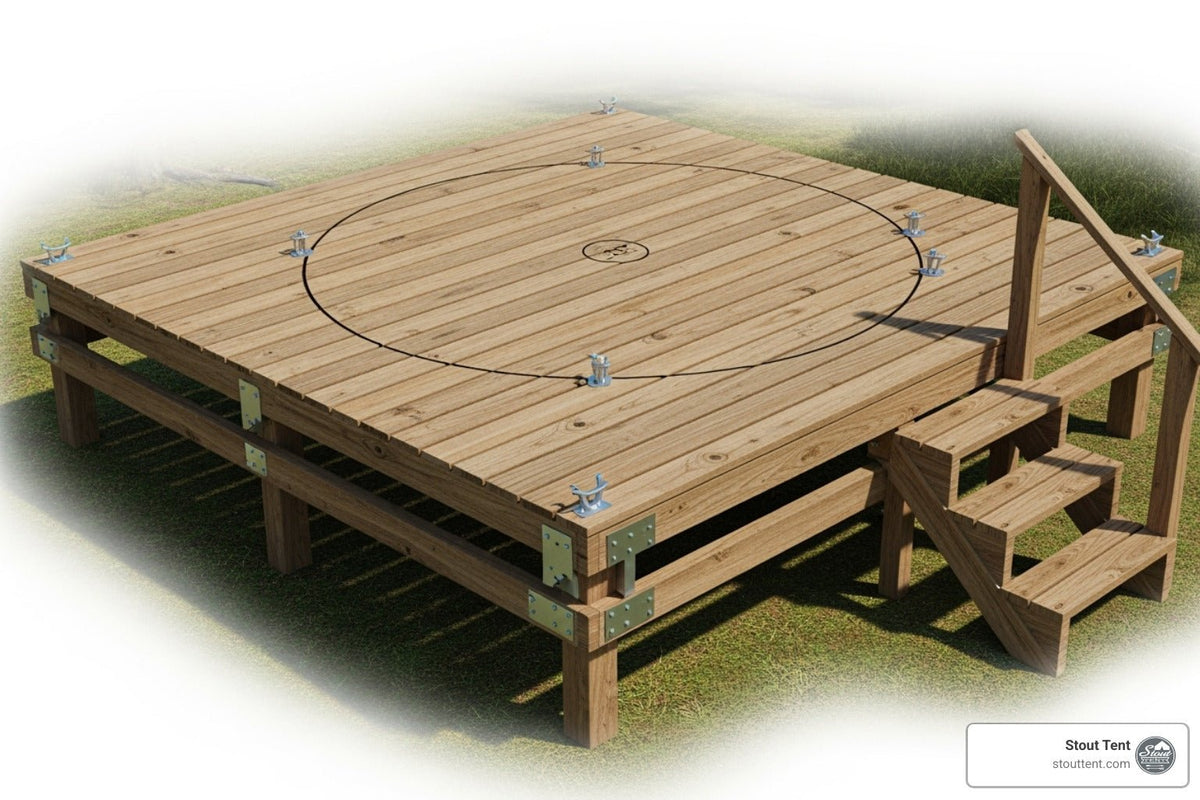
When building a deck, many people forget how standard tent tension works. Without proper downward pull on your guylines, your tent sidewalls will slouch and sag, ruining the interior headroom and inviting water pooling. Always plan your anchor points so straps or lines pull downward at an angle, rather than just pulling horizontally outward against the deck edge. For guidance on getting your lines right, check out our Master Your Tent Ropes: A Guide to Fasteners and Guy Lines post.
3. Skimping on Sizing and Floor Space
Building a platform that is exact to the tent's base dimensions leaves zero margin for error. You need extra clearance around the perimeter to comfortably tie off ropes, walk around the exterior, and secure sidewalls. Before starting construction, check out your model's exact footprint and interior specs in our Choosing the Right Tent Guide.
4. Failing to Account for Drainage and Airflow
Wood decking traps moisture underneath a canvas tent floor if the boards are laid completely flush with no gaps. Leave small spacing gaps between your deck boards to allow airflow and prevent trapped condensation or mildew from forming against your tent floor.
5. Skipping the Pros and Cons Assessment
Not every setup benefits from a platform. Before committing, read through our Modular Portable Bell Tent Platform guide to weigh the pros and cons of going elevated versus sticking to traditional stakes.

Ready to Build Your Ultimate Campsite?
Building a tent platform is a rewarding DIY project that elevates your outdoor living space—literally. By avoiding these common layout, tension, and spacing mistakes, you'll ensure your heavy-duty canvas setup remains structurally sound, weather-tight, and comfortable all season long.
Read more
Master the art of platform camping and heavy-duty anchoring. Learn how raised wooden platforms and secure guy lines protect your canvas tent against high winds, uneven terrain, and severe weather.
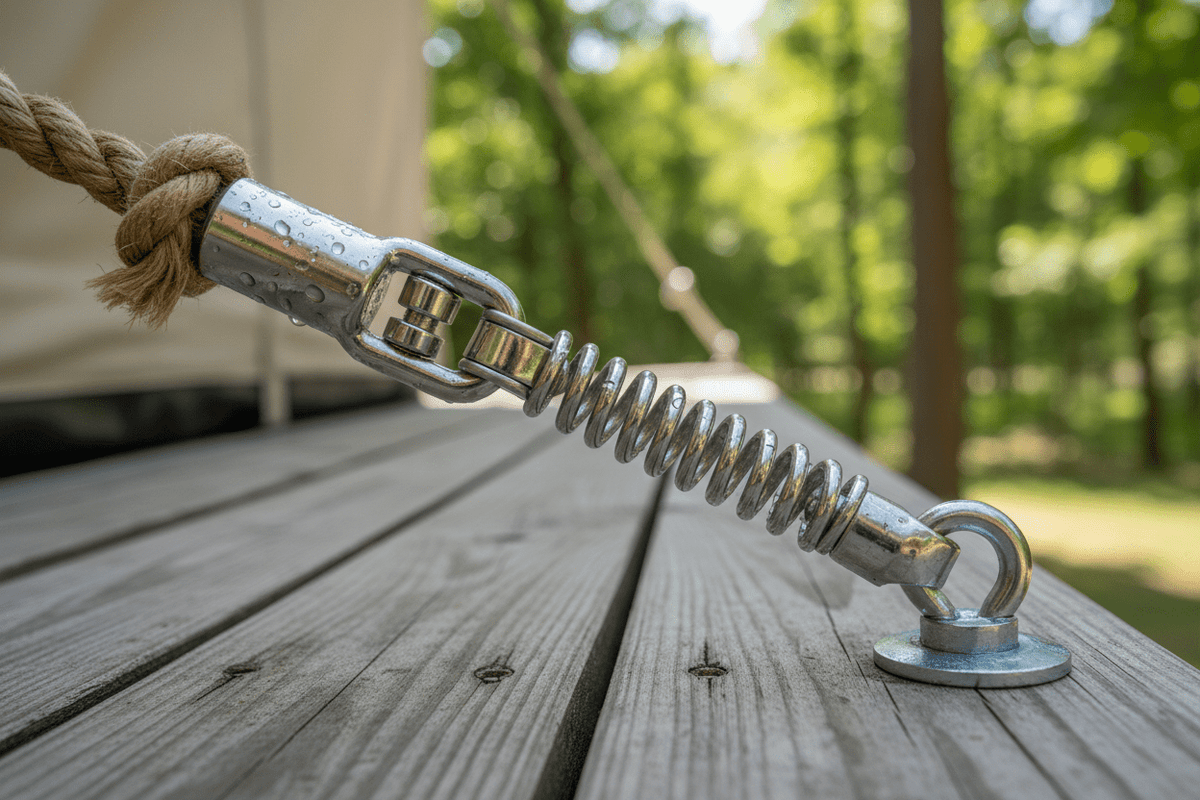
Moving your canvas tent from the ground to a wooden deck? Discover clever hardware hacks—from through-bolted eye bolts to tension-locking turnbuckles—to secure your setup without single-use stakes.