


Never Take a Season off from Adventure Again.
Why Stout Tent is Built for Snowy and Cold Winter Climates
There is nothing more serene or cozy than a winter camping trip. However, snow accumulation and the need for internal heating create challenges that synthetic gear is not designed to handle. To truly stay warm in freezing temperatures, you need a durable, canvas tent with stove-jack.
Advantages & Challenges of Winter Camping
The Advantages of Our Canvas Tents in Winter:
Breathability & Condensation Control: Unlike synthetic materials that trap moisture, natural cotton canvas breathes. This significantly reduces condensation buildup inside the tent during freezing temperatures.
Wood-Burning Stove Compatibility: Many of our tent models feature a built-in adjustable stove jack allowing you to safely heat your shelter with a wood-burning stove.
Removable Groundsheets: For snowy and rugged environments, you can utilize a No Groundsheet Setup, and place your stove directly on the ground.
The Challenges We Design For:
Heavy Snow Accumulation: Snow accumulation can strain your tent roof, causing sagging and subsequent leaking.
Extreme Cold & Preparation: Winter camping demands a higher level of preparation, gear management, and camp maintenance. However, with the right approach, it is entirely doable, and worth it.
Pro Tip: Check out our complete Winter Camping YouTube Series for tips and tricks on managing cold-weather setups.
Our Top Tent Picks for Winter & Snow
While winter camping presents unique challenges, choosing a sturdy shelter designed for the elements makes all the difference. Our top picks for cold-weather expeditions are our most durable canvas tents.

Pro Series Tents (Best for 4-Season Versatility):
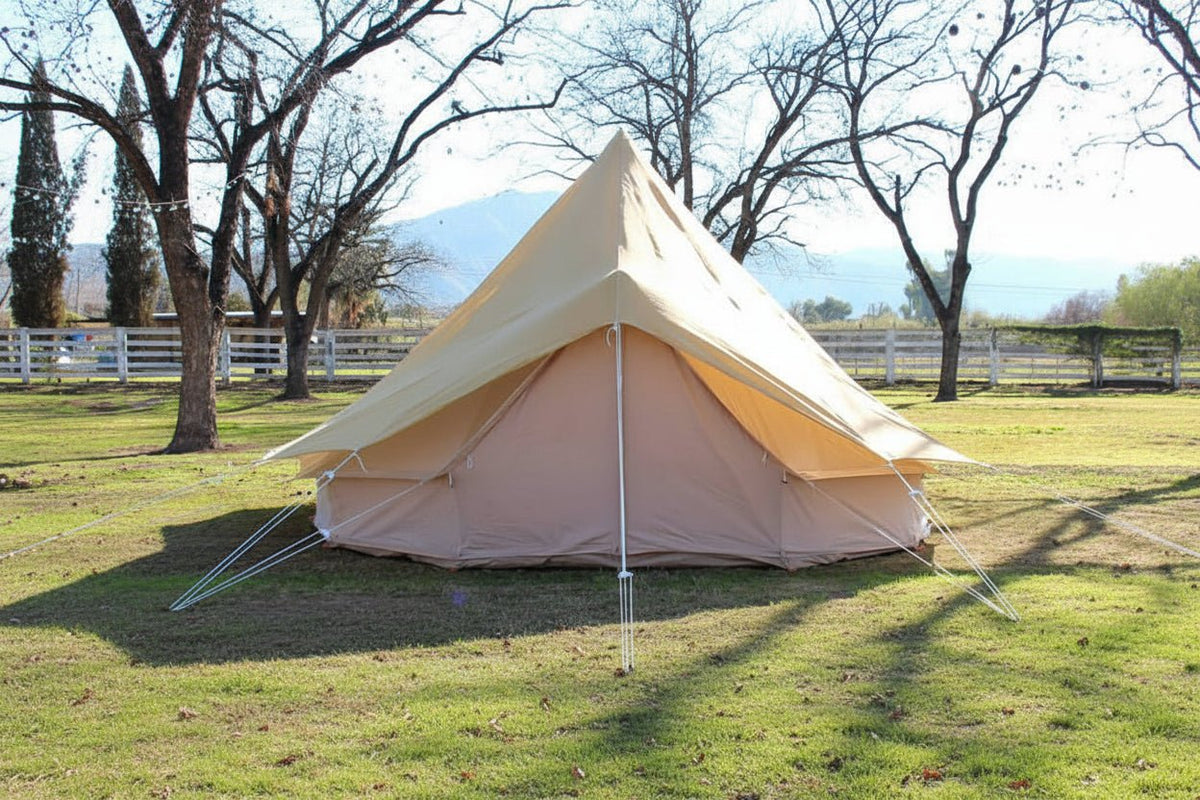
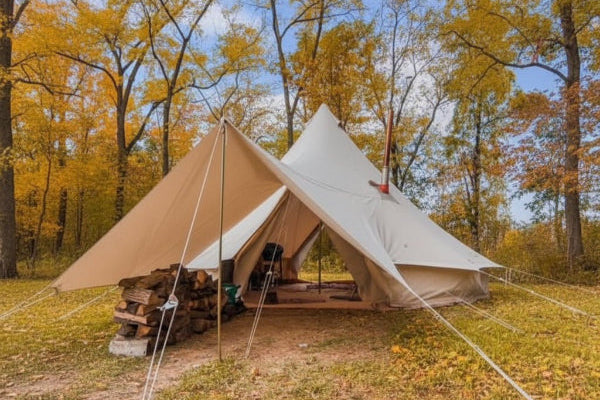
Why we recommend them: Crafted from thick, fireproof single-weave canvas, our Pro Series Bell tents naturally insulate against freezing temperatures and come equipped with integrated stove jacks.
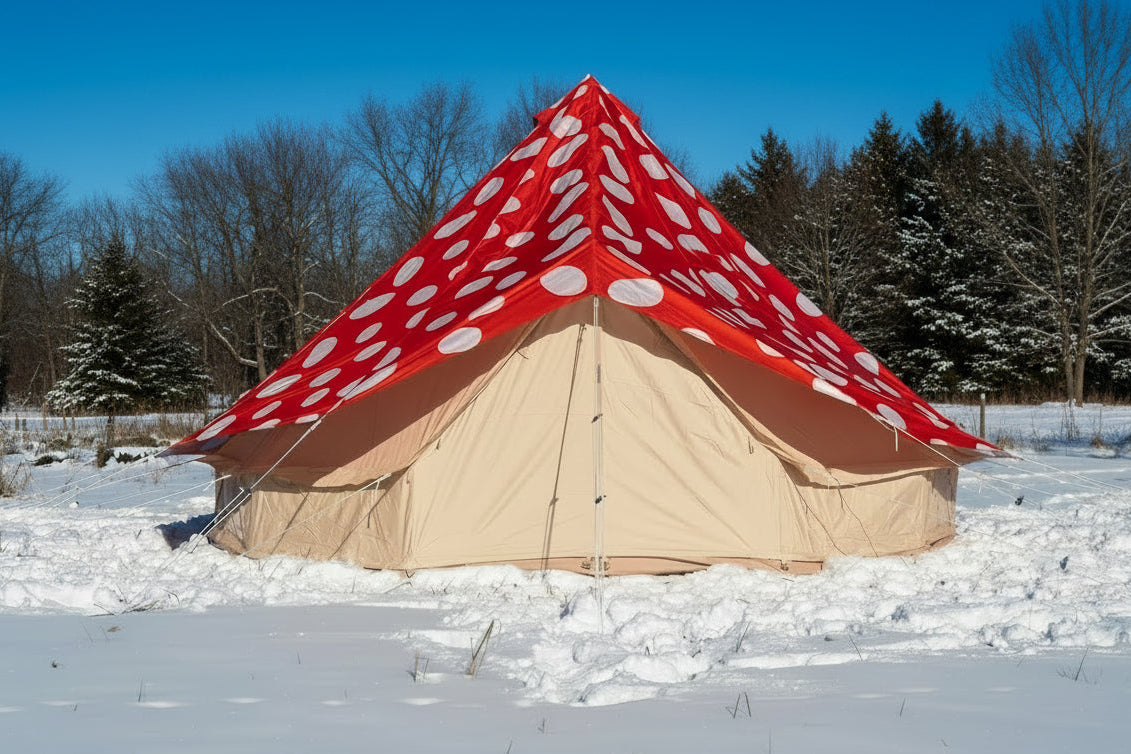
Snow Load Consideration: While the conical shape of a Bell tent naturally helps shed light snow, heavy or wet winter storms require active clearing to prevent accumulation on the roof.

The Overland Sunforger (Best for Extreme Weather):
Why we recommend them: Built with fireproof, double-weave, army duck Sunforger canvas, these durable tents handle heavy snow weight and wind loads effortlessly. This model also comes equipped with an integrated stove-jack so your wood-burning stove can keep you warm, and your gear dry.

Wall Tents (Best for Fast Pitching & Efficient Heating)
Why we recommend them:
Wall tents are smaller and faster to pitch. Their internal frame structure means less staking, and much easier to heat quickly. As a practical tent with chimney hole setup, they make managing a wood-burning tent stove seamless and efficient in cold-weather.
Long-Term & Wind Consideration: Wall tents are not recommended for long-term setups because their straight vertical walls are not as wind-resistant as the aerodynamic conical shape of traditional Bell tents.
Essential Gear Upgrades for Winter Conditions
Standard tent setups can struggle against harsh winter conditions. Upgrading your setup with the right gear ensures your canvas stays protected, your anchors hold fast in frozen ground, and your interior stays warm.

Canvas Wood Stoves & Chimney Kits:
A wood-burning stove transforms your canvas tent into a warm winter haven, providing safe, efficient heat for cooking and drying gear.
Pro Tip: Pair your stove with a portable electric or propane heater so you don't have to wake up at night to refill your wood chips.

Heavy-Duty Snow Stakes or Deadman Anchors:
Standard stakes will snap or pull out of frozen ground. Upgrading to specialized snow anchors or deadman stakes ensures your tent remains locked down securely in deep powder or ice.

Tent Awning
A protective shelter to keep your firewood, boots, and extra gear dry and accessible outside the main tent entrance.
Our awnings are designed as an entirely separate structure from your tent and are independently staked, making them a versatile, one-size-fits-all addition while vastly improving durability in high winds.
Things to Know: Winter Canvas Care & Safety
Master Stove Safety & Ventilation: Always use a spark arrestor and ensure your stovepipe is fitted correctly through your tent's integrated stove jack. We outline essential setup practices in our Wood Stove guide.
Combat Winter Condensation: The contrast between warm interior heat and freezing outside air creates moisture. We recommend cracking your windows slightly and maintaining proper airflow. Check out our management strategies in our How to Heat Your Tent guide.
Dry Your Canvas Before Storage: Even in winter, moisture can lead to mildew if packed away damp. Always ensure your tent is completely dry before storing it long-term. Read our complete maintenance overview in our How to Properly Take Down and Store a Canvas Tent guide.
Ready to Equip Your Winter Campsite?
We have spent over a decade perfecting professional canvas gear that stands up to sub-zero temperatures, heavy snow loads, and winter storms. Let us help you choose the right setup for your cold-weather adventures.
Planning a Winter Camping Trip? Let’s Talk Gear.
If you have any questions, please fill in this contact form, and our team will reach you back as soon as possible.
Frequently Asked Questions About Winter & Snow Camping
Expert answers on wood stoves, snow load management, and freezing ground anchoring.
While our tents are built to accommodate a variety of setups, the A/C port is not intended for hot-air ducting. Even with fiberglass insulation, the canvas and stitching around that sleeve are not rated for continuous exposure to temperatures near 200°F, and prolonged use could lead to fabric wear or discoloration.
Some customers who run diesel heaters safely choose one of these approaches:
- Keep all heat-producing components—including the hose outlet—completely outside the tent.
- Run the duct through a short metal adapter or heat-safe sleeve via a partially zipped door or vent.
- Install a metal bulkhead fitting that isolates the hot-air hose from any direct canvas contact.
These methods keep the canvas from acting as a heat barrier and greatly reduce risk. While the fiberglass wrap helps, it does not completely prevent heat transfer or trapped heat buildup. Therefore, we do not recommend using the A/C port for heater exhaust or hot-air intake; keeping the heater outside with a heat-rated pass-through is always the safest route. For more tried-and-true heating options, check out our guide on How to Heat Your Tent.
Yes! Many winter campers prefer a groundsheet-free setup because it gives them more flexibility and better performance in cold conditions. Going floorless offers several key technical advantages:
- Safer stove placement: Without a groundsheet, your wood-burning tent stove can sit directly on soil or packed snow, allowing heat to dissipate naturally and reducing the risk of melting or damaging the floor.
- Better interior engineering: A floorless setup lets campers level or pack snow, dig a cold-air trench, or create a subfloor for insulation and drainage, significantly improving overall heat retention.
- More secure anchoring: Our durable tents use elastic bungees along the bottom edge instead of fixed grommets. This allows for the use of larger or irregular stakes (which are common in frozen ground), provides shock absorption to prevent stress tears when high winds load the canvas, and maintains consistent tension as snow settles or the ground shifts.
Ultimately, running your tent with stove without a groundsheet gives you more control, enhanced safety, and better long-term durability in harsh winter conditions.
Yes! Our Pro Series and Wall Tents come equipped with integrated, fireproof stove jacks specifically designed to accommodate wood-burning stoves safely when installed with proper chimney clearances.
Wall tents feature rigid internal frames that provide exceptional load-bearing strength. For bell tents, the steep conical pitch helps shed light snow, but you should actively brush off heavy or wet accumulation to protect the canvas structure.
Standard metal stakes will not penetrate frozen earth. We recommend using specialized snow stakes, deadman anchors (burying logs or heavy bags in the snow), or heavy-duty spiral anchors designed for frozen terrain.