



How to Handle Heavy Snow Loads on a Canvas Bell Tent (Without Collapsing the Pole)
Can a Bell Tent Really Handle Winter Snow?
There is something undeniably magical about winter camping. Waking up to a silent, snow-covered forest from the cozy, wood-stove-warmed interior of a heavy-duty canvas tent is an unbeatable experience.
However, when a major winter storm rolls in and the flakes start piling up, every winter camper eventually asks the same anxious question: Will my center pole hold, or am I going to wake up to a crushed canvas roof?
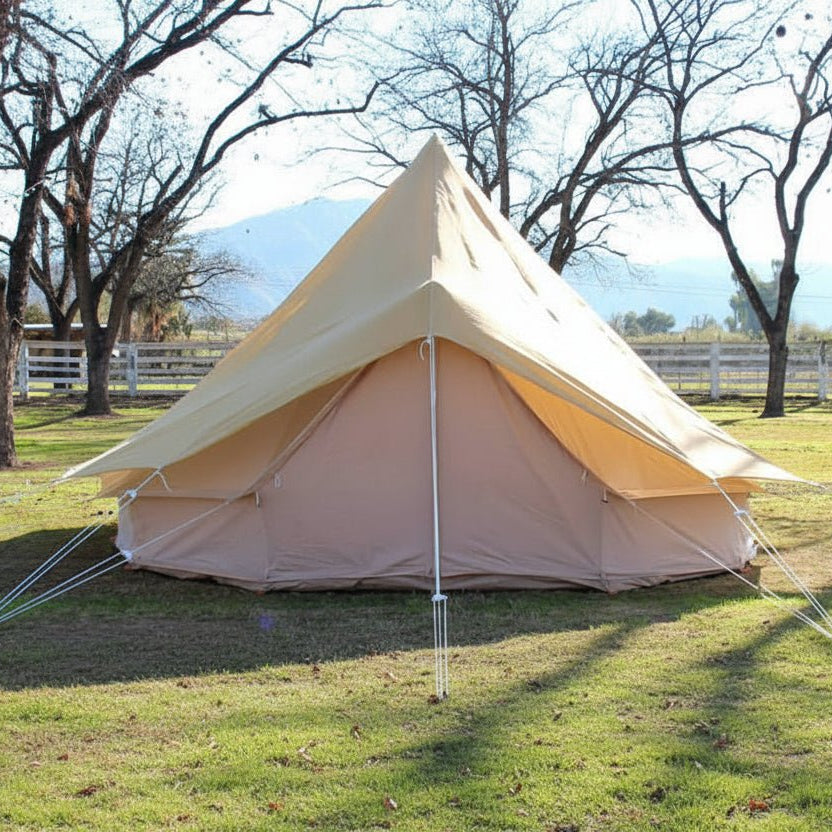
Unlike rigid metal-frame wall tents, bell tents rely on a sleek, aerodynamic, conical design. While that sloped roof is naturally engineered to shed wind and moderate weather, heavy, wet mountain snow can accumulate quickly if you aren't prepared.
Here is everything you need to know to reinforce your setup, manage heavy snow loads, and keep your shelter structurally sound all season long.
1. Pitching for Performance: The Foundation of Snow Resistance
How your tent handles a heavy snow load is determined long before the first snowflake hits. It starts with the initial pitch. When you are setting up camp in freezing or sub-freezing conditions:
-
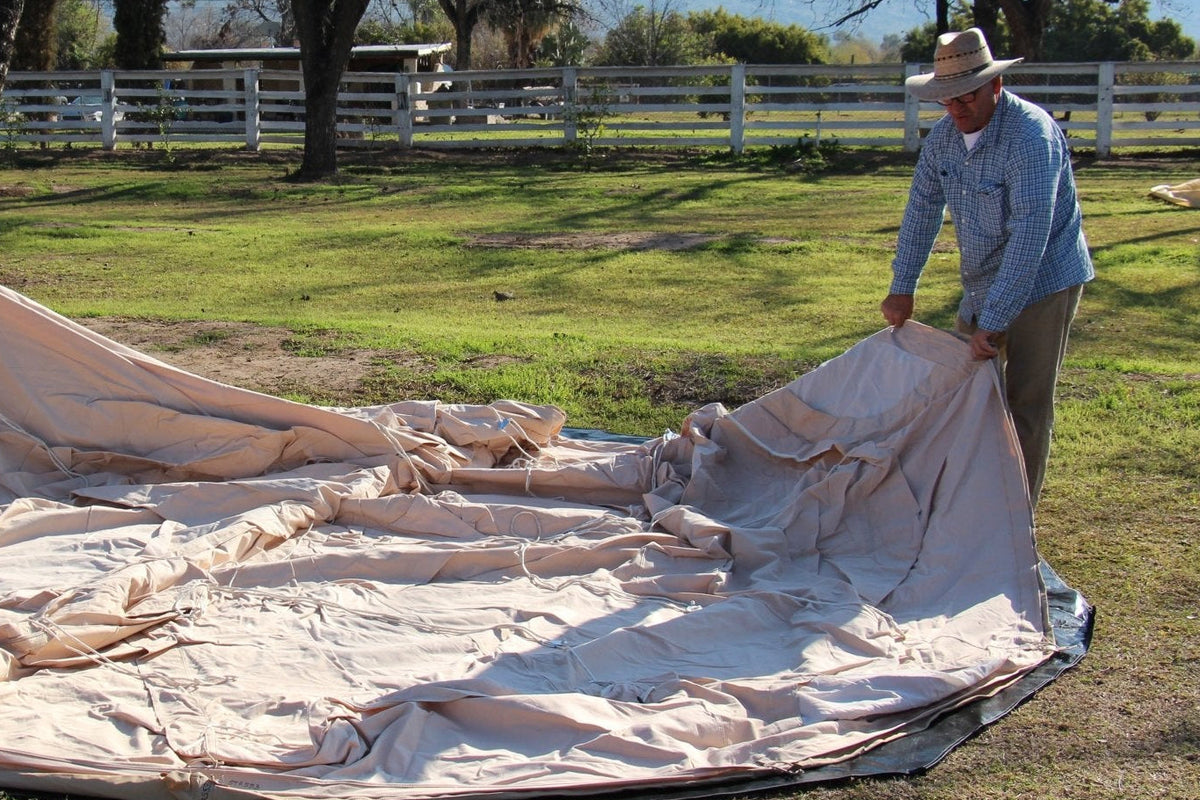
Tension is Everything: Cold temperatures cause natural cotton canvas to contract slightly, while moisture makes it expand. Ensure your guy lines are securely staked out with proper tension. A loose roof creates sagging pockets where heavy snow can pool and compound in weight.
-
Double Up on Your Footprint: Pair your shelter with a durable, cut-to-fit Footprint Groundsheet to isolate moisture coming up from the ground, which prevents internal humidity from freezing against the inner roof fabric.
-
Clear the Perimeter: Pitch your tent on a slightly elevated or well-drained patch of ground if possible. Avoid deep natural depressions where melting snow can pool around your sidewalls and freeze your stakes into the ground.
If you are setting up your camp in harsh northeastern winter environments—where heavy Nor'easters and dense coastal snowpacks test your gear—be sure to review our specialized guide on Snowy Climates like the US Northeast for regional pitch optimization.
2. Reinforcing the Center Pole and Framework
When heavy, wet snow dumps onto a tent, the downward pressure is funneled directly onto the center pole and the apex ring. If you are planning an extended winter basecamp or heading into heavy alpine environments, consider these structural reinforcements:
-
Upgrade to Heavy-Duty Stakes: Standard wire or thin steel stakes will pull right out of frozen or slushy ground under snow pressure. Switch out your perimeter stakes for heavy-duty rebar or spiral ice stakes to ensure your guy lines hold firm against shifting snow weight.
-
Distribute Apex Pressure: Ensure your center pole's top cap is seated correctly in the apex canvas reinforcement patch. Some advanced winter campers use a custom base plate under the bottom of the center pole to distribute the downward weight and keep the pole from punching down into soft or melting ground.
-
Consider a Frame Alternative: If you are anticipating extreme, multi-foot snow accumulations and want a rigid framework rather than a traditional center pole, explore a reinforced Wall Tents Collection, which utilizes a heavy-duty galvanized steel skeleton built explicitly for high snow loads.
Watch: Winter Hot Tent Setups in Action
Seeing how a heavy-duty canvas structure holds up against real sub-freezing blizzards makes all the difference. Check out our Stout Tent Winter Camping Series Playlist to watch real-world setups, wood stove integrations, and storm-management tips in deep winter conditions.
3. Active Snow Management: Tips for Heavy Storms
Even the toughest tents have limits. If you are caught in a severe blizzard or heavy snowfall, active maintenance is required to protect your investment:
-
Tap the Canvas: If snow is accumulating faster than it is sliding off, don't wait for it to pack down. A gentle push or tap on the interior canvas walls from inside the tent will usually break the bond and send the snow sliding off the steep roof pitch.
-
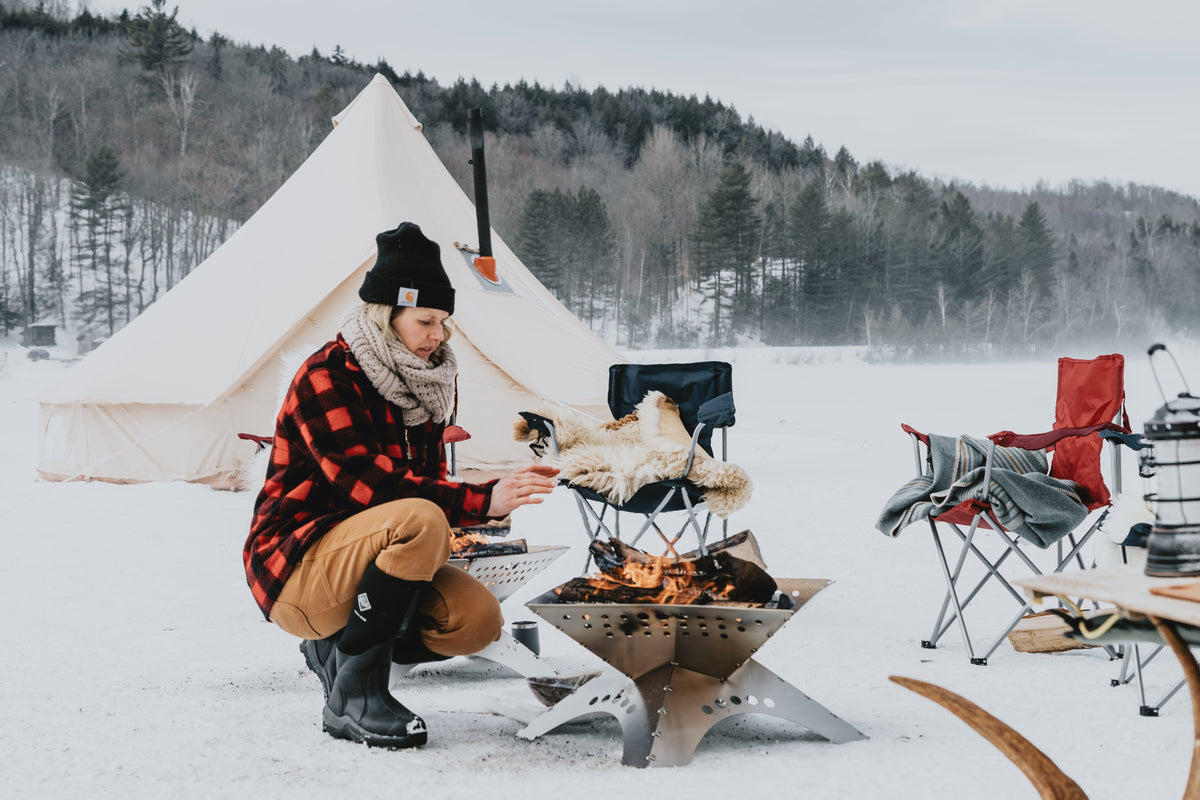
Keep the Stove Burning: Running a wood stove inside your tent does more than keep you warm. The ambient heat radiating through the canvas helps melt snow on contact, preventing dangerous heavy buildup. Check out our guide on How to Safely Install and Enjoy Your Wood Burner to ensure your stove flue is clear of drifting snow or ice blocks.
-
Clear Around the Sidewalls: As snow piles up around the outside of your tent, shovel a small trench or clear a perimeter around the base. If snow builds up too high against the zippered walls, it can block ventilation, trap interior moisture, and put sideways pressure on your pegs.
Gear Up for Winter Adventures
Don't let winter weather catch you off guard. Whether you need a heavy-duty pro shelter or reliable accessories to keep your camp warm, we’ve got you covered.
Read more
Plan your cold-weather camping trip with our guide to the best extended-season glamping spots in the Pacific Northwest and Colorado. Discover heavy-duty shelter solutions for fall and winter.

Transform your canvas bell tent into an autumn sanctuary. Explore 10 cozy fall glamping decor ideas featuring layered textures, wood-burning stoves, and atmospheric lighting setups.