



Mastering Sub-Freezing Canvas: Condensation vs. Frost Management in Winter Bell Tents
Here is the complete, raw text of the blog post body, fully formatted and cleared of any hidden control blocks so you can paste it smoothly into a plain text document or directly into your Shopify editor:
Mastering Sub-Freezing Canvas: Condensation vs. Frost Management in Winter Bell Tents
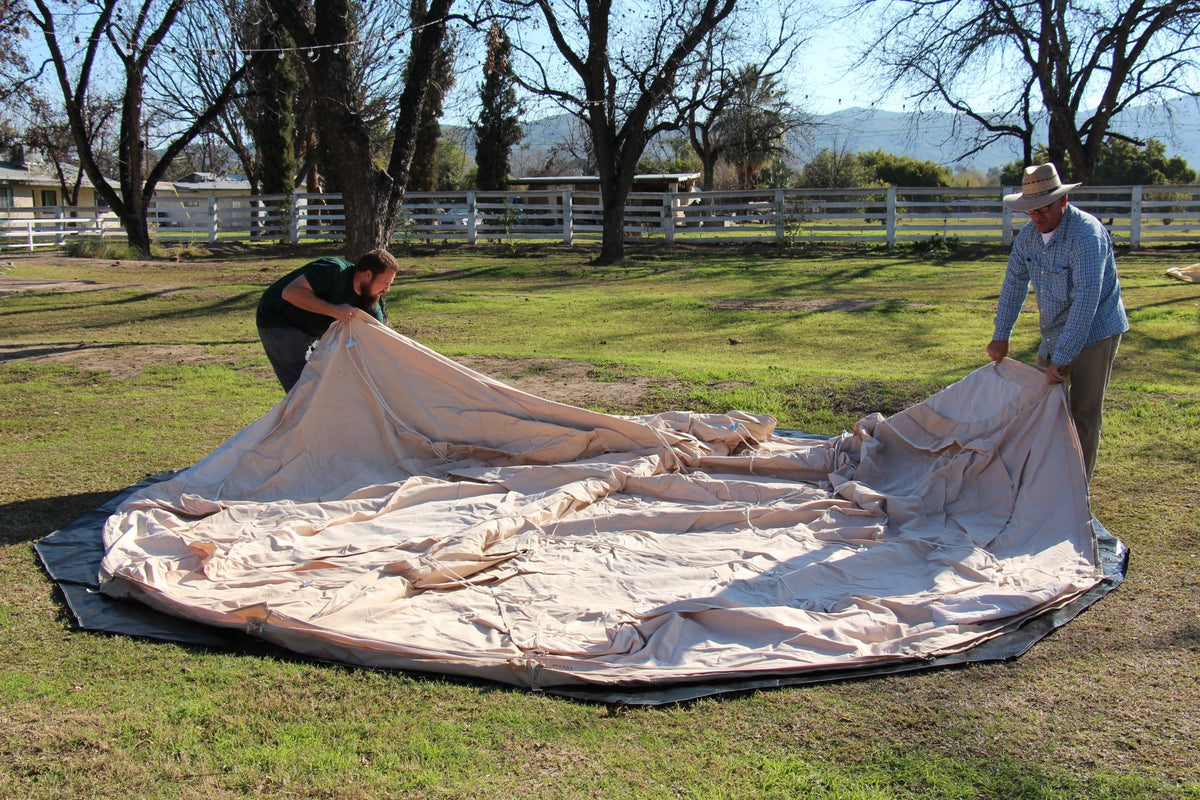
When the temperature drops below freezing, cold-weather canvas camping changes entirely. While a high-quality cotton canvas tent—such as the heavy-duty Overland Sunforger Tent—naturally breathes far better than synthetic alternatives, winter camping introduces a stealthy challenge: moisture management.
Many winter campers confuse standard condensation with sub-freezing frost. Understanding the difference—and knowing how to combat both using ventilation, stove draft control, and proper thermal balancing—is the key to staying warm and dry off-grid.
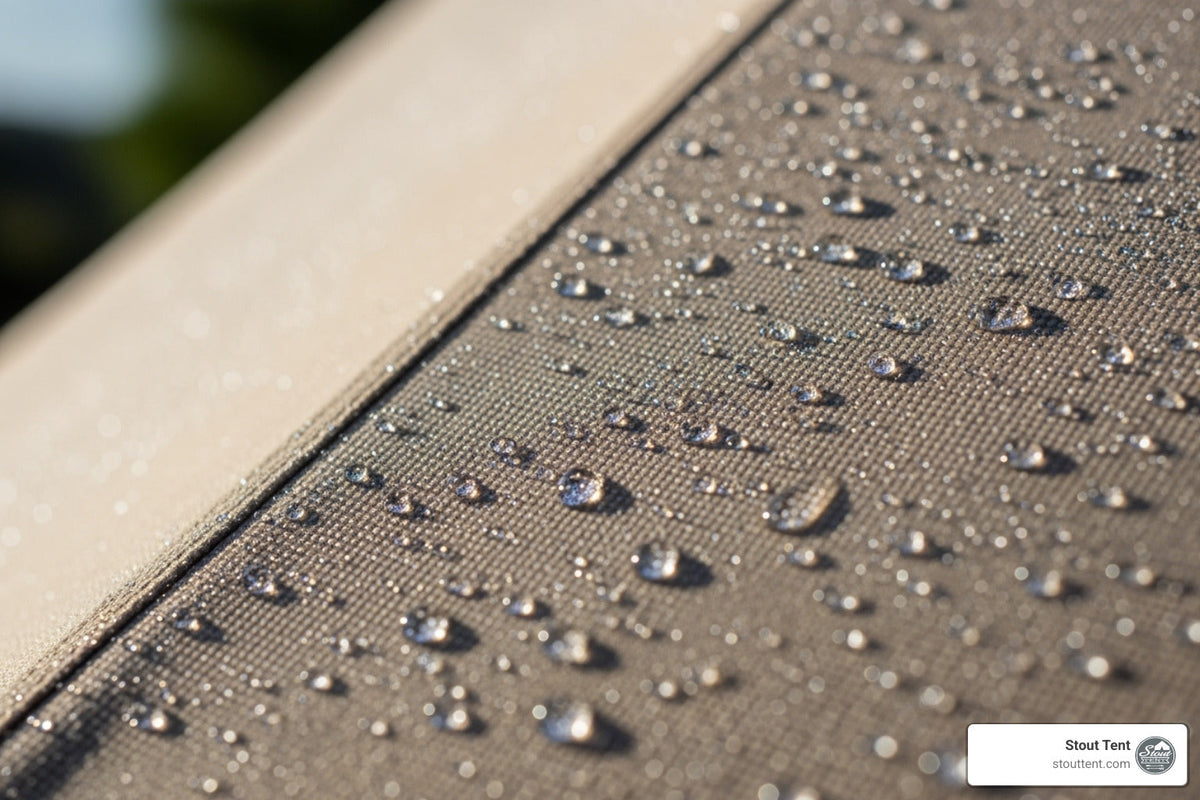
The Core Difference: Condensation vs. Frost
|
Metric |
Condensation (Above Freezing) |
Frost (Sub-Freezing) |
|
State of Matter |
Liquid water droplets |
Crystalline ice / solid frost |
|
Primary Trigger |
Warm, humid air meeting a chilled fabric wall |
Water vapor hitting a canvas surface sitting below 32°F (0°C) |
|
Common Symptom |
Water "raining" down on sleeping bags during the early morning shift |
A glittering white layer coating the interior roof canvas upon waking |
|
Primary Danger |
Damp bedding, heavy gear saturation, and mildew growth |
Fabric stiffness, sudden melting when a stove is lit, and subsequent indoor downpours |
Why Winter Canvas Tents Catch Moisture
Every camper exhales roughly one liter of water vapor per night just through normal breathing. Add in sealed ground zippers, combustion emissions from heaters, and damp winter gear, and the relative humidity inside a closed bell tent spikes rapidly.
In sub-freezing environments, the exterior canvas acts as a severe thermal boundary. When internal humidity hits that freezing perimeter wall, it skips the liquid phase entirely and deposits directly as crystals. If you fire up a wood or diesel stove too quickly in the morning without addressing this frost layer, it melts instantly, turning into a localized indoor downpour.
Tactical Strategies for Dry Winter Camping
- Maintain Active Cross-Ventilation (Even in the Cold) The instinct in freezing weather is to seal every gap to trap heat. However, completely sealing a canvas tent traps your breath's humidity inside. Crack your apex peak vents or ridge caps slightly to allow warm, moist air to escape before it reaches the dew point. Balance your stove draft so it continuously pulls fresh air through the lower perimeter without creating dangerous carbon monoxide pockets.
- Control the Morning Melt If you wake up to a layer of frost coating the interior roof of your bell tent, do not fire the stove on high immediately. Rapid heat spikes will melt the entire ceiling at once. Use a soft-bristled brush or a microfiber towel wrapped around a paddle to gently sweep away loose ice crystals before they liquefy and drop onto your cot or sleeping system.
- Fortify Your Floor and Footprint Buffer Moisture doesn't just come from above; frozen ground underneath your tent pushes vapor upward. Ensure you use a heavy-duty Tent Footprint beneath your integrated groundsheet to block ground moisture transmission and protect against frozen, jagged terrain. Layer closed-cell foam mats or wool blankets directly over the floor underneath your cots to stop body heat from creating thermal loops against frozen earth.
Upgrade Your Cold-Weather Setup
Conquering sub-freezing camping isn't about avoiding the cold—it's about understanding the thermodynamic balance inside your shelter. By managing internal humidity, utilizing proper ventilation, and protecting your canvas base from the elements, you can enjoy a bone-dry, cozy off-grid experience all winter long.
Ready to build your ultimate four-season basecamp? Explore our rugged lineup of weather-resistant shelters and gear to prepare for your next cold-weather excursion:
Gear Up: Browse the Winter-ready Tents & Gear collection for heavy-duty winter performance.
Read more

Transform your canvas bell tent into an autumn sanctuary. Explore 10 cozy fall glamping decor ideas featuring layered textures, wood-burning stoves, and atmospheric lighting setups.
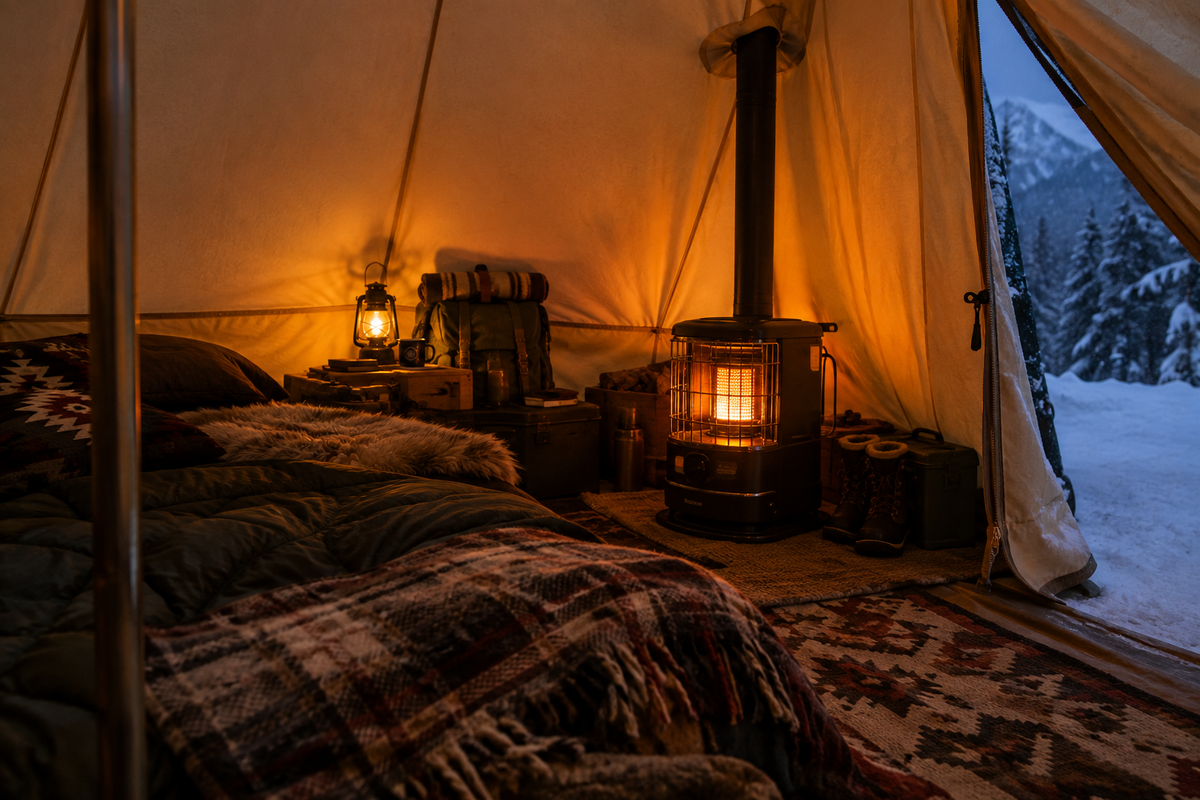
Master off-grid diesel heating in freezing conditions. Learn how to prevent diesel fuel gelling, protect your pump lines, and manage lithium battery drain when winter camping.