

The DIY Glamping Site Setup
How to Build a DIY Portable Tent Platform for Your Bell Tent.
TL;DR: A DIY portable tent platform elevates your bell tent off the ground, preventing floor abrasion, eliminating groundwater tracking, and extending the lifespan of your canvas. By building a modular deck using exterior-grade lumber and durable hardware, you can create a level, highly secure glamping foundation that can be disassembled and moved as needed.
For outdoor enthusiasts setting up a basecamp, a semi-permanent glamping site, or an eco-retreat, a canvas bell tent offers unmatched comfort and weather defense. However, leaving your tent directly on bare earth or grass for months at a time exposes the heavy-duty groundsheet to constant moisture, insects, and sharp rocks.
Building a modular, DIY portable tent platform is the ultimate upgrade. It protects your investment, guarantees a perfectly level sleeping surface, and keeps your campsite pristine.

Why You Need an Elevated Platform
-
Moisture Barriers: It prevents moisture from getting trapped under your tent floor, stopping mold before it starts.
-
Structural Stability: It provides clean, solid anchor points for structural framing, ensuring your tent remains completely stable during high winds.
-
Enhanced Comfort: A wooden deck feels cleaner, stays warmer, and provides a beautiful, flat surface for premium camp furniture.
Required Tools & Materials Checklist
To build a modular 16-foot platform perfect for a standard 5m bell tent, you will want to gather the following materials. Using high-durability, exterior-grade materials ensures your deck stands up to harsh climates.
-
Lumber: Pressure-treated 2x6 boards for the outer frame and joists; 5/4x6 exterior decking boards or high-grade plywood panels for the surface.
-
Hardware: Heavy-duty, rust-resistant deck screws (3-inch), framing angles, and modular joist hangers.
-
Foundation: Solid concrete deck blocks (placed at every corner and joist intersection to level the frame on uneven ground).
-
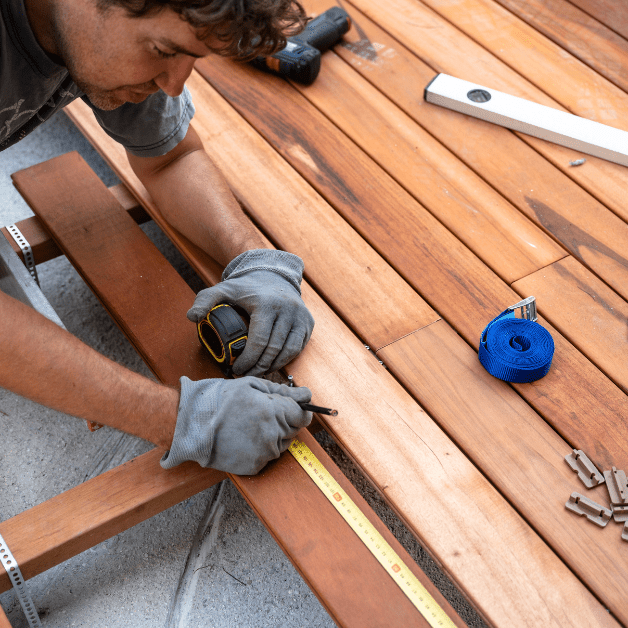
Tools: Circular saw, power drill, level, tape measure, and chalk line.
The Step-by-Step Construction Plan
+-----------------------------------+
|              | <-- 2x6 Pressure-Treated Frame
|    |         |         |          |
|    |         |         |          |
|    |         |         |          |
+-----------------------------------+
Step 1: Site Clearing and Leveling
Select a clear space with adequate drainage. Clear out large rocks, roots, and brush. Lay down your concrete deck blocks in a grid pattern. Use your level and long straight boards to ensure all the blocks sit flush with one another, using gravel underneath them to adjust heights if your ground slopes.
Step 2: Assemble the Modular Framing Sections
To keep the platform truly portable, construct the frame in distinct, bolt-together sections (such as two 8x16 modules) rather than one massive unit. Frame the perimeter using your 2x6 boards, then install interior joists spaced 16 inches apart on center using your joist hangers. Secure the frames together using heavy-duty bolts that can be easily unfastened later.
Step 3: Lay the Deck Boards
Affix your top decking boards or plywood sheets across the framing, leaving a minute 1/8-inch gap between boards to allow for wood expansion and rainwater drainage. Drive two deck screws into every joist intersection to ensure the surface stays perfectly flat over time.
Step 4: Final Sanding and Sealing
Sweep off any sawdust. If using standard wood, apply a high-quality exterior wood sealant or water-resistant stain to protect the platform from UV degradation and rain rot.
Anchoring Your Tent Safely
Once your platform is complete, center your bell tent on the deck. Instead of driving stakes into the dirt, you can use heavy-duty eye bolts screwed directly into the perimeter of your wooden platform frame to secure your tent's guy lines. This creates an incredibly rigid, wind-resistant pitch that keeps your canvas perfectly taut.
Planning a cold-weather escape on your new platform? Make sure you check out our essential video guides on How to Heat Your Tent and selecting the safest firewood for your stove configuration.
Read more

High-traffic events require more than just beautiful tents—they require flawless logistics. Learn how to plan, position, and protect your bell tent village for weddings and festivals.

Behind the scenes of the Fire in the Mountains giveaway & glamping production. See why our premium canvas tent lineup is the top choice for rugged festival luxury.