

How to Build a Tent Platform: Your Comprehensive Guide
Introduction & Why Tent Platforms Matter
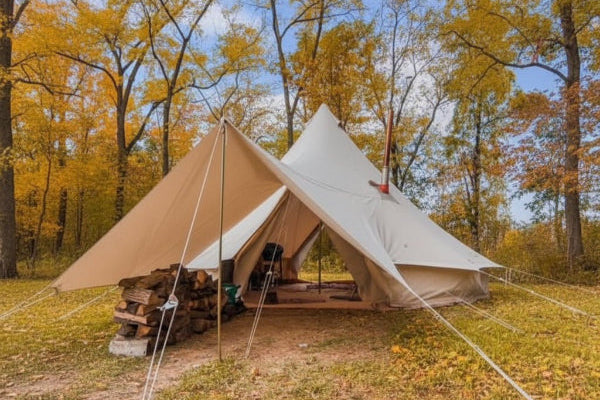
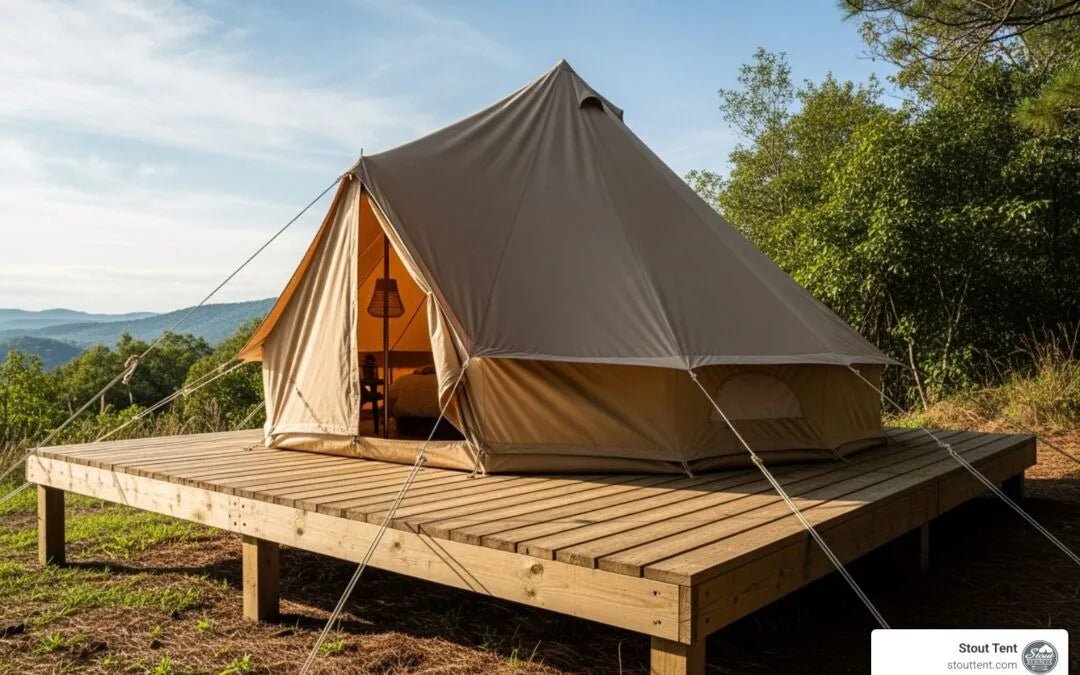
At Stout Tent, we’ve spent years supplying gear and managing large-scale setups across diverse environments. Drawing from hands-on construction and site development experience, we know that elevating your shelter changes the economics of your tent fleet. A raised deck lifts your canvas bell tent away from ground moisture, deters pests, improves airflow to prevent mold, and provides a stable, level surface that extends tent life significantly. Furthermore, if you plan on utilizing a wood stove for four-season camping, a solid wooden platform ensures a secure, level foundation for both your stove footprint and furniture.
Quick Build Guide
-
Design selection — Choose between permanent (glamping sites) or portable (weekend camping) frameworks.
-
Material sourcing — Invest in pressure-treated lumber, cedar, or composite decking alongside galvanized fasteners.
-
Site preparation — Clear, level the ground, and establish robust drainage or concrete footings below the frost line.
-
Framing & Joists — Install perimeter beams and space joists 16 inches on center.
-
Decking installation — Secure boards with a 1/8-inch to 1/4-inch drainage gap using galvanized screws.
Planning Your Tent Platform: Design, Materials, and Costs
Building a DIY tent platform for your canvas bell tent requires careful planning. Making smart decisions on design, materials, and budget at the start saves headaches and money over time.
Essential Materials and Tools
Quality materials ensure your platform matches the durability of your canvas bell tent:
-
Lumber & Decking: Pressure-treated lumber (like 2x6 joists and 4x4 posts) resists rot and insects. Premium cedar offers natural weather resistance, while composite decking requires zero staining and prevents splintering—making it an exceptional choice for high-end glamping operations.
-
Fasteners: Always use galvanized screws and stainless steel hardware to prevent rust, supported by joist hangers and post-top connectors.
-
Foundations: Concrete footings provide maximum stability for permanent structures, while deck blocks work well for slightly uneven ground without heavy excavation. Gravel pads offer an excellent, low-cost drainage alternative.
Watch the Build in Action: Wooden Platform Setup
Want to see how a sturdy timber base comes together for a bell tent setup? Watch our step-by-step video guide below for a closer look at framing and anchoring your structure:
The Ultimate DIY Tent Platform Build: Step-by-Step
Step 1: Site Preparation and Foundation
Choose a level location with natural drainage. Clear debris, mark your perimeter with stakes and string to ensure the layout is square, and call 811 before digging post holes to avoid underground utilities. Pour concrete footings or set posts deep enough to clear local frost lines, ensuring everything is plumb and level before setting.
Step 2: Building the Frame and Joists
Attach perimeter beams securely to your posts using galvanized screws. For larger builds, install a center beam for added load distribution. Space your joists 16 inches apart on center using joist hangers to create a rigid grid capable of handling the weight of your tent, furnishings, and occupants.
Step 3: Installing the Decking
Lay deck boards across your joists, maintaining a 1/8″ to 1/4″ gap between boards to ensure proper drainage and accommodate natural wood expansion. Drive two galvanized screws through each board into every intersecting joist for a squeak-free surface. Finish by cleaning debris and applying a protective weather-seal stain.
Pitching and Securing Your Bell Tent on a Deck
-
Platform Anchoring: Secure your groundsheet using the D-rings at each corner. Instead of standard tent stakes, thread heavy-duty screw hooks directly into your decking, or use bolts and washers drilled through the platform with a nut underneath to distribute the load and prevent fabric tears.
-
Guyline Management: Platform elevation alters guyline geometry. Extend your guyline anchor points outward using eye-bolts secured to the framing joists rather than just the surface deck boards for maximum storm resistance.
-
Stove & Chimney Alignment: If you run a tent wood stove, map your stove jack position before final tent placement. Ensuring your stovepipe clears roof overhangs and framing structural members safely is vital for fire prevention.
Download our free Deck and Platform Guide PDF or head over to HazywoodDesigns to purchase an exact deck plan for your tent model.
Got Questions About Your Platform or Setup?
Whether you are planning a multi-site glamping resort or building your first backyard platform, every terrain brings unique challenges. If you need advice on platform dimensions, deck anchoring, or tent compatibility, reach out to our team. We are always here to help you protect your investment.
Read more
Don't let a stuck zipper get between you and your camp setup. Learn five easy steps to fix zipper problems on your canvas bell tent and keep your gear running smoothly.
How to Clean Mold From A Canvas Tent We get so many requests for how to clean mold from a canvas tent that we've decided to share our secrets with you. However, we cannot stress enough that the bes...