





How to Cool Your Canvas Tent: The Ultimate Guide for Summer Comfort & AC Management
How to Cool Your Canvas Tent
Summer camping, festival season, and high-temperature glamping bring unique climate challenges. While heavy-duty canvas provides incredible natural insulation against extreme sun compared to synthetic nylon tents, managing internal heat and humidity requires the right setup, especially when operating in high-sun regions like the US Southwest.
At Stout Tent, we spend the summer months setting up and supporting shelters across extreme environments. We’ve compiled our expert strategies, equipment specifications, and field-tested methods to help you keep your canvas shelter cool, comfortable, and structurally secure when the mercury rises.
1. Prioritize Airflow and Ventilation
The single most effective way to combat heat and stuffiness in a canvas tent is to keep air moving so trapped solar heat and body humidity can escape.
-
Open Doors & Windows: Whenever weather and security permit, unzip doors, windows, and mesh layers to let cross-breezes flow naturally through the shelter.
-
Active Airflow: Supplement natural breezes with oscillating fans or mechanical cooling to drive hot air out and pull cooler air in.
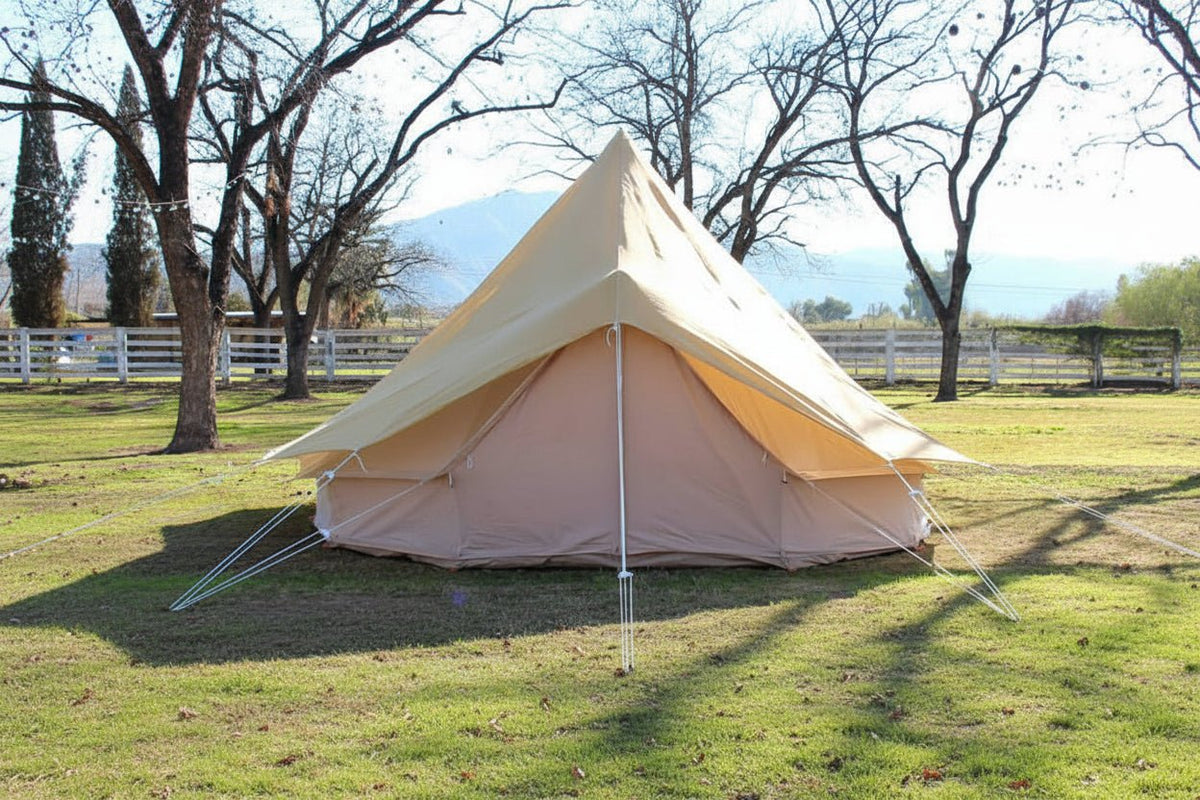
- The Double-Wall Advantage: Our Double-Wall Tents feature an advanced dual-layer design that combines breathable natural canvas with an integrated rainfly or mesh barrier, drastically reducing condensation buildup and keeping your interior dry and comfortable.
2. Choosing and Running a Portable AC Unit
For intense summer heat, high-end glamping setups, or long-term warm-weather living, a portable air conditioner is a game-changer. However, operating an AC in a sealed canvas bell tent requires careful handling to prevent structural stress.
-
BTU Sizing Guidelines: For standard bell tents in the 4M to 6M size range, we recommend utilizing a portable AC unit with at least 15,000 BTUs of output to ensure effective cooling volume.
-
Exhaust Management: Make sure the exhaust hose is securely directed outside the tent so that hot compressor air is vented properly rather than recirculating into your living space.
-
Preventing Tent Suction (Crucial!): Be sure to crack a window or vent while the AC is running. If a canvas tent is sealed entirely airtight, a powerful AC unit can cause the tent fabric to suction inward, putting massive, unnecessary pressure on the center pole and cone and potentially causing long-term structural damage.
-
Drainage & Maintenance: Regularly empty or plumb your condensate drain to prevent water buildup inside the unit during high-humidity operations.

3. Smart Shading: Tent Flies vs. Sunshades
Direct solar radiation is the primary driver of internal tent heat. Adding a dedicated overhead shade barrier drastically reduces interior temperatures.
-
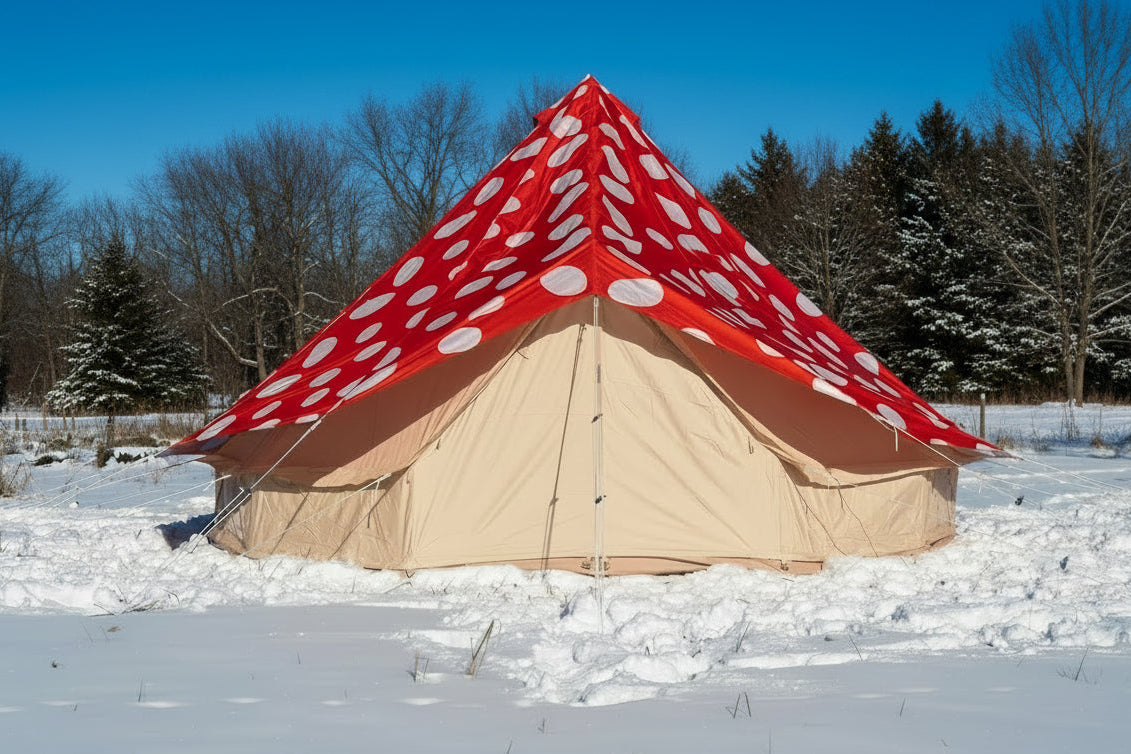
The Role of a Tent Fly: While many campers use a Tent Fly for Stout Bell Tent to customize their campsite aesthetics or make it easy to spot in a sea of festival shelters, it also acts as an initial thermal shield against bird droppings, falling debris, and intense midday UV rays.
-
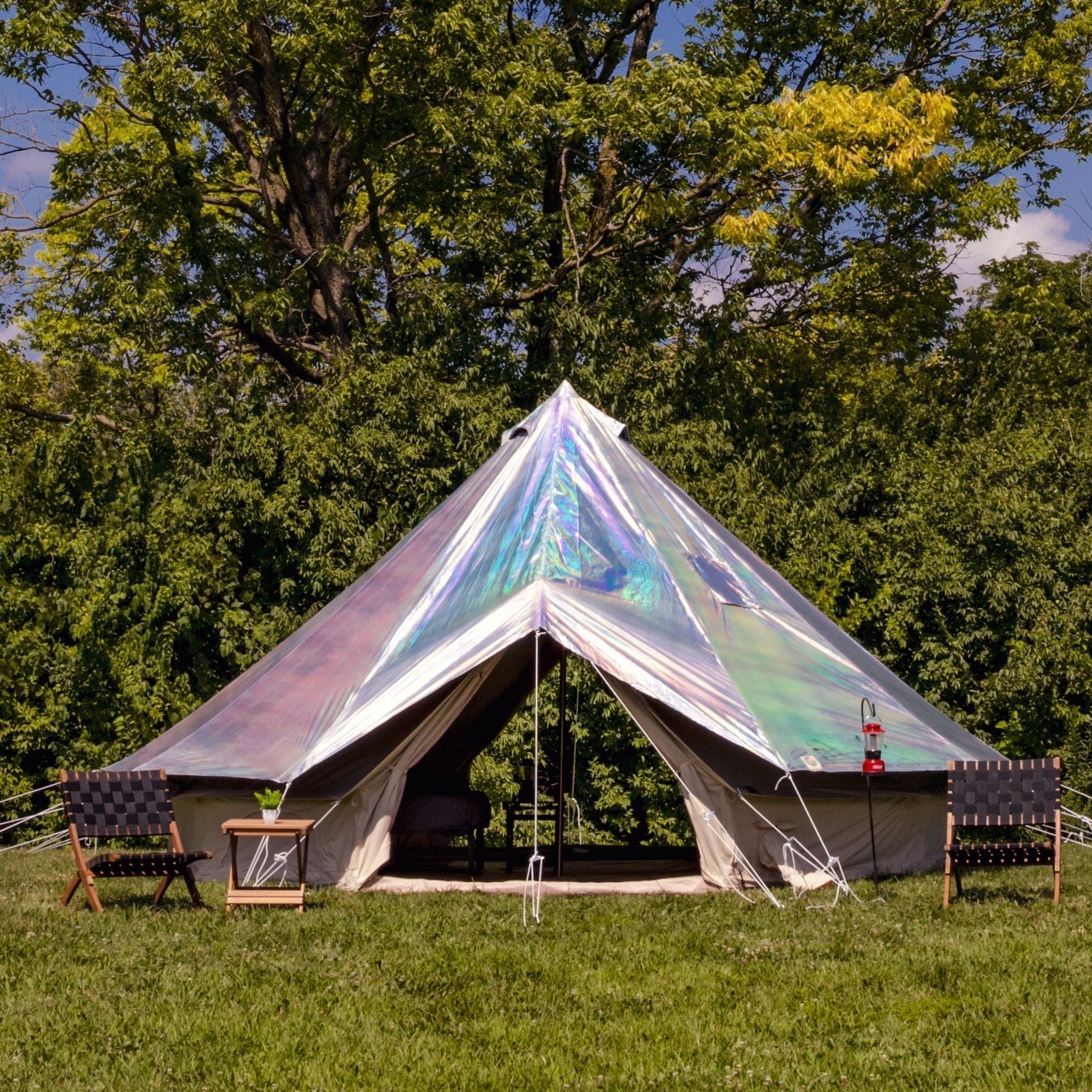
HDPE Sunshades: For peak summer heat, our specialized Stout Tent Sunshade for Bell Tents is engineered to allow maximum airflow while blocking harsh direct sunlight from baking your canvas roof.
Got Questions About Your Summer Setup?
Whether you are configuring a commercial glamping village, setting up a backyard retreat, or trying to figure out the right portable AC and exhaust setup for your tent, reach out to our team. We’re always here to help you keep your canvas cool, comfortable, and built to last through the heat.
Read more
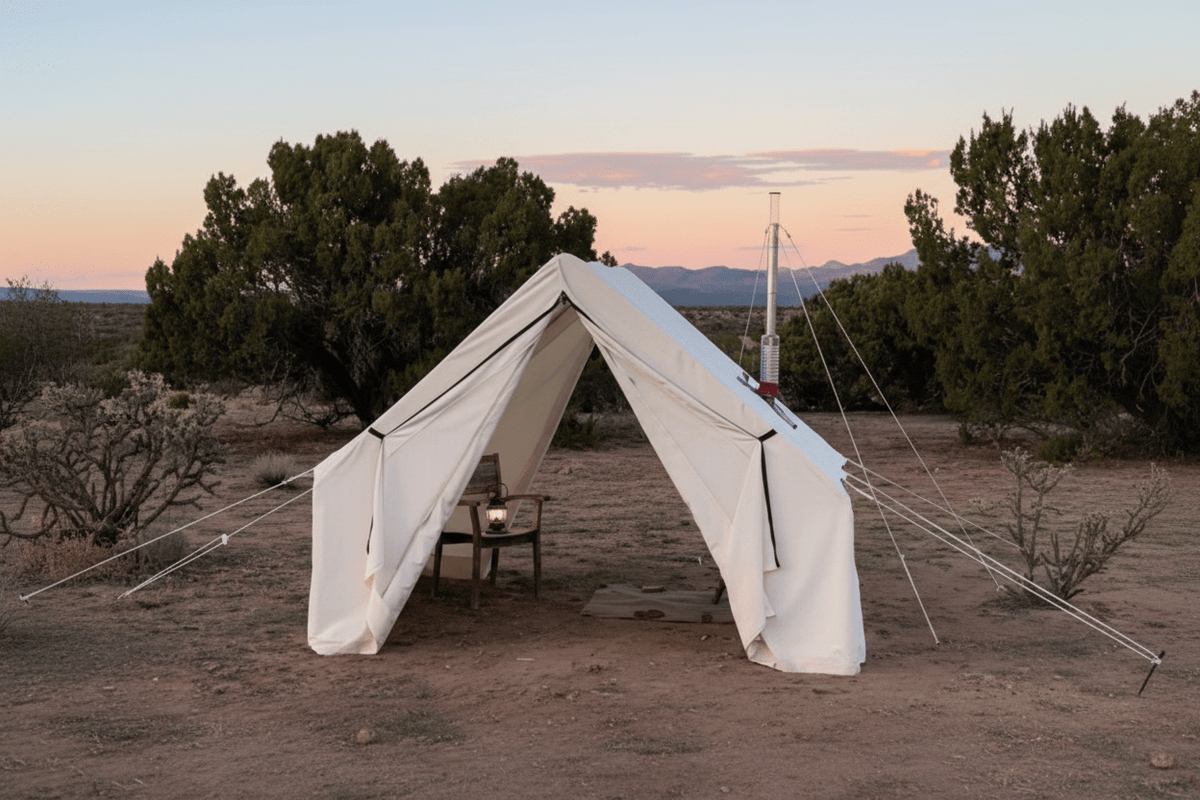
Learn how to set up your canvas wall tent and steel frame in minutes. Watch our video guide, follow step-by-step assembly instructions, and master your basecamp pitch!

Learn how to set up your curved/round awning in minutes. Watch our video guide, follow step-by-step assembly instructions, and expand your canvas campsite!