

How to Heat Your Canvas Tent
How to Heat Your Canvas Tent: A Practitioner’s Guide
There are a few different ways to heat a canvas tent, and we’re putting them all here for you.
When you treat a heavy-duty canvas tent like a semi-permanent structure rather than a flimsy weekend pop-up, heating it effectively comes down to matching your fuel source to your environment. We set up thousands of tents each year for music festivals, glamping villages, and extreme endurance events like 29029 Everesting, where our tents faced temperatures in the 20s, wind chill, and active snow. Safe to say, we’ve learned a thing or two about keeping people warm and comfortable when the weather turns.
Here is our breakdown of the best ways to heat your canvas shelter, along with the pros, cons, and operational realities of each.
1. Propane Heater
We love propane heaters for our pop-up events and rent hundreds of them out every season. They provide instant, reliable warmth when you need to take the edge off quickly.
-
Pros: Highly portable and convenient, easy to operate, features built-in safety mechanisms (low-oxygen sensors and tip-over switches), affordable (typically in the 100 to 180 range), and widely rated well online.
-
Cons: Propane off-gases water vapor, which introduces unwanted condensation inside your shelter if ventilation isn't managed. Standard 1lb fuel tanks are not refillable unless you purchase an adapter to hook up to a larger, refillable 25lb tank.
-
Fuel Cost & Run Time: Expect to spend around $3.50 per 1lb tank ($7/night). A standard 1lb tank runs for roughly 8 hours on LOW, and significantly less on HIGH.
2. Electric Heater
An electric heater is a great option for backyard campouts, or when you are staying at KOAs and established campgrounds that offer powered hookups at the site.
-
Pros: Portable, convenient, simple to operate, equipped with basic safety features, and very affordable upfront.
-
Cons: Entirely power-dependent; if the campground grid trips or you trip a breaker, you lose heat immediately.
-
Fuel Cost: Zero fuel cost for the heater itself, but you will pay a premium for a powered campsite, typically running $35 to 55 per night (usually about $10 more than a standard primitive site).
SAFETY FIRST: It’s critical for your safety that you turn off and unplug your electric heater before you go to sleep for the night. Heat your tent thoroughly before bed and snuggle under some heavy, warm layers (we rely on a heavy alternative down duvet). Never leave a space heater running unattended while sleeping.

3. Wood Burning Stove
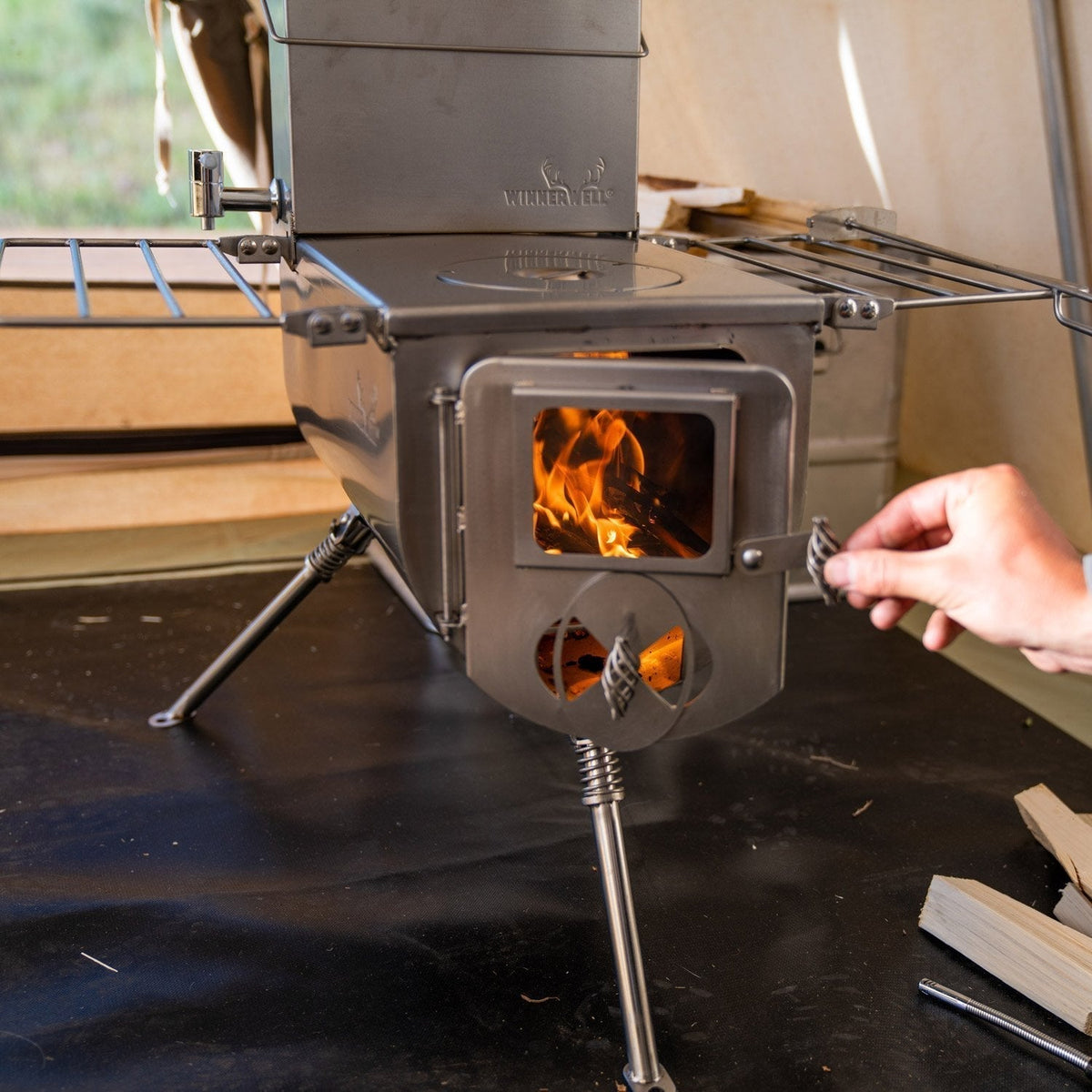
Our absolute favorite choice for heating a canvas tent is a wood-burning stove, especially a high-end model like a Winnerwell wood stove. It’s a solid, indestructible choice for those looking for a light yet durable heating solution at a fair price. We also love Four Dog Stoves for dedicated winter and hot-tent camping.
Stoves range in price depending on the size of your shelter, but a well-built stove will literally last a lifetime. (Note: Always set up your wood burner outside for an initial hot, dry run first so it can completely burn off the factory paint fumes before taking it into your tent!)
-
Pros: Highly portable, lasts forever, provides a warm, dry heat that actively pulls humidity out of the tent, creates zero condensation, and allows you to source natural fuel while out in the field.
-
Cons: There is a learning curve (mastering drafts, learning how to split wood, and picking the right wood types), and you will have to wake up periodically during the night to re-fuel.
-
Firewood Cost & Logistics: Firewood typically runs $20 per wheelbarrow or $7.50 a bag at most campsites. You’ll want roughly two bags for an efficient stove on a standard weekend trip. Make sure your wood is exceptionally dry and cut down into 6-to-12-inch pieces—oversized logs will choke a tent stove. If park-supplied wood is damp, grab your supply from a local roadside supplier on your way to camp.
Bonus Heating Alternatives: Some campers utilize specialized propane stoves that safely vent exhaust out through a stove jack (like a G-Stove), pellet stoves, or custom homemade options.
Watch Our Winter Camping & Stove Guides in Action
Want to see these stove-building techniques and cold-weather setups in real time? Watch our complete Winter Camping in a Canvas Tent playlist below for step-by-step video tutorials from our outdoor living experts:
Got Questions About Your Tent Setup?
Every climate and camping environment brings its own unique set of challenges—whether you're battling high-altitude winds, intense sun, or freezing overnight temperatures. We’ve spent years working through real-world configurations for residential homesteads, event spaces, and weekend camps, and we are always happy to help.
If you want to talk through your specific setup, explore our Wood-burning Stove Guide, or ask about stove jack compatibility, reach out to our team. We’re here to make sure your canvas shelter is built to handle the elements year-round.