

Why Every Canvas Bell Tent Owner Needs a Quality Repair Kit
A tent repair kit is essential for maintaining your canvas bell tent investment and ensuring decades of reliable shelter. Whether you’re running a glamping operation or own premium canvas tents for personal use, having the right repair tools on hand can mean the difference between a quick fix and a costly replacement.
Essential tent repair kit components for canvas bell tents:
- Heavy-duty canvas patches – Match your tent’s canvas weight and weave (e.g., 10–12 oz cotton duck), as supplied in Stout Tent’s repair solutions
- Canvas-specific adhesive – Solvent-borne, canvas-safe adhesive that bonds permanently to cotton fibers and wax treatments, as recommended by Stout Tent
- Seam sealer – Canvas-safe sealant that waterproofs stitch lines and stress points without compromising breathability, as used in Stout Tent’s service repairs
- UV-resistant thread – Heavy, waxed, UV-stabilized polyester thread for long-term outdoor exposure, the spec Stout Tent recommends
- Heavy-gauge needles – Sailmaker/upholstery needles that reliably penetrate thick canvas, compatible with a palm thimble, as in Stout Tent kits
- Zipper lubricant – Non-staining silicone/paraffin lube to keep heavy-duty zippers running smoothly, as included in Stout Tent maintenance solutions
- Grommet kit – Solid brass grommets with spur washers and setting tools to restore guy-out and stake points, per Stout Tent’s field-repair guidance
According to the U.S. Bureau of Economic Analysis, the outdoor recreation economy accounted for $1.1 trillion in gross output in 2022. This growth reflects increasing demand for durable, long-lasting gear that can be maintained rather than replaced – exactly what quality canvas bell tents represent.
I’m Caitlyn Stout, founder of Stout Tent, with extensive hands-on experience in canvas materials, treatments, and construction techniques across six continents. Having worked with canvas tent repair kit solutions for commercial glamping operations worldwide, I understand what works for heavy-duty repairs that last generations.
What Makes a Great Canvas Tent Repair Kit?
Your canvas bell tent is built to last generations, so naturally, your tent repair kit needs to match that same level of durability and quality. Think of it this way: you wouldn’t use a Band-Aid to fix a leather jacket, and you certainly shouldn’t use flimsy materials to repair your sturdy canvas shelter.
The heart of any great canvas tent repair kit starts with heavy-duty canvas patches. These aren’t your typical lightweight patches meant for backpacking gear. Canvas bell tents demand patches made from industrial-strength material that can integrate seamlessly with your tent’s thick cotton fibers. The best patches come pre-cut with rounded corners to prevent peeling and feature strong, flexible adhesive that’s already applied and ready to use.
Industrial-strength adhesive is where many repair attempts fail. Canvas requires specialized adhesives that can penetrate deep into the cotton fibers and create a permanent bond. This isn’t just about sticking two pieces together – it’s about forming a watertight seal that can handle UV rays, temperature swings, and the constant stress of wind and weather. Regular craft glue simply won’t cut it for canvas repairs.
Your tent’s seams work hard to keep you dry, which is why seam sealer specifically formulated for canvas is essential. Unlike synthetic tent sealers, canvas seam sealers must remain flexible while allowing the fabric to breathe naturally. This creates a waterproof barrier without compromising the canvas’s natural properties.
When repairs require stitching, you’ll need heavy-gauge needles and waxed, UV-resistant thread. Canvas is tough material, and regular sewing needles will bend or break when trying to penetrate multiple layers. The thread must withstand years of sun exposure without degrading, ensuring your repairs last as long as the original construction.
Don’t overlook zipper lubricant for maintaining those robust zippers on your canvas bell tent. These heavy-duty zippers handle significant stress, and proper lubrication prevents sticking, corrosion, and premature wear. A little maintenance goes a long way toward keeping your tent’s entry points functioning smoothly.
Your tent’s stability depends on strong spare guy line rope and secure anchor points. When guy lines fray or stretch beyond usefulness, having replacement rope that matches your original specifications ensures your tent maintains proper tension. Similarly, a grommet replacement kit addresses those high-stress attachment points where guy lines connect to your tent.
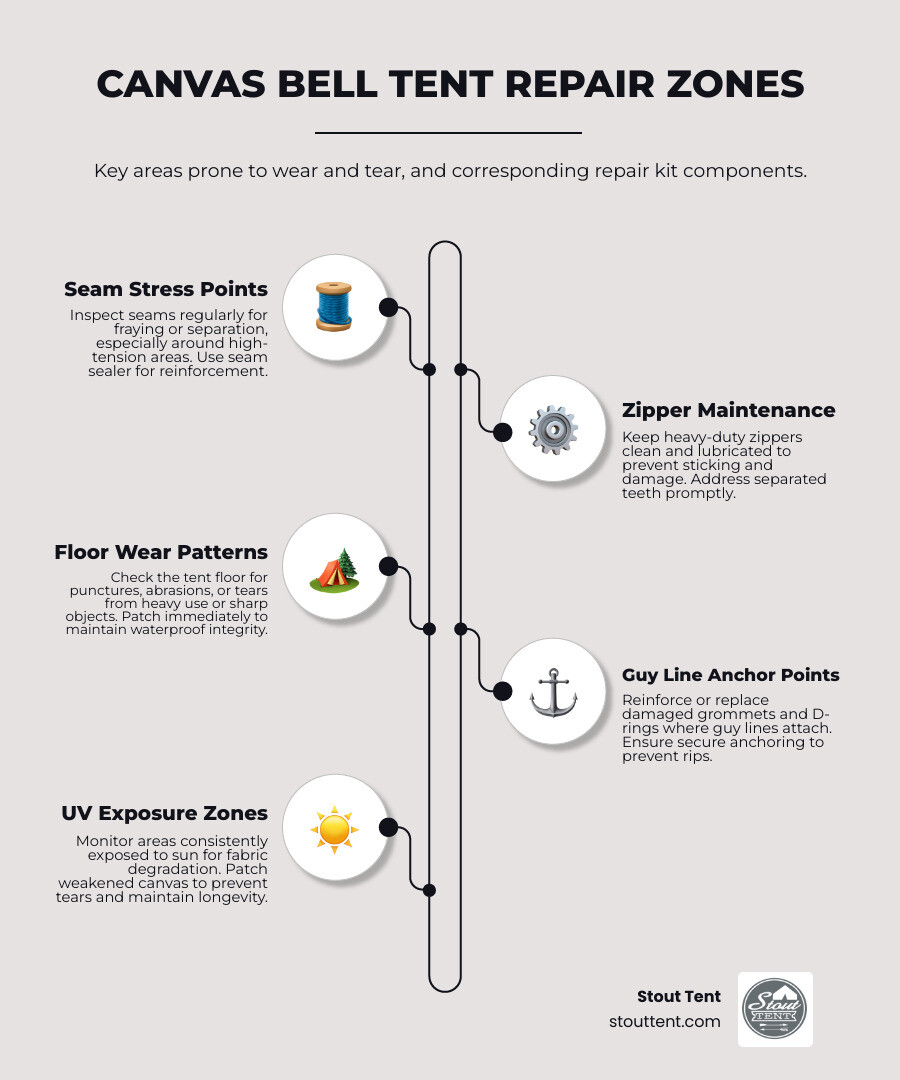
Essential tools for your canvas tent repair arsenal include heavy-duty scissors for cutting canvas, rubbing alcohol for cleaning repair surfaces, clean application rags, a brush for applying seam sealer, an awl for creating precise holes, and quality duct tape for emergency field repairs.
Your canvas bell tent represents a significant investment in quality outdoor shelter. Your repair kit should reflect that same commitment to excellence and longevity.
Common Canvas Tent Damage & How to Fix It
Even the sturdiest canvas bell tents face challenges in the great outdoors. These legacy shelters are built to last generations, but understanding what can go wrong helps you stay prepared with your tent repair kit.
Weather damage is probably the most common culprit. High winds can stress guy lines and seams, while heavy rain tests every stitch. Snow loads can push fabric beyond its limits if your tent isn’t pitched with proper tension. Canvas handles weather beautifully, but Mother Nature doesn’t always play fair.
UV degradation works slowly but surely. Those sunny days that make camping perfect also send ultraviolet rays that gradually weaken canvas fibers over time. It’s the price we pay for all that beautiful natural light streaming into our bell tents.
Accidental rips happen to the best of us. Maybe it’s a sharp branch during setup, a tent stake that goes rogue, or just an unfortunate encounter with camping gear. These sudden tears are exactly why keeping a tent repair kit handy makes such good sense.
Stress points deserve special attention. Door frames work hard every time someone enters or exits. Zipper lines flex constantly. Guy line attachment points bear the load of keeping your tent secure. These areas naturally show wear first, which is completely normal for such hardworking shelters.
Proactive inspection is your best friend here. A quick look-over after each camping trip can catch small issues before they become big problems. Check those seams, test the zippers, and examine high-stress areas. It’s much easier to fix a tiny tear than replace an entire panel.
Patching Holes and Tears in Heavy-Duty Canvas
When your canvas bell tent gets a hole or tear, don’t panic. With the right approach and your tent repair kit, you can restore it to full strength.
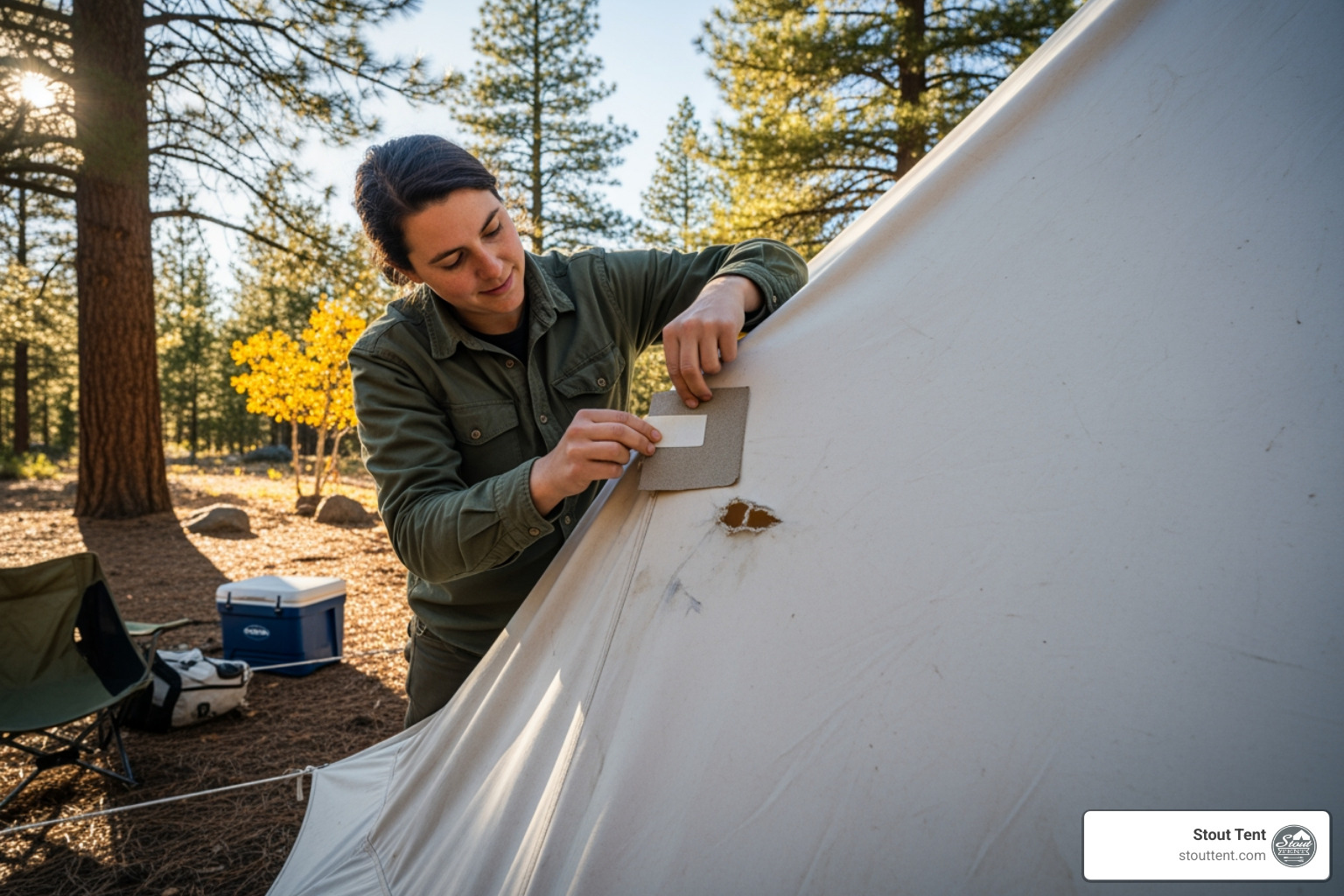
Start by cleaning the area thoroughly. Use rubbing alcohol and a clean cloth to remove dirt, tree sap, or any other grime from both sides of the canvas. This step matters more than you might think – adhesives need clean surfaces to create strong, lasting bonds.
Preparing your patch comes next. Choose a canvas patch that extends at least an inch beyond the damage on all sides. If you’re cutting your own patch, round off those corners. Sharp corners love to catch on things and peel up over time, which defeats the whole purpose of a good repair.
Applying adhesive requires patience. If your patch isn’t self-adhesive, spread a thin, even layer of canvas-specific adhesive. Don’t glob it on – a smooth, consistent layer works best.
Pressing the patch into place is where technique matters. Start from the center and work outward to eliminate air bubbles. For high-stress areas or larger tears, apply a second patch on the inside of the tent. This creates a sandwich repair that’s incredibly strong.
Curing time tests your patience, but it’s crucial. Give the adhesive at least 24 hours to fully bond before packing your tent or putting stress on the repair. Think of it as an investment in decades of future camping trips.
Ensuring a watertight seal means checking the patch edges after curing. If any spots look loose, dab a bit of seam sealer around the edges. A proper patch repair can actually be stronger than the original canvas, creating a durable fix that stands the test of time.
Sealing Leaks and Reinforcing Seams
Seams work incredibly hard on canvas bell tents. They hold together large panels of heavy fabric while flexing with wind and weather. Eventually, even the best seams may need attention.
Identifying failing seams starts with a thorough inspection. Set up your tent and look carefully at every seam, especially after rain. Water stains, frayed stitching, or peeling seam tape are telltale signs that maintenance is needed.
Removing old sealant requires a gentle touch. Peel away loose seam tape or cracked sealant, but leave intact sections alone. You’re preparing the surface, not creating more work for yourself.
Cleaning with alcohol prepares the seam for new sealant. A thorough wipe-down removes oils, dirt, and residue that could interfere with adhesion. Let everything dry completely before moving forward.
Applying new canvas-specific sealant is where precision pays off. Use an applicator brush to spread an even, thin coat along the seam. Work from the inside of your tent for the best results. For detailed guidance on this process, check out our resource on Repairing Your Tent Seam.
The curing process creates a permanent, waterproof bond that keeps your tent dry for years to come. Depending on humidity and temperature, this can take several hours to a full day. Properly sealed seams help maintain your canvas tent’s reputation as a generational shelter.
Fixing a Damaged Tent Zipper
Heavy-duty zippers on canvas bell tents are built to last, but they still need occasional care to keep running smoothly.

Cleaning zipper teeth solves many problems before they start. Use a small brush or old toothbrush to remove sand, lint, and debris from the teeth. You’d be amazed how much grit can accumulate in zipper tracks during normal camping use.
Applying zipper lubricant keeps everything moving smoothly. Choose a silicone-based lubricant that won’t stain your canvas. Apply it directly to the teeth and slider, then work the zipper back and forth to distribute the lubricant evenly.
Addressing separated teeth often requires gentle persistence. If the zipper keeps coming apart, try working the slider slowly back and forth over the problem area. Sometimes the teeth just need to be coaxed back into proper alignment.
When to replace a zipper slider becomes necessary if the teeth consistently separate or the slider itself is damaged. Many tent repair kit options include replacement sliders, though this repair requires more skill than basic patching. A properly maintained zipper system ensures your canvas bell tent remains secure and comfortable for countless adventures ahead.
The Best Tent Repair Kit Solutions for Your Canvas Bell Tent
When it comes to maintaining your canvas bell tent, not all repair kits are created equal. Lightweight patches engineered for thin nylon or polyester backpacking tents lack the tensile strength, adhesive compatibility, and abrasion resistance needed for heavy cotton canvas—and typically fail under tension, moisture, and UV exposure.
Canvas bell tents demand specialized care because they’re built to different standards entirely. These aren’t disposable shelters – they’re generational investments designed to provide sturdy, reliable protection for decades. That means any tent repair kit you choose needs to match that same level of durability and craftsmanship.
| Repair Solution Type | Best For | Canvas Suitability | Benefits for Canvas Tents |
|---|---|---|---|
| All-in-One Kits | Minor tears, sticky zippers, small leaks | Varies; look for “canvas-specific” | Convenient for general field repairs, good starting point |
| Specialized Fabric Kits | Major rips, holes | Excellent; custom for canvas | Industrial-strength patches, robust adhesives, maintains fabric integrity |
| Specialized Seam Kits | Leaking seams, seam reinforcement | Excellent; formulated for canvas | Creates flexible, waterproof, long-lasting seals on canvas seams |
| Specialized Zipper Kits | Broken sliders, stubborn zippers | Good; universal components | Provides specific tools for zipper maintenance and replacement |
The beauty of investing in quality canvas repair solutions extends far beyond your bell tent. These same robust materials work wonderfully on other canvas gear in your outdoor arsenal. Your heavy-duty awnings that provide extra shade and weather protection, those trusty canvas gear bags that haul your equipment season after season, and even canvas groundsheets that take a beating from rocks and roots – they all benefit from the same industrial-strength repair approach.
Choosing the Right Tent Repair Kit for Fabric Tears
When your canvas bell tent suffers a tear, you need a tent repair kit that rises to meet the challenge. We’re talking about fabric that’s built like armor – thick, tightly woven, and designed to withstand whatever nature throws at it.
Heavy-duty canvas patches form the foundation of any serious repair effort. These aren’t flimsy bits of fabric with weak adhesive backing. Instead, look for patches made from industrial-strength material that matches the weight and weave of your tent canvas. The best patches come pre-cut with rounded corners to prevent peeling and are designed to integrate seamlessly with your tent’s existing fabric.
The magic happens with airtight and watertight seals that go beyond simple sticking power. Quality canvas adhesives create a permanent bond with the cotton fibers, forming a seal that’s as weatherproof as the original fabric. This isn’t just about keeping water out – it’s about preventing the tear from spreading and maintaining the structural integrity that makes canvas bell tents so dependable.
UV resistance and flexibility work hand in hand to ensure your repair lasts for years, not months. Canvas naturally expands and contracts with temperature changes, and your repair materials need to move with it. The best solutions remain pliable through hot summers and cold winters while resisting the sun’s damaging rays.
Modern no-sew solutions for canvas have revolutionized field repairs. These specialized adhesive patches bond permanently to canvas without requiring needles, thread, or sewing skills. You get a sturdy, long-lasting repair that can be completed in minutes rather than hours. Stout Tent recommends repair options that deliver this level of convenience without compromising on durability.
The Ultimate Seam Sealing Solution
Canvas bell tent seams deserve special attention because they’re where durability meets vulnerability. Even the strongest canvas can develop leaks along seam lines over time, especially after years of faithful service.
Silicone-based sealants specifically formulated for canvas offer the perfect balance of waterproofing and breathability. Unlike generic sealants that can make fabric stiff and brittle, canvas-specific formulations maintain the natural flexibility that makes canvas such a pleasure to work with.
Application methods using brush-on applicators give you precise control over coverage. You want an even, thin coat that extends slightly beyond the stitching line, creating a continuous waterproof barrier without adding unnecessary bulk or weight.
Ensuring full coverage means taking your time and working in good lighting. Miss a spot, and water will find it eventually. The goal is creating a seamless seal that becomes part of the tent’s weather protection system.
Preventing future leaks requires understanding that even the best seam sealing isn’t permanent. Regular inspection and proactive reapplication keep your canvas bell tent performing at its peak. Think of it as routine maintenance rather than emergency repair.
The longevity of sealed seams directly impacts your tent’s legacy potential. Properly sealed seams using quality products and careful application can extend your tent’s waterproof life by years, reinforcing why canvas bell tents remain such smart long-term investments. Stout Tent’s recommended products focus on solutions that support this generational durability.
Proactive Care: Preventing Repairs Before They Happen
The truth about canvas bell tents is this: the best repair is the one you never have to make. While having a quality tent repair kit on hand gives you peace of mind, smart maintenance practices will keep your canvas shelter performing beautifully for decades to come.

Think of your canvas bell tent as a living, breathing piece of equipment. Just like any investment you want to last generations, it thrives with a little attention and care. The good news? Proper tent maintenance doesn’t require special skills or fancy equipment – just consistent, thoughtful habits.
Storing your tent dry is absolutely non-negotiable. This single practice prevents more damage than any other maintenance step. Canvas that’s stored even slightly damp becomes a breeding ground for mold and mildew, which don’t just smell terrible – they actually eat away at the cotton fibers, weakening your tent from the inside out. If your tent gets wet during a trip, take the time to set it up at home until it’s bone dry. Your future self will thank you.
Preventing mold and mildew goes beyond just storage. During use, make sure your tent has proper ventilation to prevent condensation buildup. Open those windows and vents, especially on humid nights. If you do spot any mold beginning to form, address it immediately with a canvas-specific cleaner. Never use harsh household cleaners that can strip away the natural protective qualities of the canvas.
Regular cleaning keeps your tent looking great and performing at its best. After each trip, brush off dirt, leaves, and debris before packing up. For stubborn stains, use only cleaners designed specifically for canvas – they’ll remove the grime without damaging the fabric’s water resistance or natural durability.
Adjusting guy lines properly distributes stress across your tent, preventing those weak points that eventually require repairs. Check your guy lines regularly, especially after weather changes or strong winds. Uneven tension puts unnecessary strain on attachment points and can lead to fabric fatigue over time. A well-pitched tent is a happy tent.
Minimizing UV exposure helps preserve your canvas for the long haul. While our canvas bell tents are built to handle sun exposure, unnecessary UV bombardment will gradually weaken any fabric. When possible, pitch in areas with some natural shade, or consider the sun’s path when setting up for extended stays.
These simple practices transform tent care from reactive repairs to proactive preservation. Your canvas bell tent is designed to be a sturdy, generational investment – one that serves your family faithfully through countless adventures when given the care it deserves.
When to Call in the Professionals
Sometimes even the most comprehensive tent repair kit meets its match. Your canvas bell tent is built to be a generational investment, and there are moments when protecting that legacy means knowing when to step back and call in the experts.
Assessing the damage honestly is the first step. What looks like a simple tear on the surface might actually reveal deeper issues – fabric fatigue around stress points, compromised waterproofing, or structural weakening that only becomes apparent under close professional inspection. When you’re dealing with a tent designed to last decades, getting the full picture matters.
Large tears present a particular challenge for DIY repairs. While your tent repair kit handles smaller punctures beautifully, tears longer than a foot or damage near critical areas like the central pole sleeve require industrial-grade equipment. Professional tent repair services have heavy-duty sewing machines and specialized techniques that create repairs as strong and waterproof as the original canvas construction.
Structural issues are where professional expertise becomes invaluable. If your bell tent’s main pole sleeve is severely damaged, or if there’s extensive wear around the A-frame reinforcement areas, the tent’s fundamental stability is at risk. These aren’t just fabric repairs – they’re engineering challenges that affect how your tent handles wind loads and maintains its iconic bell shape.
Extensive mildew damage can be heartbreaking to find, especially on a tent you’ve invested in for the long haul. While minor mildew spots respond well to careful cleaning, deep-set mold that has penetrated the canvas fibers requires professional treatment. Specialists have access to cleaning processes and treatments that can often restore heavily affected canvas without causing additional damage to the fibers.
When a DIY kit isn’t enough, it’s time to admit defeat gracefully. If you’ve attempted a repair and it hasn’t held up to the stresses of pitching and weather, or if you’re facing damage that makes you uncomfortable, seeking professional help protects your investment. The goal isn’t just fixing the immediate problem – it’s ensuring your canvas bell tent continues serving as reliable, sturdy shelter for years to come.
At Stout Tent, we understand the value of your canvas investment. While we believe in empowering tent owners with quality DIY solutions and guidance, we also recognize that some repairs require the expertise that only professionals can provide. Your tent’s durability and longevity are worth that extra investment when the situation calls for it.
Conclusion
Your journey through mastering the tent repair kit for your canvas bell tent has equipped you with everything you need to keep your investment thriving for generations. We’ve walked through the essentials together – from choosing the right heavy-duty patches and industrial-strength adhesives to mastering the art of sealing seams and fixing stubborn zippers.
The beauty of owning a canvas bell tent lies not just in its incredible durability, but in knowing you can maintain it yourself. When you patch a tear with the proper tent repair kit, you’re not just fixing fabric – you’re preserving a legacy. When you seal those seams or lubricate that zipper, you’re ensuring countless more adventures under your sturdy shelter.
We’ve seen how specialized repair solutions make all the difference for canvas. Unlike lightweight synthetic tents that might need replacing after a few seasons, your canvas bell tent is built to last decades with proper care. The right repair techniques we’ve covered – from cleaning and patching to knowing when professionals should step in – transform what could be tent-ending damage into simple maintenance tasks.
Perhaps most importantly, we’ve learned that the best repair is often the one you never have to make. Storing your tent completely dry, regular cleaning, and proper guy line adjustment aren’t just maintenance tasks – they’re investments in your tent’s future. These simple habits can prevent most major repairs and keep your canvas shelter performing like new year after year.
Your canvas bell tent represents something special in a world of disposable gear. It’s a sturdy companion for family camping trips, a reliable shelter for glamping adventures, and potentially a treasured heirloom to pass down. By mastering these repair techniques and investing in quality materials, you’re actively writing the next chapter of your tent’s story.
At Stout Tent, we’re proud to support you on this journey. Our commitment goes beyond selling you a exceptional tent – we want to ensure it serves your family faithfully for generations to come.
Ready to build your repair arsenal? Explore our full range of tent accessories and care products and give your canvas bell tent the care it deserves.