

Why Tent Rugs Are Essential for Canvas Bell Tent Comfort
Tent rugs transform a basic canvas shelter into a comfortable, insulated, and stylish space that protects your investment and improves the experience for guests or family. Here’s what tent rugs deliver:
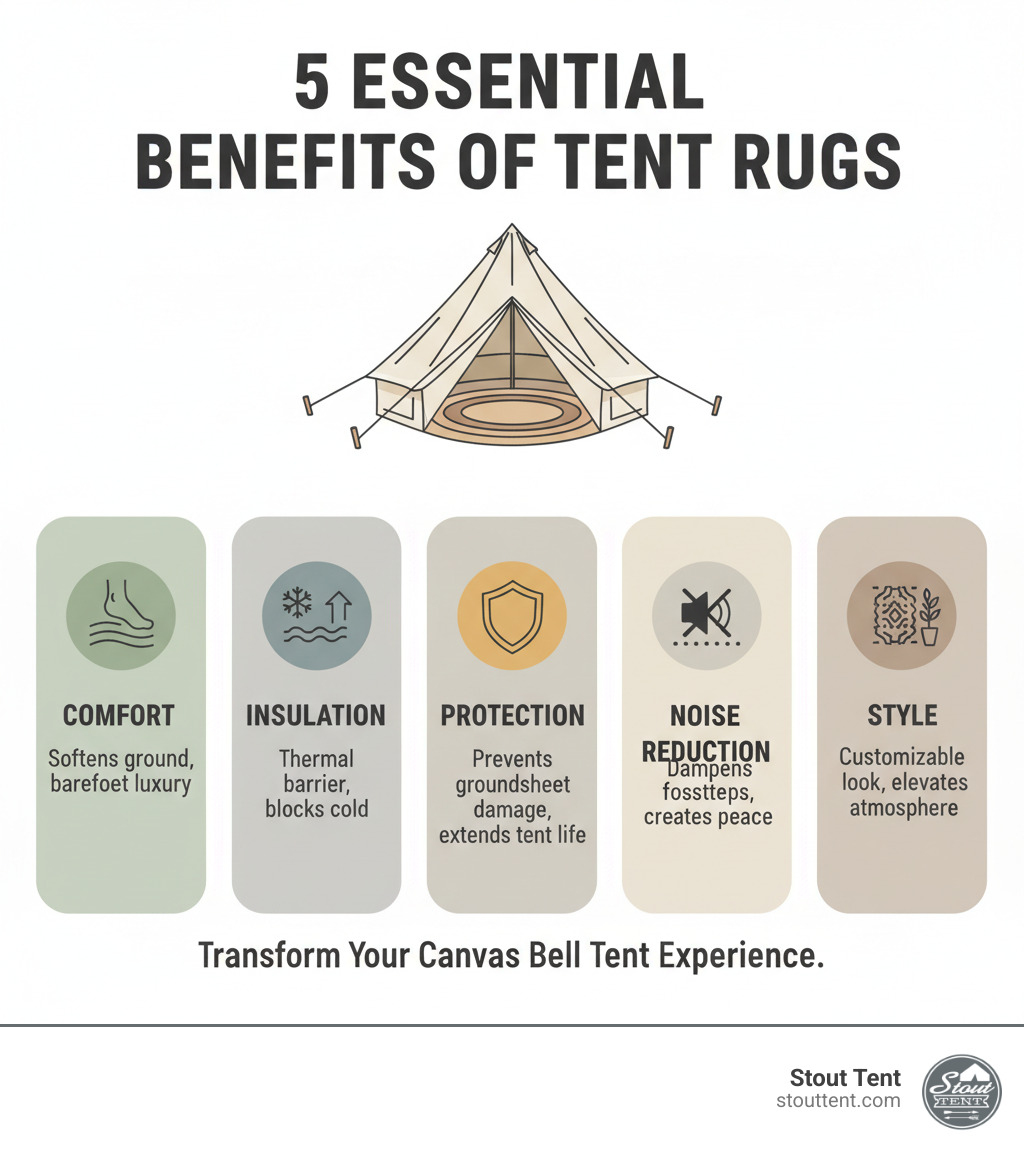
Top 5 Benefits of Tent Rugs:
- Comfort – Soften uneven ground and provide a barefoot-friendly surface
- Insulation – Add a thermal barrier between you and cold ground
- Protection – Shield your tent’s groundsheet from tears, punctures, and wear
- Noise Reduction – Dampen footstep sounds for a quieter environment
- Style – Create a home-away-from-home aesthetic that lifts any space
For glamping businesses and event producers, a quality tent rug is not just a comfort upgrade—it’s a critical component for reducing Total Cost of Ownership. Protecting your canvas tent floor from high-traffic damage extends the lifespan of your professional-grade materials, reducing replacement costs across multi-year event calendars. For personal use, a rug turns your canvas bell tent into a true retreat where bare feet meet soft fabric instead of hard groundsheet.
The right rug also provides insulation that keeps your space warmer in cold conditions and protects against moisture transfer from below. Whether you’re outfitting a single bell tent for weekend escapes or scaling infrastructure for a 200-guest glamping resort, choosing the right flooring is foundational.
I’m Caitlyn Stout, founder of Stout Tent, and over the past decade I’ve worked with glamping operators and event producers across six continents to help them select durable tent rugs that balance comfort, protection, and long-term value for their canvas bell tents. From material selection to sizing strategies, I’ve seen how the right rug transforms both guest experience and operational efficiency.
The Essential Benefits of Adding a Rug to Your Canvas Bell Tent
A premium canvas bell tent deserves a foundation that matches its quality. When you add a tent rug to your setup, you’re not just improving aesthetics—you’re making a strategic investment in comfort, protection, and the overall experience inside your canvas shelter. Whether you’re outfitting a personal basecamp or managing infrastructure for a glamping operation, here’s how the right rug transforms your space.
Best Comfort
There’s a world of difference between stepping onto a cold, hard groundsheet and sinking your bare feet into a soft rug. A tent rug creates that barefoot luxury you’d expect in a premium space, cushioning every step and softening any uneven ground beneath your tent. This simple addition turns your canvas bell tent floor into a genuinely comfortable surface where kids can play, guests can relax, and everyone feels at home.
That plush layer matters more than you might think. After a long day hiking or managing event logistics, having a soft surface underfoot makes your tent feel like a true retreat rather than just a shelter. It’s the difference between a basic camping experience and a space where you actually want to spend time.
Superior Insulation
Cold ground steals heat faster than most people realize. Even on mild evenings, that thermal drain can make your canvas bell tent uncomfortably chilly. A tent rug creates a thermal barrier between you and the ground, blocking that heat loss and keeping your interior noticeably warmer.
This insulation works both ways. The rug traps warmth from inside while preventing cold from seeping up through the groundsheet. For shoulder-season camping or cooler climates, this extra layer can make the difference between needing three blankets or just one. For glamping operations, it’s an essential component that keeps guests comfortable without relying solely on heaters.
Groundsheet Protection
Our canvas bell tents are built with professional-grade materials designed to last, but even the most durable groundsheet benefits from protection. A tent rug acts as a sacrificial layer, absorbing the wear and tear from furniture legs, dropped equipment, and foot traffic that would otherwise stress your tent’s integrated floor.
This protection directly extends the lifespan of your tent. For event producers managing a fleet of canvas shelters across multi-year event calendars, preventing tears and punctures reduces your Total Cost of Ownership significantly. It’s far more cost-effective to replace a worn rug than to repair or replace a damaged groundsheet. Think of it as insurance for your investment—one that pays dividends in reduced maintenance and longer asset life.
Noise Reduction
Canvas groundsheets have a distinctive rustle that amplifies with every footstep. That sound might seem minor during the day, but at night when guests are trying to sleep, it can be surprisingly disruptive. A tent rug dampens those footstep sounds considerably, creating a serene environment where movement doesn’t disturb others.
This noise reduction matters especially for glamping sites and events where guest comfort determines your reputation. The quieter interior contributes to better sleep quality and a more peaceful atmosphere overall. It’s one of those subtle improvements that guests might not consciously notice, but they’ll definitely feel the difference.
Lifted Style
Beyond all the practical benefits, a tent rug transforms your canvas bell tent from functional shelter into an inviting space with personality. The right rug creates that home-away-from-home feel that makes your tent memorable. You can choose patterns and colors that match your vision—whether that’s rustic natural fibers for an organic aesthetic or bold geometric designs for a modern glamping vibe.
For personal use, this customizable aesthetic lets you express your style and make the space truly yours. For event producers, it’s a critical tool for enhancing guest experience and creating Instagram-worthy interiors that drive bookings and positive reviews. That attention to detail separates average accommodations from unforgettable experiences.

Choosing the Perfect Foundation: Types and Materials for Tent Rugs
The right tent rug starts with understanding what it’s made from. After working with glamping operators across six continents, I’ve seen how material choice directly impacts both guest comfort and operational costs. Some materials excel in high-traffic festival environments, while others shine in creating that intimate, rustic retreat feel.
When you’re selecting a rug for your canvas bell tent, you’re really balancing four key properties. Durability determines how the rug handles foot traffic, furniture weight, and the daily wear that comes with hosting guests or family. Texture affects the barefoot experience—from soft and inviting to sturdy and practical. Weather resistance matters tremendously, whether you’re setting up in the moisture-heavy Pacific Northwest, the intense sun of Arizona and Nevada, or the varied climates of the Southeast and Northeast. And increasingly, eco-friendliness plays a role for operators building sustainable glamping experiences.
Our collection of camping rugs reflects these varied needs, offering materials that work for everything from weekend family getaways to 200-guest corporate retreats.

Material Spotlight: Polypropylene Rugs
For event producers managing multi-day festivals or recurring corporate retreats, polypropylene tent rugs deliver the resilience that protects your bottom line. This synthetic material resists moisture like a champion, shrugs off UV damage that would fade natural fibers, and cleans up with a simple hose-down between guest turnovers.
I’ve watched polypropylene rugs handle the punishment of three-day music festivals where hundreds of guests track in mud, spill drinks, and move furniture repeatedly. The rugs still look presentable at teardown, which directly reduces your replacement frequency across multi-year event calendars. That durability translates to lower Total Cost of Ownership for professional-grade materials.
The lightweight nature of polypropylene also matters when you’re loading and unloading event infrastructure. Your crew will appreciate the difference when they’re outfitting fifty tents in a day.
Our Solid Beige Stout Tent Outdoor Rug offers a neutral foundation that works with any aesthetic, while the Aqua Blue White Checks Stout Tent Outdoor Rug adds visual interest for operators wanting to create a more distinctive guest experience.
Material Spotlight: Natural Fiber Rugs
Natural fiber tent rugs bring something synthetic materials simply can’t replicate—that authentic, grounded aesthetic that makes a canvas bell tent feel genuinely special. When you step onto jute or coir, there’s an immediate warmth and texture that signals “this is different from regular camping.”
Jute rugs offer exceptional softness underfoot, making them brilliant for creating cozy seating areas where guests want to linger. The natural breathability of jute works beautifully in warmer climates like California and the Southwest, and the material’s gentle texture invites bare feet in a way that synthetic options don’t quite match. For personal glamping retreats or boutique installations where guest experience trumps everything else, jute delivers that barefoot luxury.
Coir rugs, made from coconut fiber, take a different approach. These are the workhorses of natural materials—tough enough to handle furniture, durable enough for families with active children, and sturdy enough to protect your tent’s groundsheet from daily wear.
The honest truth about natural fibers: they’re best suited for dry conditions and require more attentive care than polypropylene. In moisture-heavy environments, these materials need proper drying between uses to prevent mildew. For operators in the Pacific Northwest or Southeast during humid seasons, this maintenance consideration matters. But for installations in Arizona, Nevada, or California’s drier regions—or for personal use where you control the environment—natural fibers create an best atmosphere that guests remember long after checkout.
Sizing and Key Features for Your Ideal Tent Rug
Finding the right tent rug for your canvas bell tent isn’t just about picking a pretty pattern—it’s about understanding dimensions, functionality, and how specific features protect your investment while elevating comfort.
Sizing for Bell Tents
Our canvas bell tents come in several diameters, typically 4M, 5M, and 6M, and the beauty of these round structures is how flexible your flooring options can be. You have two primary approaches when selecting tent rugs for these spaces.
Half-moon rugs are semi-circular beauties that cover approximately half your tent’s floor space. This design gives you incredible flexibility to create distinct zones—imagine a plush carpeted sleeping area on one side, with an open space near the door for muddy boots or gear storage. You can also layer two half-moon rugs to achieve full circular coverage while maintaining the ability to remove one for cleaning or seasonal adjustments. Our Bell Tent Rug Half Moon Navy and White exemplifies this versatile approach, offering both style and practical zoning.
Full-round rugs match the complete diameter of your bell tent, providing wall-to-wall coverage that creates a unified, luxurious interior. This option delivers maximum comfort and insulation, changing your canvas tent into a space that feels genuinely finished and intentional.
Before ordering, measure your tent’s floor space carefully. A properly fitted rug should sit comfortably within your tent’s footprint without bunching at the edges or leaving awkward gaps that collect dirt and compromise the polished look you’re after.
Key Features
Beyond selecting the right material and size, certain features dramatically improve how your tent rug performs over time, especially for those running multi-season operations or high-traffic event installations.
Waterproof backing is non-negotiable if you’re serious about protecting your canvas bell tent’s groundsheet. This bonded layer prevents ground moisture from wicking through the rug, keeping your interior dry and maintaining that thermal barrier we discussed earlier. For event producers managing installations across diverse climates—from the humid US Southeast to the arid US Southwest—this feature directly impacts guest comfort and reduces groundsheet replacement costs.
Non-slip features become important in high-traffic scenarios or when your rug sits on smoother groundsheet materials. While the weight of furniture and gear often keeps rugs in place, a non-slip backing or separate pad prevents shifting during guest turnover at glamping sites or during active family use.
Stain resistance separates professional-grade rugs from decorative options. Synthetic tent rugs like our polypropylene styles resist spills and dirt naturally, making cleanup as simple as a quick hose-down between guests. This characteristic significantly reduces operational overhead for event producers managing tight turnaround schedules.
UV resistance matters more than most realize, particularly for installations in sun-intense regions like California, Arizona, and Nevada. Quality rugs with UV-resistant properties maintain their color and structural integrity season after season, avoiding the faded, worn appearance that undermines a premium glamping experience. This durability translates directly to lower Total Cost of Ownership when you’re calculating asset lifespan across multi-year event calendars.

Tent Rugs vs. Groundsheets: Understanding the Difference
There’s often confusion about the difference between tent rugs and groundsheets, but understanding their distinct roles will help you create a canvas bell tent setup that’s both comfortable and built to last. Think of them as partners, not alternatives—each serving a specific purpose in your tent’s layered protection system.
Groundsheet Function
The groundsheet forms the foundation of your canvas bell tent’s floor system. Our tents come with integrated groundsheets made from heavy-duty, waterproof materials that create an essential barrier between your interior space and the ground below.
This external protection layer shields your tent floor from sharp rocks, rough terrain, and abrasive surfaces that could cause punctures or tears. The groundsheet’s primary job is to keep moisture out—preventing ground dampness from seeping into your tent during rain or when camping on dewy grass. It also takes the brunt of dirt, mud, and wear from foot traffic, protecting the structural integrity of your tent’s base.
Without a quality groundsheet, even the most durable canvas bell tent would be vulnerable to the elements. It’s the workhorse of your floor system, designed for toughness rather than comfort.
Tent Rug Function
A tent rug works from the inside, changing your tent’s interior from functional to exceptional. Placed on top of the groundsheet, it’s an internal improvement that lifts the entire experience.
Where a groundsheet focuses on protection, a tent rug delivers comfort and insulation. It provides that soft, warm surface underfoot that turns a camping space into a genuine retreat. The thermal barrier it creates keeps cold from radiating up through the floor, making a noticeable difference in cooler weather. And beyond the practical benefits, a rug brings style and finish to your canvas bell tent, creating that home-away-from-home atmosphere that defines quality glamping.
The groundsheet is your tent’s armor; the tent rug is its soul.
Layering for Maximum Protection and Comfort
We recommend a layered approach: a robust groundsheet providing foundational protection, topped with a quality tent rug for improved comfort and insulation. This combination gives you the best of both worlds—durability where it counts and luxury where you feel it.
For event producers managing professional-grade canvas bell tents across multiple seasons, this layered system represents smart investment protection. The groundsheet handles the heavy lifting of environmental protection, while the rug absorbs the wear from guest traffic. When a rug eventually shows signs of use, replacing it costs significantly less than repairing or replacing a damaged groundsheet or tent floor. This approach reduces your Total Cost of Ownership, extending the productive life of your expert-tested canvas shelters across multi-year event calendars.
| Feature | Tent Rug | Groundsheet (Integrated) |
|---|---|---|
| Primary Purpose | Comfort, Insulation, Style | Protection from ground, Moisture barrier |
| Placement | Inside the tent, on top of groundsheet | Forms the base of the tent, directly on the ground |
| Material | Polypropylene, Jute, Coir, Recycled Cotton | Heavy-duty PVC, durable waterproof fabrics |
| Benefits | Soft underfoot, warmer, noise reduction, aesthetic | Keeps tent dry, prevents damage, extends tent life |
Frequently Asked Questions about Tent Rugs
Over the years, I’ve fielded countless questions from event producers and glamping enthusiasts about getting the most from their tent rugs. Here are the answers to the most common concerns we hear.
How do you clean and maintain tent rugs?
The secret to a long-lasting tent rug is simple: match your cleaning method to your material, and never pack it away damp.
For polypropylene rugs, you’re in luck—these workhorses are built for abuse. Start by shaking out loose debris after each use. When they need a deeper clean, simply hose them down with water and a mild soap solution. Let them dry completely in the sun before rolling them up for storage. This straightforward maintenance routine is one reason polypropylene remains our top recommendation for high-traffic event settings.
Natural fiber rugs—including jute, coir, and recycled cotton—require a gentler touch. Regular vacuuming or shaking keeps surface dirt at bay. When spills happen (and they will), spot clean immediately with a damp cloth and mild soap. The key is avoiding saturation; these materials absorb water readily and take longer to dry. If you soak a jute rug, you’re inviting mildew to set up camp.
Regardless of material, moisture is the enemy of storage. A damp rug rolled up in your gear shed becomes a science experiment you don’t want to unwrap next season. Always ensure complete drying before putting your tent rug away. For those managing inventory across multiple events, this drying protocol is non-negotiable for protecting your asset value.
Can tent rugs be used for other purposes?
Absolutely—and this versatility is precisely why savvy event producers love them. A quality outdoor tent rug isn’t a single-use item locked into one function.
We regularly see our rugs doing double duty on patios and decks between events, creating comfortable outdoor living spaces at basecamps or personal properties. They work brilliantly as oversized picnic blankets for outdoor meals. RV and camper van owners use them to add warmth and style to their mobile living spaces. For event producers, these rugs can transition from canvas bell tent flooring to outdoor lounge areas, creating cohesive design elements across your site.
This multi-purpose functionality maximizes asset utility—a critical consideration when you’re managing inventory across a calendar of diverse events. One investment serves multiple needs, improving your return across seasons and venues.
What are the best types of tent rugs for a canvas bell tent?
The honest answer? It depends on your specific use case, climate, and aesthetic goals. But I can offer clear guidance based on a decade of real-world installations.
For canvas bell tents, half-moon rugs deliver exceptional flexibility. Use one to define a sleeping zone while leaving the entry area clear for shoes and gear. Or combine two to create complete circular coverage that fits perfectly within your bell tent’s footprint. This adaptability makes them ideal for both personal glamping setups and event installations where layout needs vary. Our Black White Stripes Stout Tent Outdoor Rug offers a bold, graphic statement that works beautifully in modern glamping designs.
Full-round rugs provide wall-to-wall coverage for maximum insulation and a seamless, luxurious feel. They’re the right choice when you’re prioritizing comfort and thermal performance over layout flexibility.
Material selection should align with your environment and traffic patterns. In moisture-prone regions like the Pacific Northwest or the US Southeast, polypropylene rugs are the clear winner—they resist weather, clean easily, and maintain their appearance through heavy use. For drier climates like Arizona, Nevada, or the US Southwest, natural fiber options like jute or recycled cotton create that warm, authentic aesthetic that guests love. These softer materials work beautifully in personal retreat settings where foot traffic is lighter and controlled.
The best tent rug for your canvas bell tent is the one that matches your operational reality—whether that’s a serene weekend escape or a busy glamping resort serving hundreds of guests across a season.
Conclusion: Complete Your Premium Canvas Tent Setup
A tent rug is far more than just a finishing touch—it’s a foundational element that transforms your canvas bell tent from a simple shelter into a luxurious, protected, and genuinely comfortable space. Whether you’re creating a personal retreat for weekend escapes or outfitting a fleet of tents for a large-scale glamping operation, the right rug delivers tangible value that extends far beyond aesthetics.
The benefits are clear and measurable. A quality tent rug provides essential insulation that keeps your space warmer and more comfortable, protects your tent’s groundsheet from the wear and tear that shortens its lifespan, and adds that crucial layer of style that makes guests feel like they’ve stepped into a true home away from home. For event producers managing professional-grade materials across multi-year event calendars, this protection directly reduces replacement costs and lowers your Total Cost of Ownership—making it a strategic investment, not just a comfort upgrade.
We’ve seen how the right flooring changes the guest experience. A soft surface underfoot, reduced noise, and a polished aesthetic create memorable moments that guests talk about long after the event ends. And for personal use, there’s something deeply satisfying about unzipping your canvas bell tent and stepping onto a plush rug instead of a bare groundsheet—it’s the difference between camping and truly living outdoors.
Ready to complete your canvas tent setup? Browse our collection of Bell Tent Rugs designed to perfectly fit our expert-tested Canvas Bell Tents, built with solid brass frames and professional-grade materials that last for decades. For large-scale event needs, custom sizing requirements, or to discuss your glamping infrastructure, contact our team for a personalized quote and partnership consultation.