
Why Outfitters Wall Tents Remain the Gold Standard for Remote Base Camps
An Outfitters wall tent is a heavy-duty canvas shelter with vertical walls, designed specifically for extended stays in remote locations where durability and livable space are non-negotiable. Here’s what defines them:
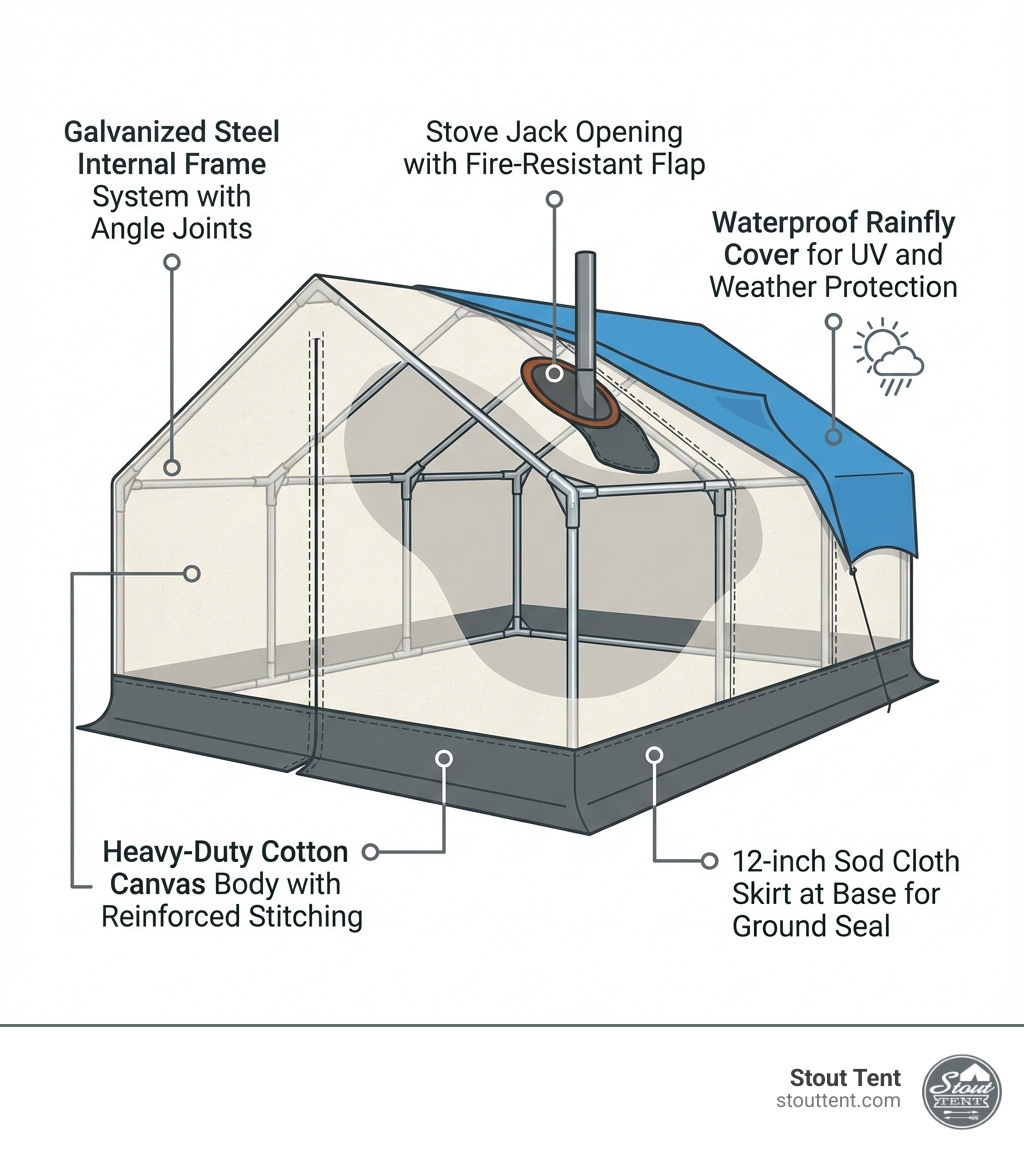
- Structure: Rectangular design with 5-foot vertical walls and a peaked roof, supported by a galvanized steel frame
- Material: Expert-tested 10-12 oz cotton canvas, treated for water resistance, mildew resistance, and fire retardancy
- Capacity: Sized from 12 x 16 feet, accommodating 4-12+ people with gear
- Key Features: Stove jack for heat, reinforced corners, sod cloth base seal, and optional rainfly
- Primary Use: Hunting camps, expedition base camps, and commercial outfitting operations requiring weeks or months of continuous shelter
For over a century, outfitters, guides, and serious hunters have relied on wall tents as their shelter of choice in the backcountry. Unlike shelters that sag, tear, and trap condensation, professional-grade canvas shelters deliver the durability and breathability essential for multi-week expeditions in harsh conditions. With proper care, a quality wall tent becomes a generational asset—many still in use after 15-20 years prove the superior Total Cost of Ownership compared to replacing lesser alternatives every few seasons.
The design traces back to early American settlement and military use, where canvas wall tents sheltered pioneers, soldiers, and frontiersmen. Today, that same proven architecture serves outfitters guiding elk hunts in the Rockies, safari operators in Africa, and glamping entrepreneurs creating liftd guest experiences. The vertical walls provide true standing room and accommodate cots, stoves, and gear—changing a tent into a livable basecamp rather than just a place to sleep.
Decades of experience working with outfitters and commercial operators across six continents has provided deep insight into deploying Outfitters wall tents in environments ranging from Alaskan winters to African savannas. This hands-on expertise with canvas construction, professional-grade materials, and field performance informs every recommendation in this guide.
Understanding what separates a professional-grade wall tent from recreational camping gear is critical for anyone making a significant investment in expedition infrastructure. The right shelter choice directly impacts guest comfort, operational continuity, and long-term asset value—especially when your business depends on reliable performance in remote, demanding conditions.
Terms related to Outfitters wall tent:
- Canvas Wall Tent
- Hunting Tent
- Wall Tent Setup
Sizing and Configuration: Planning Your Base Camp Footprint
Choosing the right size for your Outfitters wall tent is paramount to ensuring comfort and functionality for your group. It’s not just about fitting bodies; it’s about creating a livable space where people can eat, sleep, and store their gear effectively. This is especially true for outfitters who need to provide a reliable “home away from home” for their clients, often for extended periods.

Calculating Capacity
When planning for an Outfitters wall tent, a general rule of thumb for capacity is to allow for 1.8 to 2.3 square yard per person if you’re not planning to include a stove or extensive storage solutions. However, if you intend to add a stove, cots, or other large items, we recommend expanding that allowance to 2.3 to 2.8 square yard per person. This extra space is crucial for maneuverability and comfort, especially in locations like the US Southwest or Pacific Northwest, where varying weather conditions might necessitate more indoor time.
Consider the composition of your group:
- Adults vs. Children: Adults generally require more space, especially with personal gear.
- Cots vs. Floor Sleeping: Cots significantly reduce floor space but offer elevated comfort. Placing the tent on a raised platform can further elevate sleeping arrangements, providing a more comfortable and dry experience.
- Gear and Equipment Storage: Hunting expeditions often involve considerable gear, from rifles and packs to cooking supplies. Adequate storage prevents clutter and maintains a functional interior.
Influence of Location and Duration on Size Selection
The intended location and duration of your camping trip heavily influence the ideal tent size and features. For short-term arrangements, a slightly smaller tent might suffice. However, for long-term base camps—common in outfitting operations in rugged terrains like those found in Washington or the Black Rock Desert, Nevada—a larger tent with ample space for amenities like a stove and storage becomes essential.
For instance, a 4×6 meter wall tent can comfortably accommodate 6-8 people with a stove and cots, providing enough room for daily activities. For larger groups or more luxurious glamping experiences, a 5×7 meter tent offers even more versatility. The foresight in choosing a larger tent often pays dividends in client satisfaction and operational efficiency, reducing the Total Cost of Ownership by minimizing the need for multiple smaller shelters.
Deconstructing the Professional-Grade Outfitters Wall Tent
A truly professional-grade Outfitters wall tent is defined by its materials and construction. We prioritize expert-tested, professional-grade materials to ensure our tents withstand the rigors of commercial use and extreme environments, from the scorching heat of Phoenix, Arizona to the cold, wet conditions of the US Northeast.

Canvas Fabric Analysis
The heart of any durable wall tent is its canvas. We exclusively use 100% cotton army duck canvas, renowned for its superior strength, breathability, and longevity.
- Fabric Weight Significance: Canvas weight is measured in ounces per square yard (or grams per square meter). This directly correlates with durability and weather resistance. For short-term arrangements, a 10 oz fabric can be suitable. However, for long-term setups, particularly semi-permanent ones, we recommend a 12 oz fabric or heavier. Some of our tents feature canvas up to 440 gr/m², providing exceptional resilience. This heavier fabric offers better sun protection, tear resistance, and overall strength, crucial for extended use in demanding conditions.
- Professional-Grade Materials and Treatments: Our canvas undergoes rigorous treatment to improve its performance. This includes:
- Water-Repellency: While canvas is naturally water-resistant, treatments significantly improve its ability to shed water, keeping the interior dry during heavy rains.
- Mildew-Resistance: Essential for preventing fabric degradation, especially in humid environments like the US Southeast or Pacific Northwest. Mildew can compromise the integrity and lifespan of the canvas.
- Fire Retardancy: Treated in accordance with CPAI-84 guidelines, this is a critical safety feature, especially when using internal stoves.
- Breathability and Condensation Management: One of the distinct advantages of cotton canvas over synthetic materials is its breathability. Canvas allows air to circulate naturally, significantly reducing condensation buildup inside the tent. This is vital for comfort and preventing mildew, ensuring a drier and healthier interior environment.
- The Sustainability of Cotton Canvas: Beyond its functional benefits, cotton canvas is a more sustainable choice. Unlike synthetic fabrics that can take years to decompose, cotton is organic and biodegradable. Its long lifespan also means fewer tents end up in landfills, making it an environmentally responsible investment. For a broader perspective on material choices, you can review this expert overview of sustainable fabrics.
Structural Integrity and the Frame
The frame is the skeleton of your Outfitters wall tent, providing its shape and stability. For the demanding conditions our clients face, we specify galvanized steel frames.
- Galvanized Steel Frames for Superior Strength: Galvanized steel is significantly stronger and more resistant to abrasion than aluminum, making it the superior choice for wall tent frames. While aluminum is lighter, the strength and longevity of galvanized steel frames are best for semi-permanent or long-term setups, ensuring your tent stands firm against high winds and heavy snow loads.
- Internal Frame Systems: Our wall tents use robust internal frame systems. These designs simplify setup, improve structural integrity, and maximize interior space by eliminating the need for external guy ropes that can be tripping hazards.
- Reinforced Angle Kits: The strength of the frame is further improved by reinforced angle kits, which provide critical structural support at connection points, minimizing wear and tear and ensuring overall stability.
Essential Features for a Durable Outfitters Wall Tent
A truly durable Outfitters wall tent incorporates a range of features designed to withstand harsh conditions and extensive use.
- Double-Stitched Seams: All critical seams are double-stitched, providing superior strength and preventing tears, which is essential for the tent’s long-term integrity.
- Reinforced Corners and Ridge Lines: These high-stress areas are reinforced to prevent blowouts and ensure the tent maintains its shape and structural integrity even under heavy loads or strong winds.
- Heavy-Duty YKK Zippers: Cheap zippers are a common failure point. We use heavy-duty YKK zippers, known for their durability and smooth operation, ensuring reliable access and secure closures.
- Sod Cloth for Sealing the Base: A 12-inch sod cloth, typically made from woven poly, extends from the bottom of the tent. This crucial feature helps seal the tent to the ground, preventing drafts, moisture, and insects from entering, and is especially valuable on uneven terrain.
- Eaves with Reinforced Grommets for Secure Anchoring: Wide eaves (around 4 inches) facilitate better water runoff. Coupled with heavy-duty brass grommets and robust nylon guy-ropes, these ensure the tent can be securely anchored, providing exceptional stability in inclement weather.
Maximizing Functionality with Essential Accessories
An Outfitters wall tent is more than just a canvas shell; its full potential is open uped through thoughtfully designed accessories that improve comfort, safety, and longevity.
The Critical Role of the Rainfly
While our canvas is treated for water repellency, a rainfly is an invaluable addition that significantly extends the life and functionality of your wall tent.
- UV Protection: The sun’s UV rays are a primary cause of canvas degradation. A rainfly shields the tent roof, protecting it from damaging UV exposure and preserving the integrity of the canvas.
- Added Moisture Barrier: It provides an additional layer of protection against heavy rain and snow, ensuring the interior remains dry even in the most persistent downpours.
- Spark Resistance from Stoves: If you’re using a wood stove, a rainfly acts as a crucial barrier against errant sparks, preventing burns and holes in your tent roof.
- Insulation and Heat Retention: A rainfly creates an air gap above the tent, which acts as an insulating layer, helping to retain heat inside the tent during colder months and reflect heat during warmer periods.
- Keeps Roof Unsoiled: It keeps the main tent roof cleaner from dirt, tree sap, and bird droppings, reducing the need for intensive cleaning.
To explore our selection of durable canvas tents and their compatible accessories, we invite you to browse our offerings.
Integrating a Stove in Your Outfitters Wall Tent
A wood stove transforms an Outfitters wall tent into a cozy, functional base camp, even in freezing temperatures. However, safety is paramount.
- Stove Jack Design and Placement: Our wall tents come with a pre-stitched stove vent (stove jack) in the roof. While some designs place stove jacks on the side, a well-designed roof jack with a flap and tie, like ours, offers efficient venting and minimizes wear and tear compared to side exits, which can sometimes interfere with tent walls. The stove jack typically accommodates a 6-inch diameter stove pipe.
- Safety Best Practices and CPAI-84 Fire Retardancy Standards: Always choose a tent treated with fire retardant in accordance with CPAI-84 guidelines. More detailed information on the CPAI-84 safety framework is available from the Industrial Fabrics Association International at CPAI-84 Fire Retardant Standards. This standard ensures the fabric will resist ignition and self-extinguish, providing a critical safety measure. We also recommend using a fireproof mat underneath and around your stove to catch any embers or ash.
- Ensuring Proper Ventilation: When using a stove, adequate ventilation is crucial to prevent carbon monoxide buildup. Keep a window or door slightly ajar, or use dedicated vents, to ensure a constant supply of fresh air. Never seal your tent completely when a stove is in operation.
Enhancing Comfort and Livability
Beyond the basics, several accessories can lift the comfort and livability of your Outfitters wall tent.
- Screen Doors and Windows for Ventilation: Integrated screen doors and windows are essential for cross-breeze ventilation, especially in warmer climates. They allow airflow while keeping insects out, enhancing comfort significantly. Our tents often feature mesh screens on windows and doors for optimal air circulation.
- Footprints and Floor Liners for Insulation: A durable footprint or heavy-duty PVC floor liner provides an additional barrier between the tent floor and the cold, damp ground. This adds insulation, keeps moisture out, and helps prevent bugs from entering, making the interior more comfortable year-round. Some tents feature a “bathtub” style floor that rises 6 inches up the walls, offering exceptional waterproof protection.
- Internal Storage Solutions Like Organizers and Racks: Keeping a wall tent tidy and organized is key to maximizing its usable space. Internal storage solutions, such as hanging organizers, gun racks, and storage hammocks, help keep gear off the floor, making the tent feel more spacious and functional.
- Porch and Awning Additions for Expanded Living Space: A porch or awning extends your sheltered area, providing a space to remove muddy boots, store firewood, or simply relax out of the sun or rain. These additions can be seamlessly integrated with your tent fly, further enhancing your camp’s functionality.
Key Differentiators of a Professional-Grade Outfitters Wall Tent
For serious outdoor living and commercial operations, the Outfitters wall tent offers a set of defining features that establish it as the premier shelter solution. These characteristics are fundamental to its performance, affecting everything from durability and livability to long-term operational value.
Vertical Walls and Superior Livable Space
The most striking feature is the architecture. Outfitters wall tents feature true vertical walls, typically 1.5 yards high, culminating in a high peak. This design maximizes interior volume, providing exceptional headroom and the ability to stand upright throughout the entire tent. This is a game-changer for comfort, allowing for the use of cots, tables, and even a full-sized stove, transforming the tent into a truly livable base camp rather than a temporary shelter with limited standing room.
True Four-Season Capability
Professional-grade wall tents are engineered to withstand extreme conditions across all four seasons. From the heavy snows of Washington to the intense sun of the Black Rock Desert, Nevada, the robust canvas and sturdy galvanized steel frames provide reliable shelter. They are designed to manage snow loads (though brushing off heavy snow is always recommended) and shed rain efficiently, delivering consistent performance in demanding weather.
Long-Term Investment Value and TCO
While the initial investment in an Outfitters wall tent is significant, its Total Cost of Ownership (TCO) is significantly lower over time. These tents are built to last for decades, with many still in use after 15 to 20 years. This durability means reduced replacement costs, making them a wise long-term asset for outfitters and anyone requiring a reliable, semi-permanent shelter.
Material Superiority of Expert-Tested Canvas
The superiority of expert-tested canvas as a material cannot be overstated. This professional-grade material offers:
- Breathability: Minimizes condensation, creating a drier, more comfortable interior.
- Durability: Resists tears and punctures, ensuring longevity in rugged use.
- Insulation: Provides better thermal regulation, staying cooler in the sun and warmer in the cold.
- Quietness: The heavy fabric does not flap as noisily in the wind, contributing to a more peaceful environment.
These factors collectively demonstrate why Outfitters wall tents remain the gold standard for those who demand performance, durability, and comfort in the backcountry.
Frequently Asked Questions about Outfitters Wall Tents
How do you maintain a canvas wall tent for maximum longevity?
Proper maintenance is key to ensuring your Outfitters wall tent provides generations of service.
- Proper Cleaning Techniques: Regularly brush off dirt and debris. For tougher spots, use a soft brush and mild soap (specifically designed for canvas) with water. Avoid harsh detergents or high-pressure washers, which can strip natural oils and treatments.
- The Importance of Ensuring Complete Dryness Before Storage: This is perhaps the most critical step. Never store a canvas tent when it’s damp, as this will inevitably lead to mildew and rot. After each trip, ensure the tent is thoroughly air-dried, ideally in the sun, before packing it away in a breathable storage bag.
- Methods for Re-Treating Canvas: Over time, the water-repellent and fire-retardant treatments on your canvas may diminish. You can reapply specific canvas treatments to restore these properties, significantly extending the tent’s lifespan.
- How to Patch Minor Tears and Abrasions: Small holes or tears are common with heavy use. Canvas patch kits, available from reputable suppliers, allow for easy and quick repairs, preventing minor damage from becoming major issues. It’s always more affordable to sew a patch onto a tear than it is to replace your tent.
What are the key differences between various canvas treatments?
Canvas treatments are applied to improve the fabric’s natural properties and protect it from the elements.
- Water-Repellent vs. Waterproof Coatings: Water-repellent treatments cause water to bead up and roll off the surface, while still allowing the fabric to breathe. Waterproof coatings, often involving a membrane or heavier application, create a complete barrier to water but can reduce breathability. For canvas, water-repellency is generally preferred to maintain its breathable quality.
- The Function of Fire-Retardant Treatments: These treatments chemically alter the canvas fibers to resist ignition and prevent flames from spreading. As mentioned, our tents meet CPAI-84 fire retardancy standards, a crucial safety feature for tents used with stoves.
- How Mildew Resistance Works to Protect the Fabric: Mildew-resistant treatments inhibit the growth of fungi and bacteria that cause mildew. This is particularly important in damp or humid climates, helping to preserve the canvas’s strength and appearance.
What are common mistakes to avoid when using a wall tent?
Avoiding these common pitfalls will safeguard your investment and ensure a safer, more enjoyable experience.
- The Risks of Storing While Damp: As highlighted, this is a recipe for mildew, rot, and irreparable damage to your canvas. Always ensure your tent is bone dry before storage.
- Dangers of Inadequate Anchoring in High Winds: An Outfitters wall tent is robust, but it must be properly anchored. High winds can lift and damage an inadequately secured tent. Use all guy lines and heavy-duty stakes, especially in exposed areas like the Black Rock Desert, Nevada.
- The Necessity of Snow Removal to Prevent Frame Damage: While our galvanized steel frames are strong, heavy, prolonged snow accumulation can put immense stress on the structure. Regularly brush snow off the tent roof to prevent potential frame collapse.
- Improper Stove Use and Ventilation: Never operate a stove without proper ventilation. Carbon monoxide poisoning is a serious risk. Always ensure a fresh air source and follow all stove manufacturer safety guidelines. For further safety education, consult a trusted authority on backcountry heating and ventilation best practices from your local outdoor safety organization or land management agency.
Conclusion: Investing in a Shelter Built for Generations
The Outfitters wall tent is more than just a temporary shelter; it’s a strategic investment for anyone serious about extended stays in the backcountry. From the seasoned hunter seeking a comfortable base camp in Washington, to the commercial outfitter running operations in the US Southwest, the durability, functionality, and inherent advantages of a professional-grade wall tent are best. Our commitment to expert-tested, professional-grade materials and construction ensures that your tent delivers exceptional performance, superior comfort, and a low Total Cost of Ownership for years to come. When your business or passion demands a shelter that can withstand the test of time and elements, the wall tent remains the definitive choice.
Ready to explore professional-grade canvas shelters for your next venture?
- Browse our collection of durable canvas tents
- Discover our premium glamping solutions
- Contact our team for expert advice