
Why Professional-Grade Materials Define the Best 4-Season Tents
Best 4-season tents are defined not by seasonal ratings alone, but by structural integrity, material resilience, and proven performance across extreme conditions. For enterprise operators—whether running glamping sites or outfitter camps—the shelter you choose directly impacts operational continuity and Total Cost of Ownership (TCO).
Quick Answer: What Makes a Top 4-Season Tent?
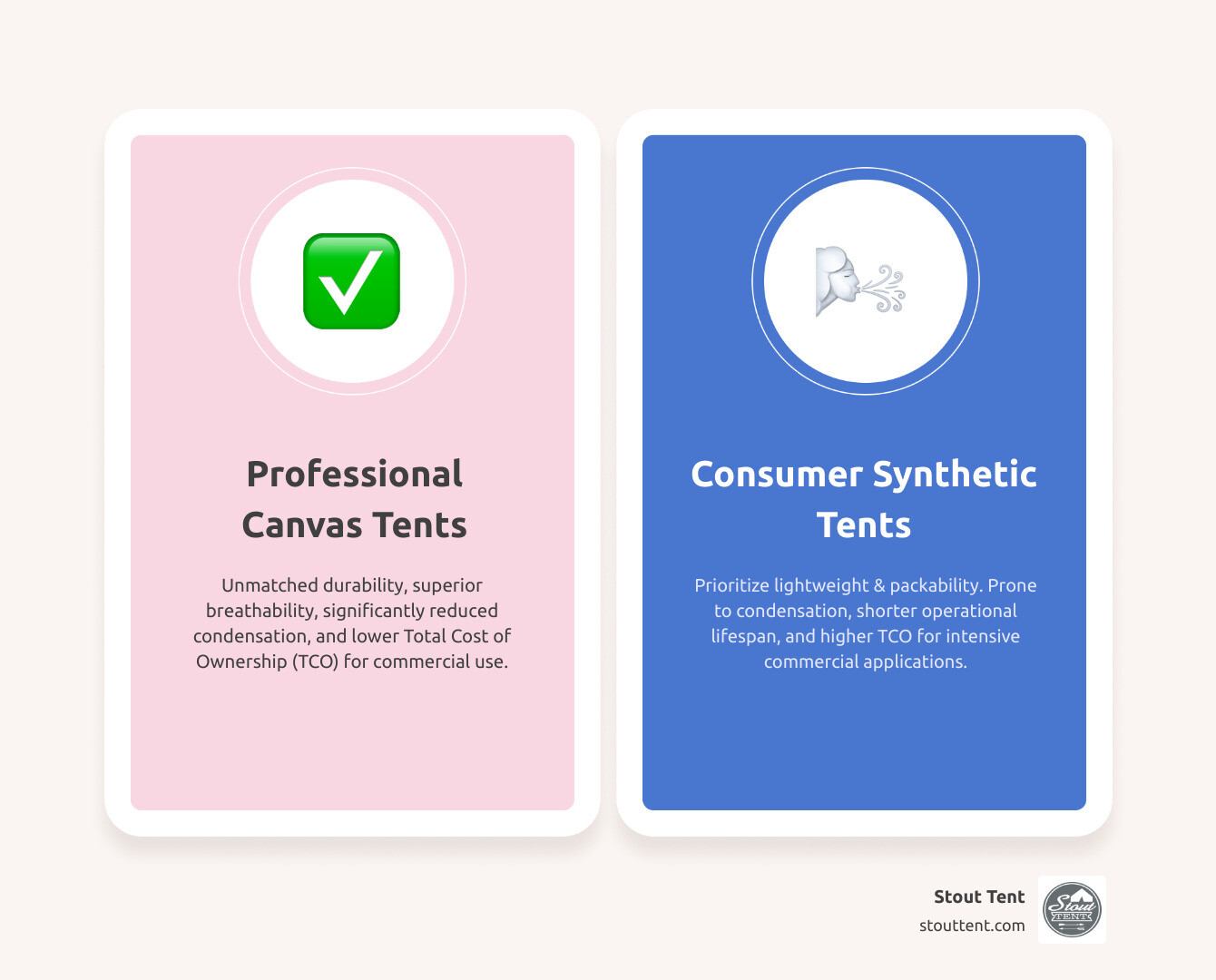
Professional-grade canvas tents are the superior choice for all-season use. They prioritize durability, breathability, and operational longevity over the weight savings of consumer-grade synthetic tents.
Key Differentiators: Professional-grade materials (heavy-duty cotton duck canvas), robust frame systems, stove jack integration, reinforced guy points, and superior condensation management.
The research is clear: while consumer-grade synthetic tents prioritize weight savings and packability, professional canvas shelters prioritize durability, breathability, and operational longevity. According to extensive field testing across multiple continents, canvas tents consistently outperform synthetic alternatives in condensation management, repairability, and resistance to material degradation—factors that directly reduce replacement costs for commercial operators.
Most articles on the best 4-season tents focus on ultralight backpacking shelters made from nylon or polyester. That’s not what this roundup covers. This analysis examines investment-grade canvas shelters built for high-value use cases: glamping operations, hunting outfitters, and basecamp deployments where structural failure isn’t an option.
Extensive, hands-on expertise in canvas materials, frame engineering, and the operational demands of commercial use defines this roundup. Drawing from expert-tested deployments across six continents—from snow-covered forests to desert environments—this analysis identifies professional-grade shelters that deliver measurable, long-term value and a lower Total Cost of Ownership.
Basic best 4 season tents terms:
- 4 person tent waterproof
- extreme cold weather tents
What Defines a Professional-Grade 4-Season Tent?
When evaluating a professional-grade 4-season tent, the discussion extends beyond basic cold-weather capability. These are investment-grade shelters engineered for year-round operational readiness, capable of withstanding the diverse and often extreme conditions found in locations like Phoenix, the Black Rock Desert, throughout California, Washington, and across the US Southwest, Southeast, Northeast, and Pacific Northwest. These tents are designed with Total Cost of Ownership (TCO) in mind, ensuring they provide long-term asset value for enterprise clients. Unparalleled expertise, gained from outfitting large-scale commercial operations nationwide, ensures these tents are durable and reliable investments.
A truly exceptional 4-season tent features extra structural reinforcements, robust seams, corners, and zippers for improved strength, insulation, and waterproofing. These shelters are built with professional-grade materials, such as heavy-duty canvas, and supported by formidable frameworks. They integrate bug meshing on doors and windows, thoughtful roof vents, and adjustable guy lines, all contributing to superior performance. For more information on what makes these shelters ideal for various settings, explore glamping tents.
Structural Integrity and Material Resilience
The foundation of any professional-grade 4-season tent lies in its structural integrity and material resilience. This begins with the frame geometry, which is carefully designed to distribute stress and withstand external forces. Frame systems are built for strength, corrosion resistance, and stability in challenging environments.
The canvas itself is a critical component. Heavy-duty cotton duck canvas is specified, with a substantial weight measured in grams per square meter (g/m²), ensuring superior rip-stop and tear strength. This canvas undergoes specialized UV and mold resistance treatments, crucial for maintaining material integrity over extended periods of exposure to sun, rain, and snow across diverse climates. These treatments are essential for minimizing degradation and extending the operational lifespan of the tent, directly impacting the TCO. When properly guyed out, these robust structures, combined with their resilient materials, are engineered to handle significant wind loads, standing strong against powerful gusts, as demonstrated in various tests and real-world deployments.
Key Features of the Best 4-Season Tents
Beyond robust construction, specific features elevate a 4-season tent to professional-grade status, catering to the demanding needs of commercial operations and high-value users.
- Stove Jack Integration: Essential for cold-weather operations, integrated stove jacks allow for safe and efficient heating with a wood-burning stove, providing warmth and comfort even in freezing temperatures.
- Sod Flaps for Insulation: These extended fabric flaps at the base of the tent are crucial for sealing out drafts, preventing cold air and snow from blowing inside, and trapping warmth within the shelter.
- Robust Zippers and Hardware: High-quality, reinforced zippers and hardware are non-negotiable. They endure constant use and harsh conditions without failing, maintaining the tent’s integrity and security.
- Ample Ventilation Points: Even in cold weather, proper ventilation is vital to manage internal conditions. Strategically placed roof vents and adjustable openings facilitate airflow, minimizing condensation buildup while retaining heat.
- Steep Roof Pitch for Shedding Snow and Rain: The design of the roof is critical for shedding precipitation. A steep roof pitch allows snow and slush to roll right off, preventing accumulation that could stress the frame or cause collapse.
- Reinforced Guy Points: Numerous, reinforced guy points are essential for securing the tent in high winds and heavy snow. Paired with strong, adjustable guy lines, they ensure the tent remains firmly anchored, providing unwavering stability.
The Superiority of Canvas: Why Material Dictates All-Season Performance
In the field of professional-grade 4-season tents, the choice of material is paramount, and cotton duck canvas stands as the definitive option. Its natural properties offer unparalleled advantages over synthetic alternatives, translating into long-term durability and significant investment value for operators. The commitment to high-quality canvas tents is rooted in extensive field experience, providing shelters that consistently exceed expectations.
Breathability and Condensation Management in Canvas
One of the most significant advantages of cotton duck canvas is its inherent breathability and ability to manage condensation, a common challenge in 4-season tents. Cotton possesses hygroscopic properties, meaning its fibers naturally absorb and release moisture. This natural moisture regulation actively works to eliminate interior condensation by preventing water vapor from condensing on the tent walls. Instead, the canvas absorbs excess humidity and slowly releases it to the outside, maintaining optimal air quality and a comfortable, dry interior. This is a crucial differentiator from sealed synthetic fabrics, which trap moisture inside, leading to a damp, clammy environment that can be unpleasant and even dangerous in cold conditions. The natural insulating qualities of canvas allow it to hold in maximum heat or keep heat out while remaining breathable and comfortable. For additional technical background on cotton’s performance characteristics, operators can consult independent fiber research, such as the overview of cotton fiber properties provided by Cotton Incorporated.
Durability and Total Cost of Ownership (TCO)
The durability of canvas directly contributes to a lower Total Cost of Ownership (TCO) for commercial operators. Unlike synthetic materials that can degrade rapidly under UV exposure and repeated folding, quality canvas offers remarkable longevity. Its robust fibers are less prone to tearing and abrasion, making canvas tents a far more resilient choice for continuous, year-round deployment in demanding environments.
Furthermore, canvas is highly repairable. Minor tears or punctures can often be mended effectively, extending the tent’s lifespan significantly. This repairability, coupled with its inherent resistance to material degradation when properly treated and maintained, means reduced replacement cycles compared to consumer-grade synthetic tents. Expert-tested performance data consistently shows that while the initial investment in a professional-grade canvas tent may be higher, the extended operational lifespan and reduced need for frequent replacements result in substantial long-term savings and superior asset value. This makes canvas tents a strategic investment for any enterprise prioritizing reliability and cost-efficiency.
Expert-Tested Roundup of the Best 4-Season Tents

From extensive operational experience in diverse climates, from the scorching heat of the Black Rock Desert to the snowy peaks of Washington and the varied terrains of the US Pacific Northwest, this expert-tested roundup presents professional-grade 4-season tents. This selection details shelter solutions for high-value use cases, from commercial outfitting to basecamps, where reliability and performance are paramount.
The Premier Large-Capacity Bell Tent Shelter
For large-scale operations such as large group basecamps, premier large-capacity bell tents are the definitive choice among the best 4-season tents. These impressive structures offer floor space from 5 to 7 meters, providing ample room for guests, equipment, or communal gatherings. Their high center ceilings create an open, airy atmosphere, while multiple entrances ensure convenient access and egress, crucial for high-traffic use. Engineered with solid brass frames and heavy-duty canvas, these tents are designed for rapid deployment and unwavering stability, delivering a luxurious yet robust shelter solution.
The Robust and Adaptable Wall Tent Shelter
When it comes to establishing long-term hunting or outfitter camps in rugged terrain, robust and adaptable wall tents stand as the benchmark for reliability. A key differentiator for the best 4-season tents in this category is their vertical walls, which maximize usable interior space, allowing for efficient setup of cots, tables, and storage. These shelters are built around heavy-duty galvanized steel frame systems, providing exceptional structural integrity against heavy snow loads and high winds, a common challenge in the US Northeast and Pacific Northwest winters. Crucially, they are fully compatible with wood stoves, offering essential warmth and comfort for extended stays. These wall tents are expert-tested for extreme conditions, ensuring professional-grade materials and construction. Find more about wall tent selection.
The Classic, Versatile Bell Tent
The classic bell tent remains the quintessential all-season shelter, perfectly balancing comfort, aesthetics, and robust performance. Ideal for smaller groups or luxury glamping setups across operating regions, from the sunny US Southwest to the crisp seasons of the US Northeast, these tents are designed for versatility. Available in practical sizes from 4 to 6 meters, they offer generous space without overwhelming a site. The straightforward design allows for efficient setup, a valuable asset for busy operators. With solid brass frames and heavy-duty canvas, these bell tents provide an excellent balance of spaciousness, stability, and aesthetic appeal, making them a top choice for creating memorable outdoor experiences.
Note: For maximum longevity and performance, especially in high-moisture or snow-prone environments like Washington or the US Pacific Northwest, a canvas tent on a platform is highly recommended. This lifted setup improves airflow, prevents ground moisture wicking, and provides additional protection against snow accumulation around the tent base.
Frequently Asked Questions about Professional 4-Season Tents
How do you maintain a canvas tent for year-round use?
Maintaining a canvas tent for year-round use, particularly in varying climates like those of California or the US Northeast, is straightforward but crucial for maximizing its operational lifespan and TCO. Regular inspection of the canvas for any signs of wear, mildew, or damage is key. Proper cleaning procedures involve brushing off dirt and debris, and spot cleaning with mild soap and water. It’s important to allow the canvas to dry completely before packing away to prevent mildew. Periodically, re-treating the canvas with waterproofing and UV/mold resistance treatments will refresh its protective properties. For winter, managing snow load by gently sweeping off accumulations is vital to prevent undue stress on the frame. When not in use, storing the tent in a dry, well-ventilated area, away from direct sunlight and pests, ensures its readiness for the next deployment.
Are canvas tents suitable for heavy snow and high winds?
Absolutely. Professional-grade canvas tents are specifically engineered for heavy snow and high winds, making them ideal for challenging conditions in locations like Washington and the mountainous regions of the US Southwest. The importance of frame strength cannot be overstated; robust frame systems provide the necessary rigidity. Proper guying techniques, utilizing all reinforced guy points and adjustable guy lines, are critical. When correctly tensioned, these guylines are what keep the tent securely anchored in strong winds, preventing uplift or structural compromise. The wind-shedding geometry of these tents and their robust structure allow them to perform exceptionally well. For snow load management, the steep roof pitch of these tents is designed to shed snow and rain effectively, minimizing accumulation and stress. Expert-tested performance across various demanding environments confirms their suitability.
What is the operational lifespan of a professional-grade canvas tent?
The operational lifespan of a professional-grade canvas tent is significantly longer than that of most consumer-grade synthetic shelters, directly contributing to a favorable TCO. Several factors influence this longevity: the superior material quality of heavy-duty cotton duck canvas, a diligent maintenance schedule including proper cleaning and re-treatment, and appropriate storage. Canvas tents are built for continuous use, resisting the degradation that often plagues lighter, less durable materials. While consumer-grade tents might require replacement after a few seasons, a well-maintained canvas tent can provide reliable service for many years, sometimes even decades. This extended lifespan, coupled with the tent’s repairability, makes it a sound investment for commercial operators, reducing long-term capital expenditure and ensuring consistent operational readiness.
Conclusion
In the demanding world of outdoor operations, from glamping operations in California to hunting expeditions in the US Northeast, the selection of the best 4-season tents is a decision that impacts both immediate success and long-term financial viability. Extensive experience has unequivocally shown that canvas is the definitive material for true all-season performance. Its inherent durability, superior breathability, and exceptional condensation management capabilities ensure comfort, reliability, and a significantly lower Total Cost of Ownership.
At Stout Tent, unparalleled expertise gained from outfitting large-scale commercial operations nationwide delivers professional-grade canvas shelters that are not just tents, but durable and reliable investments. Structural integrity, professional-grade materials, and expert-tested performance are key investment criteria for enterprise clients.
For a durable, reliable, and truly all-season shelter solution, explore the collection of professional-grade canvas tents. The team leverages nationwide outfitting experience to deliver products that represent a superior long-term investment. Contact us to discuss your specific operational needs.
Shop All Tents | Explore Canvas Bell Tents