



Building a Semi-Permanent Canvas Basecamp: Zoning & Codes
Setting up a multi-month canvas basecamp, glamping retreat, or off-grid homestead structure requires a completely different playbook than pitching a weekend tent. When you leave a heavy-duty canvas shelter deployed for months at a time, you have to account for wind loads, timber rot, and local municipal regulations.
Here is a comprehensive guide to engineering a semi-permanent off-grid canvas basecamp that stands the test of time, weather, and local zoning boards.
1. Navigating County Zoning and Municipal Codes
Before driving a single anchor or building a wooden platform, you need to understand how local municipalities classify canvas structures. Zoning laws vary wildly by county, but a few strategic frameworks help you navigate the grey areas:
-
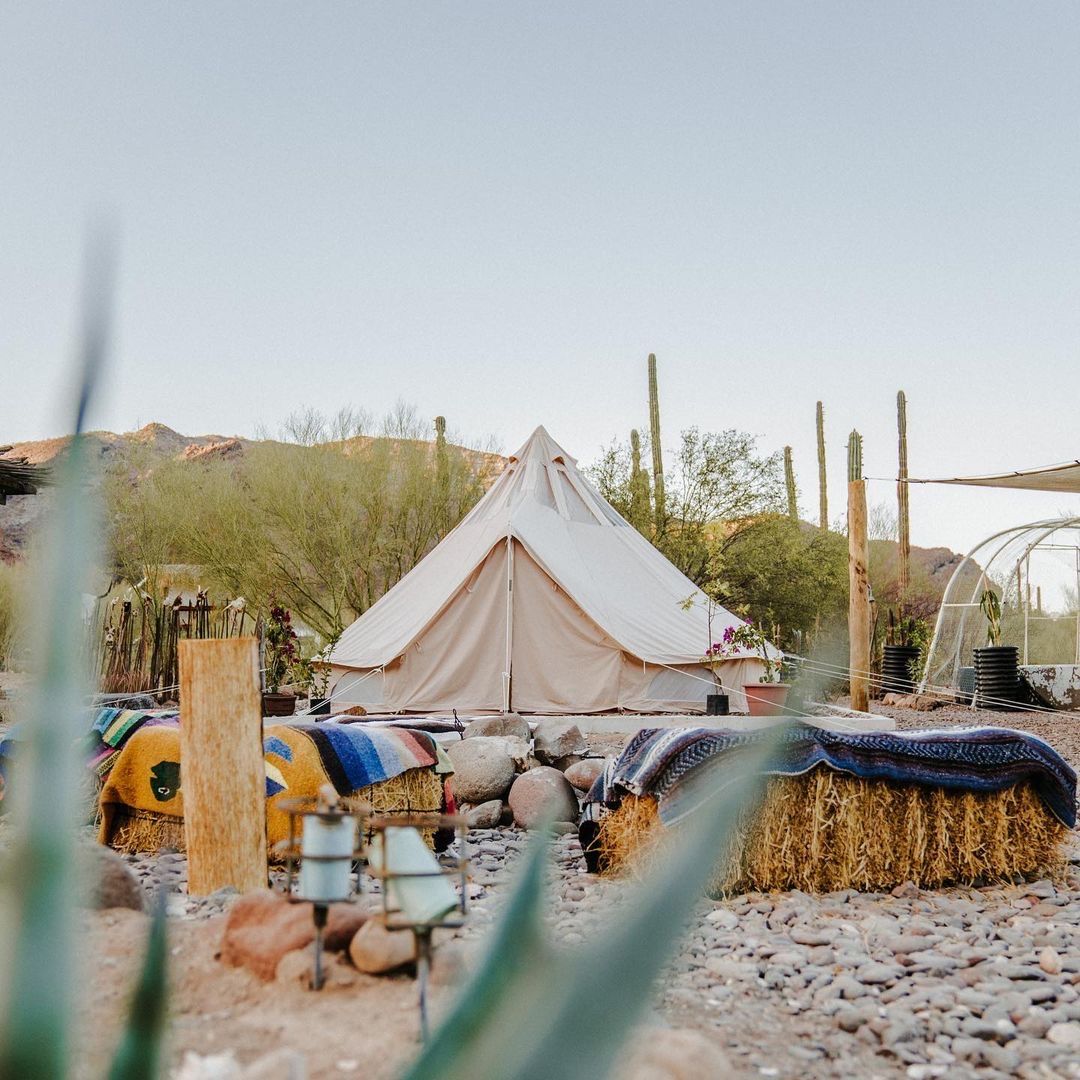
Temporary vs. Permanent Classification: Many counties define permanent structures by whether they sit on a permanent concrete foundation and connect to municipal utilities. Because canvas bell tents and wall tents utilize zip-in PVC groundsheets or elevated wooden decks without permanent slab foundations, they often fall under temporary, seasonal, or agricultural storage exemptions in rural areas.
-
RV and Glamping Loopholes: In many regions experiencing a surge in eco-tourism and agritourism, local ordinances have added specific allowances for low-impact glamping setups, temporary farm stays, or recreational structures. Always check your local planning department for accessory structure guidelines or agricultural exemptions.
-
Setbacks and Easements: Even on private land, you must respect property line setbacks, utility easements, and environmental protection zones (such as wetlands or floodplains), especially when erecting semi-permanent platforms.

2. Deck Building and Wind Load Anchoring
When a canvas tent is left standing through seasonal storms, high winds exert massive lateral force on the canvas walls and center poles. Securing your shelter to a raised wooden platform requires heavy-duty hardware that preserves wind-load ratings without tearing the frame.
-
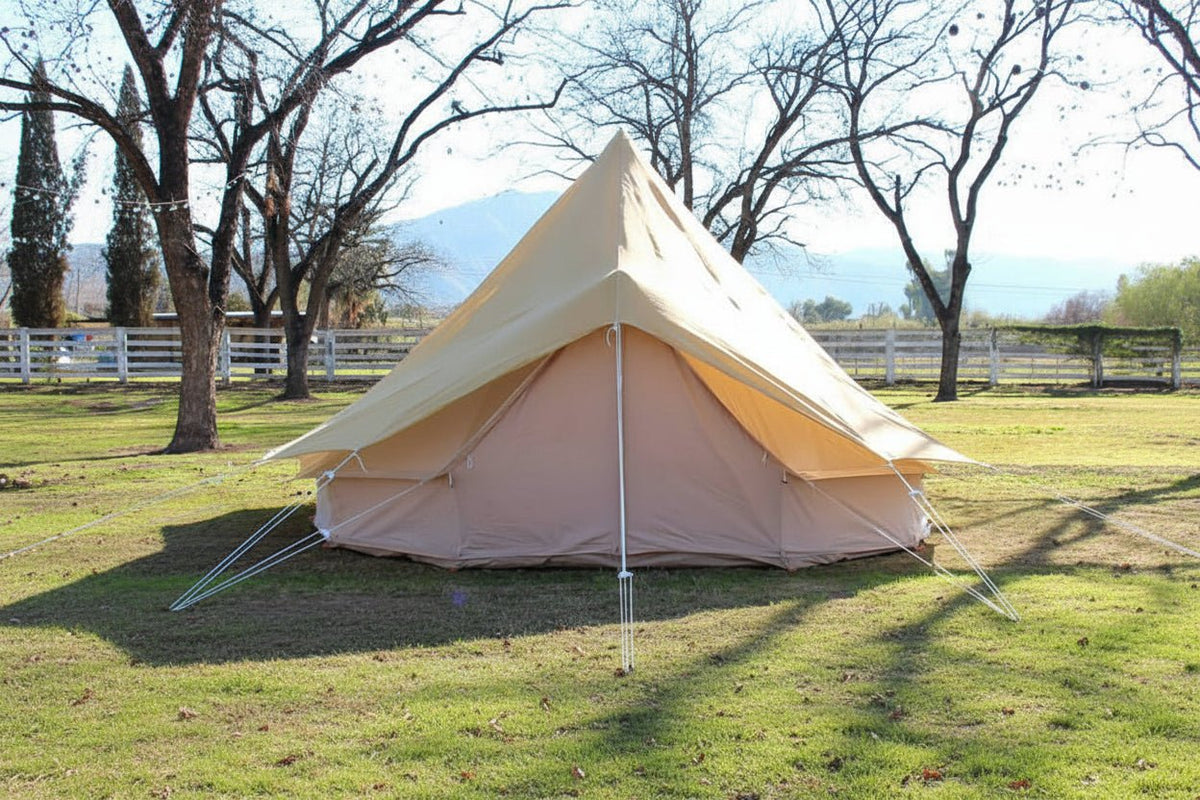
Platform Framing: Build your deck using pressure-treated lumber (such as 2x6 floor joists and 3/4-inch exterior-grade plywood). Ensure your platform dimensions match your specific tent footprint—such as our spacious Pro Series Bell Tents or rugged Wall Tents.
-
Through-Bolting Guy Lines: Do not rely solely on standard wood screws to hold guy lines to a wooden deck. Use heavy-duty eye bolts or D-rings bolted directly through the rim joists or framing members.
-
Leveraging Specialized Hardware: Pair your deck tie-downs with robust hardware from heavy-duty deck-building frameworks. For extreme wind environments, secure your structural uprights and frame corners using galvanized threaded rods tied directly into your sub-framing. To keep your base camp organized and expand your usable footprint, anchor secondary structures using gear from our Tent Add Ons collection.
3. Sub-Floor Ventilation to Prevent Timber Rot
One of the most common pitfalls of long-term deck setups is moisture accumulation. When heavy PVC groundsheets or sub-floors trap humidity against raw plywood, timber rot and mold can destroy your deck within a single season.
-
Create an Air Gap: Never lay a tent groundsheet directly flat against solid, unventilated plywood. Install furring strips or a breathable drainage mat beneath your tent floor to allow continuous airflow between the deck surface and the tent base.
-
Elevated Deck Drainage: Ensure your wooden platform features small gaps (roughly one-quarter inch) between deck boards to prevent rainwater pooling.
-
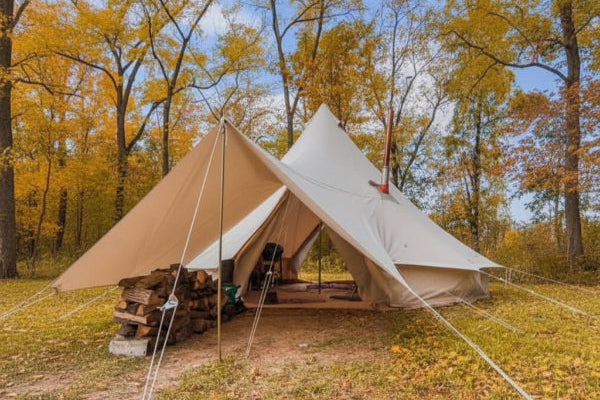
Vapor Barriers: If you are operating a no-groundsheet setup for a wood-burning stove—a popular configuration in our The Overland Sunforger Tent—ensure the surrounding earth or sub-base has proper drainage grading to direct ground runoff away from your anchor points.
Conclusion: Building for the Long Haul
Creating a reliable, semi-permanent off-grid basecamp transforms your canvas tent into a comfortable, weather-resistant home away from home. By carefully aligning with local zoning guidelines, anchoring securely into engineered wooden platforms, and maintaining rigorous sub-floor airflow, your heavy-duty canvas shelter will withstand months of continuous outdoor living.
Explore our collection of durable Bell Tents and Wall Tents to start planning your off-grid setup today.
Read more

Discover why upgrading from a synthetic nylon tent to a heavy-duty canvas shelter delivers superior long-term ROI. Explore durability, severe weather performance, and wood-burning stove compatibili...

Master sub-zero power management inside your canvas tent. Learn how to stop extreme cold from draining portable power stations like EcoFlow, safely route power pass-throughs, and run CPAPs, Starlin...