

Why a Tent Wood Burner Transforms Your Canvas Shelter Experience
A tent wood burner is a portable wood-burning stove designed to safely heat and provide cooking capabilities inside canvas tents. These stoves feature a firebox, flue pipe system, and specialized venting through a stove jack, offering radiant warmth, fuel efficiency, and extended burn times compared to open fires.
Quick Comparison: Key Tent Wood Burner Types
| Type | Best For | Key Features | Weight Range |
|---|---|---|---|
| Portable Stoves | Entry-level glamping, small tents | Compact, folding design, nesting pipes | 12-15 kg |
| Glamping Stoves | Professional operations, long-term use | Handmade construction, exceptional heat output, airtight gaskets | 20-30 kg |
| Gravity-Fed Pellet Stoves | Extended burn times, minimal maintenance | Hopper-fed, 60,000 BTU output, no electricity needed | 30+ kg |
| Heavy-Duty Models | Base camps, cold climates | 1/8″ steel construction, large firebox (3+ cubic feet) | 30+ kg |
When operating a glamping business or outfitting a professional basecamp, selecting the right tent wood burner determines whether your guests experience genuine comfort or merely adequate shelter. The difference between stove models extends far beyond aesthetics—material thickness, firebox volume, gasket quality, and construction methods directly impact heat output, burn duration, and equipment longevity. Professional-grade tent stoves built from cold-rolled steel with airtight door gaskets deliver consistent performance across diverse climates, while less robust models sacrifice durability for portability. Understanding these distinctions ensures reliable, season-after-season operation.
These expert-tested recommendations for selecting durable heating solutions are informed by hands-on sourcing, testing, and deployment of tent wood burner systems across diverse global environments. This guide examines the critical factors that separate professional-grade equipment from consumer models.
Key Factors for Selecting Your Tent Wood Burner
Choosing the optimal tent wood burner for your needs involves careful consideration of several expert-tested criteria. Experience in outfitting canvas shelters, from the deserts of Nevada to the forests of the Pacific Northwest, has shown that matching the stove to your tent size and intended use is paramount for both comfort and efficiency. Wood burning camp stoves are available in different sizes designed for your specific tent dimensions, ensuring adequate warmth and safe operation.
Material and Construction: The Foundation of Durability
The longevity and performance of your tent wood burner begin with its material and construction. Professional-grade materials and robust fabrication are prioritized because reliability in the field is non-negotiable. For a comprehensive overview, a detailed Ultimate Tent Stove Guide is available.
Stoves are often classified as “heavy” if they are constructed from 1/16-inch or 1/8-inch steel, indicating superior durability compared to less durable stoves made of thin sheet metal. For instance, some premium models feature high-quality stainless steel, known for its corrosion resistance and strength, while others use durable cold-rolled steel, often with a material thickness of 2mm. This robust construction is essential for resisting warping and maintaining structural integrity under repeated heating and cooling cycles.
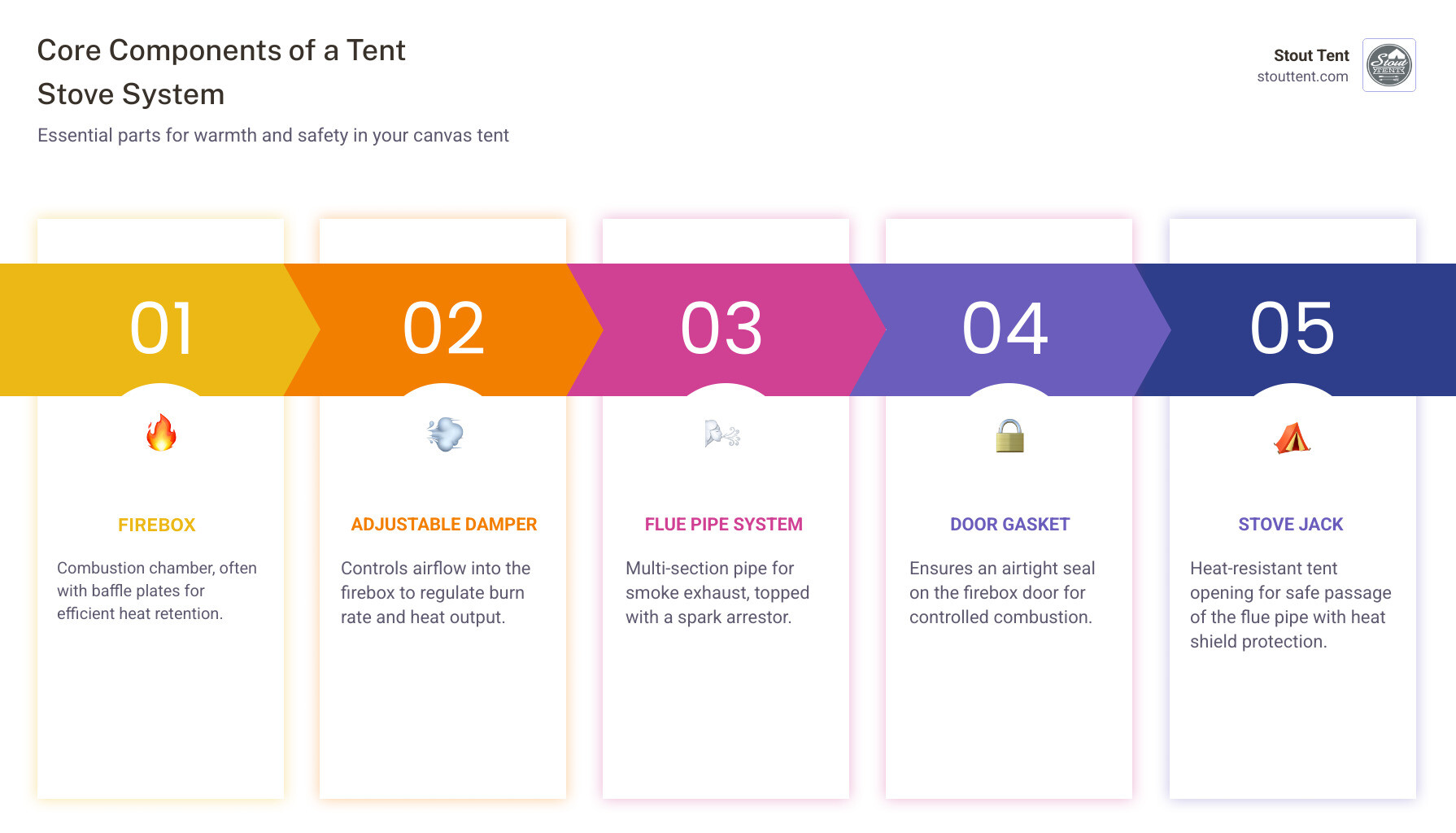
A critical design element for any efficient tent wood burner is the presence of gasket seals on the door. A wood camp stove must have a door gasket to be truly airtight. This airtight seal is vital because it allows precise control over the burn rate, optimizing fuel consumption and heat output. Without a gasket, a stove cannot be airtight, leading to inefficient burning and quicker fuel consumption. Long-term performance assessments confirm that stoves with quality gaskets outperform those without, ensuring consistent warmth and minimal tending.
Firebox Size, Burn Time, and Heat Output
The heart of any tent wood burner is its firebox, and its size directly influences burn time and heat output. For a deeper dive into how different components interact, refer to the Wood Stove Guide.
The stove with the largest firebox will always burn the longest, especially if that stove has an airtight gasket on the door. This is because a larger firebox can accommodate more fuel, and an airtight seal allows for better control of the combustion process, slowing down the burn. Caution is advised against relying solely on manufacturer-stated burn times, as these are often optimistic. The only reliable way to compare burn times between different models is to compare the size of the stove’s firebox in cubic feet. For example, some professional-grade stoves with the largest fireboxes available, combined with door gaskets, are known to offer superior burn times and heat output.
Heat radiation within the tent is also significantly impacted by the stove’s design. Baffle plates inside the firebox play a crucial role by storing and re-radiating heat, preventing it from escaping too quickly up the flue pipe. Airflow control, typically managed by a damper, further improves efficiency. Precise damper adjustments allow you to regulate the oxygen supply to the fire, dictating the intensity of the burn and the rate at which fuel is consumed. This careful balance ensures that heat is effectively transferred into your canvas tent, providing sustained warmth without excessive fuel use.
Stove Design and Core Features
The design and features of a tent wood burner are custom to different applications, from portable solutions for smaller tents to robust systems for extensive glamping operations.
For portability, many stoves are designed with folding legs and nesting pipe systems, allowing the flue sections to pack conveniently inside the firebox for transport. This compact design is ideal for entry-level glamping or smaller tents. Some models, weighing as little as 27.5 pounds (12.5 kg), offer a high degree of portability.
Cooking capabilities are a common feature, with many tent stoves designed with flat tops suitable for pots and pans. Some even come with additional grill accessories or offer pipe ovens for baking bread and pies, changing your stove into a versatile camp kitchen.
Modern tent wood burner designs often incorporate glass viewing windows, allowing you to enjoy the mesmerizing glow of the fire, much like a traditional fireplace. The Nomad View Woodburning Stove with Large Viewing Windows exemplifies this blend of functionality and ambiance.
For those seeking extended burn times with minimal effort, gravity-fed pellet systems offer an innovative solution. These stoves are powered by the natural draft of the stove pipe, requiring no electricity. Pellets are fed from a hopper into the firebox, providing a consistent, controlled burn. Six to seven feet of vertical pipe is recommended for efficient pellet burning, and temperatures can be adjusted by up to 250 degrees Fahrenheit using a damper dial. This type of tent wood burner is exceptionally efficient, offering significant BTU output for prolonged warmth.
Safe Installation, Operation, and Maintenance
Ensuring the safe operation of your tent wood burner is paramount. Proper installation, diligent operation, and routine maintenance are non-negotiable for the safety of your guests and the longevity of your equipment. Strict adherence to manufacturer guidelines and an emphasis on system integrity are critical in all setups.
Installing Your Tent Wood Burner
The correct installation of your tent wood burner involves several critical steps to ensure safe venting and proper heat distribution. The detailed guide, How to Install Stove, provides step-by-step instructions.
The first step is stove jack placement. Stove jacks allow you to decide exactly where in the tent you want your stove to be. Once the location is determined, you use the stove jack as a guide to cut a hole and safely vent your stove outside the canvas tent. Tents with pre-sewn stove jacks are also available to simplify this process.
Flue pipe assembly is equally important. The long flue helps to transport smoke and fumes away from the cooking or sleeping area. For gravity-fed pellet stoves, six to seven feet of vertical pipe is recommended for efficient burning. If an elbow is necessary for your setup, a 45-degree elbow is preferred over a 90-degree one to minimize any baffling effect on the fire’s draft. Be aware that while nesting pipe systems are excellent for portability, allowing pipe sections to fit inside one another for storage, elbows are not compatible with nesting pipe.
Heat shields and fire-resistant mats are essential safety accessories. A fireproof stove mat should always be placed under your tent wood burner to protect the tent floor from embers and radiant heat. Heat shields can also be used to protect tent walls or other combustible materials. Always ensure proper clearance from tent walls and other flammable items, following manufacturer guidelines and national safety standards such as those outlined by the NFPA standards for solid fuel appliances.
Best Practices for Safe Operation
Operating your tent wood burner safely is a continuous process that begins before the first fire. Detailed advice on this is available in the resource, Tent with Stove.
Before its first use, it is recommended to cure your stove. This involves burning a small fire in it outdoors to burn off any manufacturing oils or paint fumes. The smell during this initial curing can be strong, and performing it outside prevents these odors from permeating your canvas tent.
Proper ventilation is crucial when using a tent wood burner inside any canvas tent to prevent the buildup of carbon monoxide (CO). As a safety precaution, it is strongly suggested that a carbon monoxide detector be placed inside the tent. For more information on CO safety, please consult the Carbon Monoxide Safety Information from the CPSC. With proper ventilation, installation, and monitoring, tent stoves can be safely used overnight.
Managing the fire effectively is key to both safety and efficiency. An airtight stove with a door gasket allows you to control the burn rate precisely. Always use a spark arrestor at the top of your flue pipe to prevent embers from escaping and potentially damaging your tent fabric. Finally, safe ash disposal is important; always empty ash after every few burns, ensuring the ashes are completely cool before disposal.
Maintenance and Essential Accessories
Regular maintenance of your tent wood burner ensures its longevity and safe operation. The Stove Kit provides many of the components you’ll need for this.
You should clean and maintain your stove after each use, or at least every few burns. One of the most important tasks is removing creosote, a black, sticky by-product from burning plant-based materials, which can build up in your stove’s flue pipes. Regular cleaning with a pipe brush prevents this buildup, which can become a fire hazard. Inspect gaskets and seals periodically to ensure they remain airtight, replacing them if they show signs of wear. For off-season storage, ensure your stove is thoroughly cleaned and dry to prevent rust or corrosion.
Beyond the stove itself, several functional accessories improve the utility and safety of your tent wood burner:
- Water tanks for hot water on demand: These attach to the side of the stove, utilizing radiant heat to provide hot water for washing or drinking.
- Pipe ovens for baking: Some systems include pipe ovens that fit onto the flue pipe, allowing you to bake bread, pies, or other items using the stove’s exhaust heat. The Winnerwell Woodlander Pipe Oven 3.5 is an excellent example of this versatility.
- Drying racks for gear: These clever attachments use the warmth radiating from the stove to dry wet clothes, boots, or other gear, a significant benefit in damp conditions.
- Carry bags for transport: Specially designed bags make it easier and cleaner to transport your stove and its components, protecting both the stove and your vehicle from soot and scratches.
Frequently Asked Questions about Tent Stoves
Common inquiries about the performance, fuel, and practicalities of using a tent wood burner are addressed below.
How does a tent wood burner compare to an open fire?
A tent wood burner significantly outperforms an open fire in terms of efficiency, safety, and comfort. In an open fire, much of the heat and unburnt fuel escapes directly into the open air. A tent stove, however, captures and directs this heat inward. Components like the firebox walls, flue pipes, and internal baffle plates are designed to store heat and re-radiate it into your canvas tent. By slowing the exhaust flow and forcing gases to re-burn, a tent wood burner converts more of the fuel into usable heat, making it up to 10 times more fuel-efficient than an open fire. This contained combustion system also reduces smoke inside the tent and provides a much safer, more controlled heating method compared to an exposed flame.
What kind of wood is best for a tent stove?
The type of wood you burn significantly impacts the performance and maintenance of your tent wood burner. For best results, it is recommended to burn well-seasoned hardwoods such as oak, hickory, or maple. These woods produce more heat and burn longer than softwoods, making them ideal for sustained warmth. For detailed best practices on burning wood, refer to the Best practices for burning wood from the EPA.
Softwoods like pine can be used, but they tend to burn faster and can create more smoke and embers, which might pose a risk to your tent fabric. If you must use softwood, ensure it is thoroughly seasoned by stacking and drying it out well in advance. Crucially, avoid using green or wet wood at all costs. Wet wood creates significantly more smoke, less heat, and can even extinguish your fire. It also contributes to a more rapid buildup of creosote, a black, sticky by-product of burning plant-based materials that accumulates in your flue pipes and requires regular cleaning. Using seasoned firewood, along with coals or fire bricks inside the stove, can absorb heat and radiate it over time, extending warmth long after the fire dies down.
Can you cook on a tent stove?
Absolutely! Many tent wood burner models are designed with cooking capabilities, making them a versatile addition to your camp kitchen. Most feature flat tops that serve as excellent cooking surfaces for pots and pans. You can easily regulate the temperature for cooking by adjusting the damper and airflow.
Beyond the flat top, various accessories improve the cooking potential of your tent wood burner. Grilling accessories can be added for direct cooking, while specialized pipe ovens, such as the Winnerwell Woodlander Pizza Oven Stove Large, allow you to bake items like pizzas, bread, or even pies using the heat from the flue pipe. The ability to cook on your stove adds immense convenience and comfort, changing your canvas tent into a fully functional basecamp.
Conclusion: Lift Your Outdoor Experience
Selecting the right tent wood burner is a pivotal decision that profoundly impacts your outdoor experience, whether for personal adventures or professional glamping operations. This guide has explored the critical factors: the importance of professional-grade materials and robust construction, the direct correlation between firebox size and burn duration, and the diverse features that cater to various needs.
A quality tent wood burner offers unparalleled warmth, versatile cooking capabilities, and the convenience of drying gear, all within the safe confines of a canvas tent. The commitment at Stout Tent is to provide expert-tested, professional-grade equipment that delivers exceptional durability and reliable performance, ensuring equipment stands the test of time and the rigors of the outdoors.
Explore the comprehensive collection to find the ideal tent wood burner to lift your next adventure. Explore the collection of professional-grade tent stoves. Need help specifying a safe tent wood burner setup for your tent and conditions? Contact our team for guidance.