

Why a Bell Tent Log Burner Is a Strategic Investment for Your Glamping Operation
A bell tent log burner transforms a seasonal canvas tent into a year-round revenue asset. For glamping operators evaluating stove options, understanding the key factors is crucial for a strategic investment.
When the temperature drops, a wood-burning stove becomes a valuable amenity. These expert-tested heating solutions extend the operational season by providing efficient radiant heat without relying on electricity or gas, a key advantage for off-grid sites. Beyond warmth, a stove reduces interior condensation, creates a dry environment, and serves as a cooking platform—upgrading a basic shelter into a premium experience.
Key selection criteria include:
- Heat Output: Match stove size to tent diameter.
- Portability: Consider transport logistics, with weights.
- Construction: Cold-rolled steel offers durability and even heat distribution.
- Total Cost: The initial investment for a stove and mandatory safety equipment. This includes a flue kit, flashing collar, heat mat, spark arrestor, and CO alarm.
Safety protocols are non-negotiable. Wood stoves in canvas tents create fire and carbon monoxide risks that demand strict operational standards, including proper installation with a weatherproof flashing kit, adequate clearance from tent walls, continuous ventilation, and constant supervision when in use. Many operators shut them down overnight rather than risk unattended operation.
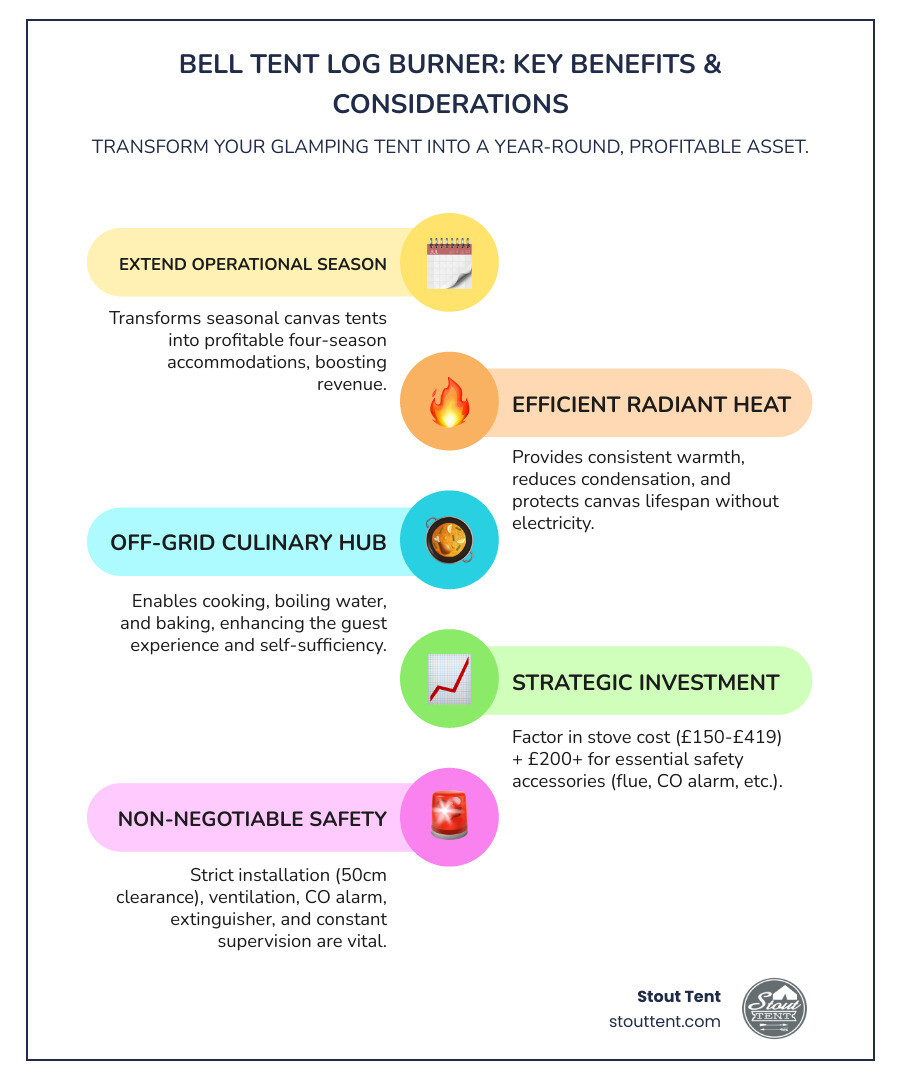
The Strategic Advantages of a Bell Tent Wood Stove
Integrating a bell tent log burner is a strategic improvement that boosts your asset’s versatility and profitability. Our professional-grade canvas bell tents become truly four-season operational units with an efficient wood-burning stove. This capability allows you to extend your rental season, capturing revenue during cooler spring, autumn, and even mild winter periods across regions like the US Pacific Northwest or the US Northeast.
The primary benefit is efficient radiant heat. A woodburner provides consistent warmth, keeping guests comfortable and changing a chilly evening into an inviting retreat. This efficiency also reduces interior condensation, a common challenge in canvas tents. By maintaining a dry, warm environment, you improve guest comfort and protect the canvas, extending the tent’s lifespan and lowering the Total Cost of Ownership (TCO). A well-equipped glamping tent with a log burner creates an atmosphere of rustic charm that commands higher nightly rates and stronger booking demand.
Opening up Off-Grid Culinary Potential
Beyond warmth, a bell tent log burner offers off-grid culinary possibilities. Many portable woodburners feature stovetops, and some include oven attachments, changing them into versatile cooking stations. Guests can boil water, simmer stews, or even bake, enhancing the rustic appeal of their stay. Some robust models include integrated ovens, opening up new possibilities for glamping meals, especially in remote locations like the Black Rock Desert, where external facilities are limited. The stove becomes a central hub for warmth, light, and food, fostering a deeper sense of comfort. For more on enhancing your cooking setup, explore our resources on stove ovens.

Selecting the Right Bell Tent Log Burner: A Buyer’s Guide
Choosing the optimal bell tent log burner requires focusing on long-term value and Total Cost of Ownership (TCO). When selecting a stove from our complete stove collection, balance portability, heat output, and the professional-grade materials used in its construction. While a compact 13kg stove offers excellent portability, a heavier model with an integrated oven might be more suitable for larger bell tents or colder climates. We advocate for stoves built from robust materials like cold-rolled steel, which offers superior durability and even heat dissipation.
Analyzing the TCO means looking beyond the stove’s purchase price. Budget for essential safety accessories, including a flue system, silicone collar, heat shield, floor protection, and spark arrestor. With a CO alarm and fire extinguisher, a complete, safe setup starts from £350-£450. Furthermore, always confirm and adhere to local campsite regulations and fire codes, as some areas may have strict prohibitions or require specific certified models.
Evaluating Stove Types and Features
The market offers a variety of bell tent log burners, each with distinct features designed to improve functionality and guest experience. Understanding these differences is key to making an informed investment.
Portable wood-burning stoves are designed for ease of transport and setup, often packing down compactly. When considering models, look for key features that align with your operational needs:
- Glass Viewing Windows: Stoves with large windows significantly improve ambiance by allowing guests to watch the flames. The improved guest satisfaction can justify the higher investment. For a closer look at models with expansive views, see the Nomad View Stove with large windows.
- Integrated Baking Ovens: Models with built-in ovens expand culinary possibilities, providing a unique amenity that can differentiate your glamping site.
- Side Racks: Removable side racks are invaluable for drying wet clothing or warming items, adding to guest comfort in damper climates.

Potential Challenges and Logistical Considerations
While the benefits of a bell tent log burner are substantial, address potential challenges and logistical considerations to ensure a smooth and safe operation.
- Stove Weight and Transport Logistics: Portable woodburners vary significantly in weight, from around 13kg for compact models to 24kg for larger units with ovens. Stoves exceeding 30kg can become cumbersome to transport and set up, especially if your glamping sites are frequently relocated or situated in less accessible areas. Careful planning for transportation, whether by vehicle or manual carry, is crucial to prevent staff injury and maintain operational efficiency.
- Soot and Ash Management: Wood-burning stoves inevitably produce soot and ash. Implementing a clear protocol for daily ash removal and safe disposal is vital to maintain cleanliness within the bell tent and prevent fire hazards. This also includes regular cleaning of the flue system to prevent creosote buildup, which can reduce efficiency and pose a fire risk.
- Sourcing Appropriate Fuel: Reliable access to well-seasoned, dry wood is paramount for efficient and clean burning. Wood with a moisture content ideally below 15-20% is essential for good heat output and minimal emissions. Sourcing and storing this fuel can be a significant logistical undertaking, especially for larger operations. Consider local suppliers in your operating regions, such as Arizona or California, and ensure you have adequate, dry storage facilities.
- Adherence to Local Fire Regulations: We cannot overstate the importance of understanding and complying with local fire regulations. These can vary significantly by county or state, particularly in areas prone to wildfires like the US Southwest. Some campsites may prohibit wood-burning stoves entirely, while others may require specific safety measures or certifications. Always consult with local authorities and campsite management before installing or operating any stove. For an in-depth look at the considerations for fitting a wood stove, refer to this external resource: Buying and fitting a Wood Stove in a Bell Tent .
Mission-Critical Safety Protocols for Tent Stove Operation
The deployment of a bell tent log burner demands an unwavering commitment to safety. Our expert-tested approach prioritizes fire risk mitigation and the prevention of carbon monoxide (CO) poisoning through stringent operational standards. For more details, our guide provides further detail on staying warm safely.
Proper installation and operation are key. The stove and flue pipe must be positioned at least 50cm from any tent canvas or combustible materials. Always place the stove on a fire-retardant heat-proof mat to protect the groundsheet. Mandatory ventilation, achieved by keeping low-level air vents clear, is the first line of defense against CO buildup and ensures proper combustion. Finally, a lit stove should never be left unattended. Many experienced operators shut stoves down completely overnight rather than risk unsupervised operation.
Essential Safety Accessories for Your Bell Tent Log Burner
A comprehensive suite of safety accessories is an essential investment to protect guests and your canvas assets.
- Carbon Monoxide (CO) Alarm: This is the most vital safety device. A battery-operated CO alarm must be installed and tested regularly in any tent with a stove.
- Fire Extinguisher (Class A): An accessible fire extinguisher suitable for combustible materials (wood, paper, canvas) should be located in or just outside each tent.
- Heat-Proof Floor Mat: This protects the groundsheet from intense heat and catches any stray embers or ash.
- Spark Arrestor: Fitted to the top of the flue, this mesh cap catches sparks and embers, preventing them from landing on the tent or surrounding combustibles.
- Fire Guards: For family-oriented operations, a guard around the stove prevents accidental contact with hot surfaces.
These accessories, part of a safe stove operation, are available in our comprehensive stove safety kits.
Installation and Setup: A Professional-Grade Walkthrough
Proper installation of your bell tent log burner system is foundational to both safety and efficiency. Our expert-tested methods ensure a secure, weatherproof seal and optimal performance, protecting your investment in our durable canvas tents. We recommend consulting our comprehensive wood stove guide for detailed instructions.
Step 1: Positioning Your Stove and Flue
Strategic placement of your bell tent log burner is the first critical step. The stove should be positioned for optimal heat distribution throughout the tent, typically centrally or slightly off-center. Crucially, ensure the stove rests on a stable, level base, ideally on a heat-proof mat.
Next, you need to decide on the flue exit point. Side-wall exits are often preferred as they are less prone to leaking in rain and any tar drips fall outside. Once the stove is positioned, press the flue pipe against the canvas to mark the circular outline for cutting.
Step 2: Installing the Flashing Kit
The flashing kit is your primary defense against heat transfer and water ingress where the flue pipe exits the tent. This professional-grade component protects the durable canvas of your bell tent and ensures a weatherproof seal.
- Cutting the Flue Hole: Using the marked circle from Step 1, carefully cut the hole in the canvas. It’s often better to start slightly smaller and enlarge as needed to ensure a snug fit around the flashing kit’s inner ring.
- Fitting the Silicone Collar: The silicone collar is the heart of the flashing kit, designed to withstand high temperatures and provide a flexible, waterproof seal around the hot flue pipe. Position this collar through the canvas hole.
- Securing the Inner and Outer Rings: The kit typically includes inner and outer metal rings that clamp together, sandwiching the canvas and the silicone collar. These rings are secured with screws or wing nuts. Carefully pierce the fabric to allow the screws to pass through into the outer ring frame, ensuring a tight, secure fit.
Proper installation of the correct size Winnerwell Flashing Kit is paramount for protecting your durable canvas tent.
Step 3: Assembling the Chimney and Heat Shields
With the stove positioned and the flashing kit installed, the final step is to assemble the flue system and deploy any necessary heat shields.
- Stacking Flue Pipe Sections: Begin by assembling the flue pipe sections, ensuring each joint is secure. The total height of the chimney must extend safely above the tent roof to ensure proper draw and disperse smoke effectively. Most portable stoves come with multiple sections that fit together.
- Installing the Spark Arrestor Cap: Crucially, fit a spark arrestor cap to the very top of the flue pipe. This mesh cap prevents embers and sparks from escaping and potentially igniting the tent or surrounding environment.
- Using a Back Plate or Heat Shield: If your stove is positioned closer to a canvas wall than the recommended 50cm, or if you simply want an extra layer of protection, install a metal back plate or heat shield behind the stove. This reflects radiant heat, further protecting the canvas.
Fuel, Operation, and Maintenance for Peak Performance
Maximizing the efficiency and longevity of your bell tent log burner is key to a successful glamping operation. By adhering to expert-tested methods for fuel selection, stove operation, and routine maintenance, you protect your investment and ensure a consistently high-quality guest experience. For comprehensive strategies to keep your operations thriving in colder months, refer to our tips for winter camping success.
Fuel Guide: Selecting and Storing Wood
The quality of your wood directly impacts performance. Dense hardwoods (oak, ash) burn hotter and longer than softwoods (pine, fir). The most critical factor is moisture content; always use seasoned or kiln-dried wood with a moisture level below 20%. A moisture meter is a valuable tool for verification. Store wood off the ground in a dry, ventilated area, covered to protect it from the elements.
Operating Your Bell Tent Log Burner Efficiently
- ‘Season’ a New Stove: Before its first use in a tent, fire up a new stove outdoors to cure the paint and burn off manufacturing residues.
- Lighting: Start with kindling to establish a hot coal bed before adding larger, seasoned hardwood.
- Airflow Control: Use the stove’s adjustable vents to control the burn rate. More air creates a hotter, faster burn; less air conserves fuel and extends burn time.
- Overnight Burning: For safety, it is strongly advised not to leave a stove burning unattended overnight. Allow the fire to die down completely before retiring.
Long-Term Maintenance for Durability
Routine maintenance is essential for safety and longevity. This proactive approach helps protect your investment.
- Flue Cleaning: Regularly clean the flue pipe with a flue brush to remove creosote, a flammable buildup that reduces efficiency and poses a fire hazard.
- Ash Disposal: Remove ash regularly into a metal bucket with a lid. Dispose of it in a designated non-combustible area, as embers can remain hot for days.
- Inspect Seals: Before each season, check stove door gaskets and flue pipe seals for wear and replace as needed.
- Off-Season Storage: After the season, thoroughly clean and dry the stove and store it in a dry location to prevent rust. For tips on how to care for your canvas, our guide on how to clean your canvas tent provides relevant insights for maintaining your entire setup.
Conclusion
A bell tent log burner is a significant operational upgrade, changing a Stout Tent into a robust, four-season asset for any glamping business or serious outdoor endeavor. By prioritizing professional-grade equipment, adhering to strict safety protocols, and performing regular maintenance, you can ensure years of reliable, comfortable, and profitable use. This strategic investment not only extends your operational calendar and improves guest experiences but also safeguards your canvas tents, minimizing long-term replacement costs and maximizing your return on investment.
Ready to upgrade your setup? Explore our expertly curated collections and resources to build the ultimate all-weather glamping experience.
- Shop our complete collection of professional-grade Tent Stoves & Accessories
- Browse our full range of durable Canvas Bell Tents
- Discover more tips and strategies on our Glamping Blog
- Contact our team of experts for a consultation