

Why Bell Tents Are a Strategic Investment for Glamping Operations
Bell tents are canvas shelters characterized by a conical shape, single central pole, and circular floor plan that provide superior livability and durability for professional outdoor applications. These structures have evolved from military field shelters used since the 1800s into premium accommodations for modern glamping businesses, hunting outfitters, and high-end event venues.
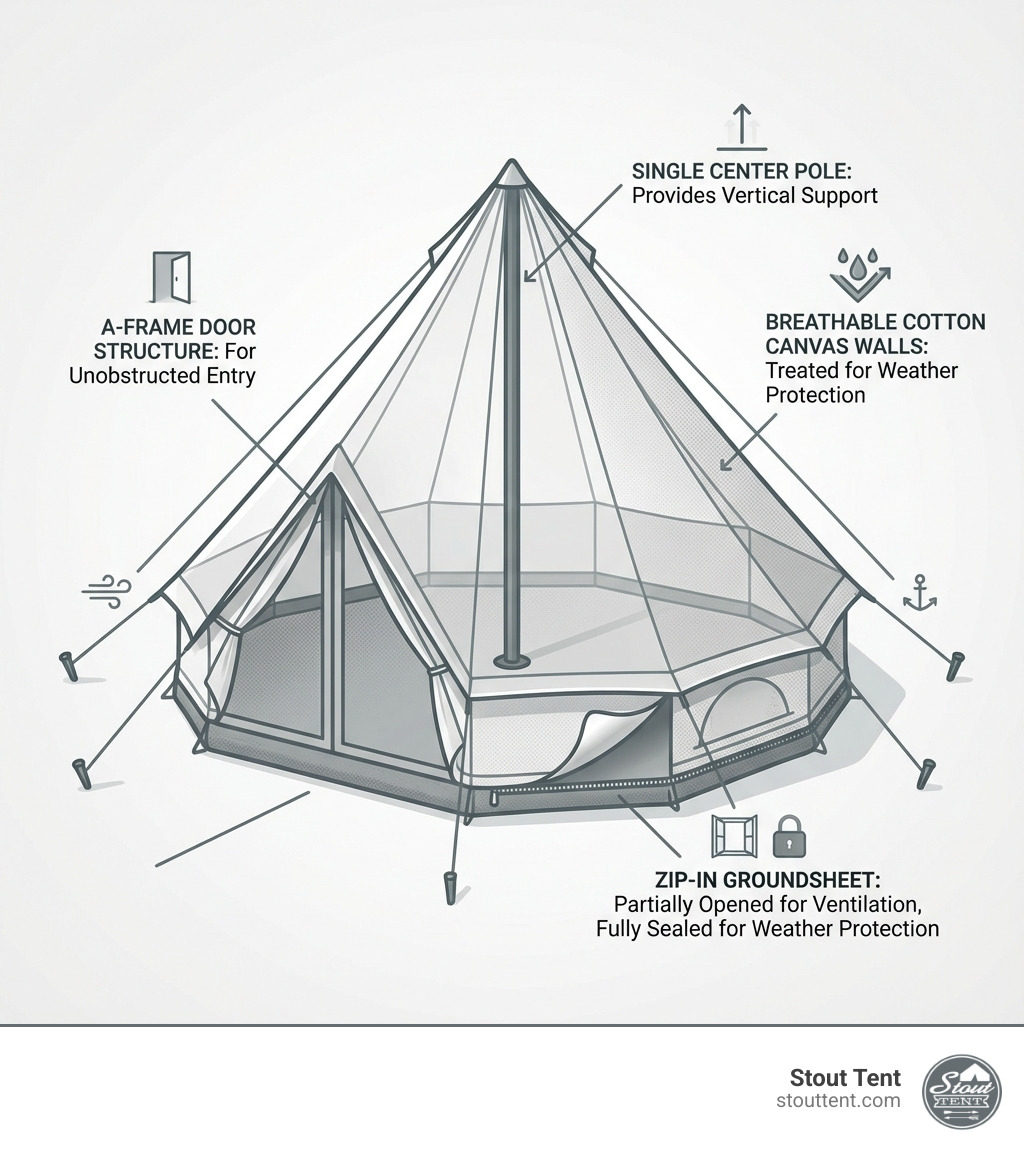
Key Features of Bell Tents:
- Single-pole design creates maximum standing height throughout the interior
- Guy rope stabilization distributes structural loads for exceptional wind resistance
- Heavy-duty cotton canvas (285-360 GSM) offers four-season performance
- Zip-in groundsheet allows for ventilation control and simplified maintenance
- Stove jack compatibility extends operational season into cold-weather months
- Solid brass frame components ensure long-term structural integrity
| Bell Tent Size | Floor Area | Typical Capacity | Best Use Case |
|---|---|---|---|
| 4m (13 ft) | 12.6 m² | 2-4 people | Couples retreat, hunting base camp |
| 5m (16 ft) | 19.6 m² | 4-6 people | Family glamping, event lounge |
| 6m (20 ft) | 28.3 m² | 6-8 people | Group accommodation, premium glamping |
For glamping operators and outdoor hospitality businesses, bell tents represent a capital investment with measurably lower Total Cost of Ownership compared to synthetic alternatives. Professional-grade materials reduce replacement frequency, while the aesthetic appeal commands premium nightly rates that accelerate return on investment. From thousands of expert-tested bell tents deployed across six continents for glamping resorts, hunting outfitters, and large-scale events in environments ranging from desert heat to alpine cold, this guide is designed to help you select the optimal canvas shelter for specific operational requirements.
Core Advantages of Investing in Canvas Bell Tents
The decision to invest in a bell tent for outdoor operations goes beyond mere shelter; it is a strategic choice for superior performance and client satisfaction. From generous interior space to robust, four-season capabilities, these intuitive-pitch canvas shelters offer advantages that consistently deliver value in demanding, high-usage environments.
One of the most immediate benefits of a bell tent is its exceptional interior space and livability. Unlike many conventional tents, the conical design and single central pole of a bell tent provide significant standing height throughout much of the interior. This creates an inviting, open atmosphere that is far more comfortable for occupants, whether they are guests at a glamping resort in California, a family on a retreat in the US Southwest, or a hunting party seeking refuge in the rugged terrain of Washington. The circular floor plan, typically starting at 3 meters in diameter, allows for versatile arrangement of furnishings, from double beds and lounge furniture to refrigeration units and coffee machines, as seen in high-end glamping setups. This ample space contributes to a feeling of luxury and relaxation, enhancing the overall outdoor experience.
Beyond comfort, the ultimate durability of high-quality bell tents sets them apart. For commercial applications, longevity translates directly to a reduced Total Cost of Ownership. Stout Tent bell tents are constructed from professional-grade materials, featuring heavy-duty cotton canvas and solid brass frame components. This robust construction ensures they withstand the rigors of frequent use and diverse environmental conditions, from the intense sun of Phoenix, Arizona, to the occasional high winds of the Black Rock Desert, Nevada. This focus on enduring quality means less frequent replacement and maintenance, securing the investment for the long term.
Bell tents are renowned for their four-season performance, a critical factor for extending operational seasons in regions like the US Northeast or Pacific Northwest. The breathable nature of cotton canvas allows for excellent airflow, minimizing condensation and maintaining a comfortable interior temperature in warmer climates. In colder conditions, the canvas offers natural insulation properties, and Stout Tent bell tents are designed with stove compatibility, allowing for the safe installation of wood-burning stoves. This feature, coupled with proper ventilation and flashing kits, ensures warmth and comfort, enabling operations even when temperatures drop.
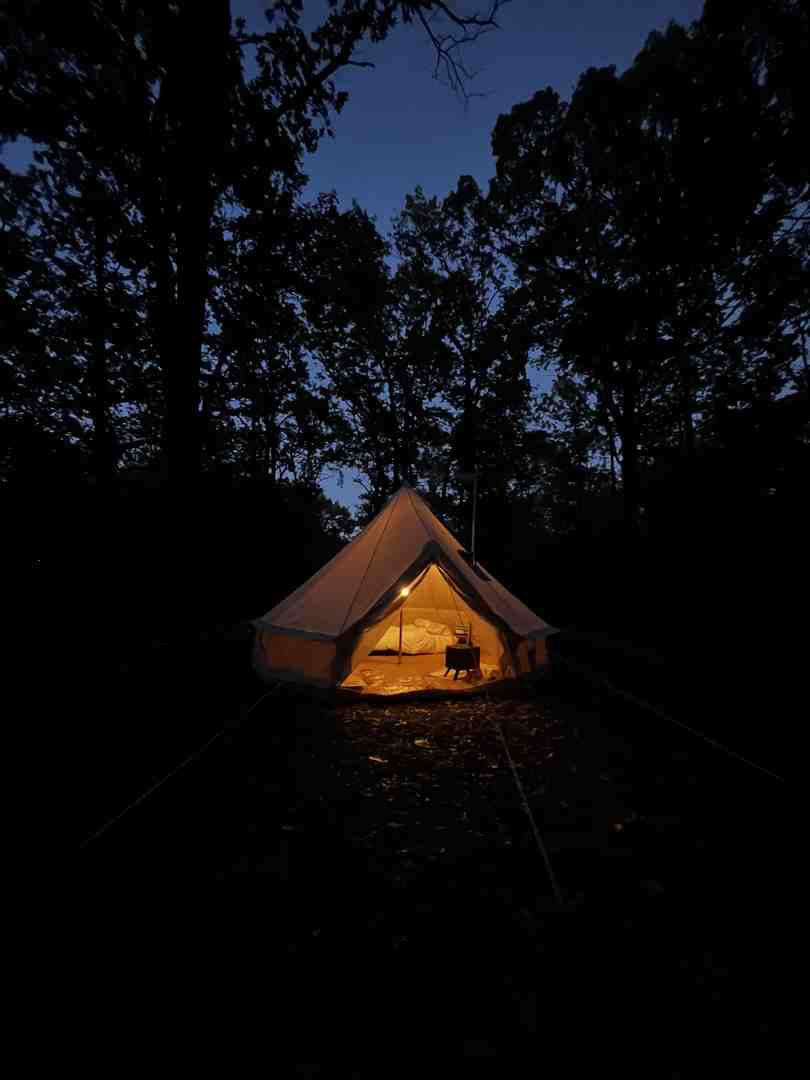
The aesthetic appeal of a bell tent is also a significant operational advantage. The classic, neat silhouette instantly elevates any outdoor setting, making bell tents ideal for high-end events, weddings, and glamping experiences. The timeless design evokes a sense of charm and adventure, creating visually compelling accommodations that attract and delight clients. This blend of functionality, durability, and visual impact makes bell tents a strategic investment for businesses looking to offer elevated, premium outdoor experiences.
For more information on how bell tents can transform outdoor hospitality offerings, explore the comprehensive guide on glamping tents.
A Buyer’s Guide to Selecting the Optimal Bell Tent
Choosing the right bell tent is a pivotal decision that directly impacts the success and profitability of your outdoor venture. Extensive field deployment across the US Southwest and US Southeast demonstrates where the right tent made all the difference. Expert-tested construction prioritizes longevity and performance, but selecting the optimal model requires careful consideration of several key factors.
When looking to shop canvas bell tents, consider your intended application, occupancy requirements, and specific climate considerations. Are you outfitting a luxury glamping resort in California, setting up a temporary event space in the US Northeast, or providing robust shelter for a hunting camp in Washington? Each scenario dictates different priorities in terms of size, features, and canvas specifications.
Understanding Canvas Specifications
The heart of any quality bell tent lies in its canvas. Understanding the various specifications is crucial for making an informed investment that truly stands the test of time.
- Canvas Weight (GSM): This refers to grams per square meter and is a primary indicator of durability. While some recreational tents might use lighter canvas, professional-grade bell tents typically feature 285 GSM for general recreational use and up to 360 GSM for longer-term pitching or more demanding environments. A heavier GSM generally means greater resistance to wear and tear, and better insulation.
- Treatment Options: Modern canvas is not just about raw cotton. Advanced materials come with specialized treatments to improve performance. Look for canvas that is waterproof, mildew resistant, and flame retardant. These treatments are essential for safety, hygiene, and extending the lifespan of your tent, especially in humid climates or areas prone to wildfires.
- Waterproofing Standards: While naturally water-resistant, cotton canvas needs to be “seasoned” to become fully waterproof. This process involves exposing the new canvas to rain or thoroughly wetting it and allowing it to dry a couple of times. This causes the cotton fibers to swell and interlock, creating a tighter weave that prevents water penetration. Without proper seasoning, a new canvas tent may not be fully waterproof on its first use.
- Mold Resistance: Given that bell tents are often packed away after use, mold and mildew resistance are paramount. Treatments help prevent fungal growth, but proper drying and storage are equally important (covered in detail later).
- Flame Retardancy: For applications involving heating sources like wood-burning stoves, flame retardant canvas is a non-negotiable safety feature. This significantly reduces the risk of fire and provides an added layer of protection for your guests or team.
Investing in a higher quality canvas with these specifications directly impacts the Total Cost of Ownership (TCO). While the initial outlay might be slightly higher, the reduced need for repairs, replacements, and the extended operational lifespan of the tent offer significant long-term savings.
Comparing Bell Tent Sizes and Capacities
Choosing the right size of bell tent is critical for both comfort and functionality. Tents are measured by their diameter, typically ranging from 3 to 7.5 meters. The sloping ceiling inherent to the bell tent design means that usable standing space decreases towards the edges, so it’s important to consider this when planning your interior layout.
Here’s a general comparison of common bell tent sizes:
| Bell Tent Size | Floor Area | Typical Occupancy (Sleeping) | Recommended Use Cases |
|---|---|---|---|
| 4m (13 ft) | 12.6 m² | 2-4 people (e.g., 1 queen bed + gear) | Couples’ glamping, small family camping, hunting base camp for 2, cozy retreat |
| 5m (16 ft) | 19.6 m² | 4-6 people (e.g., 2 queen beds or 1 queen + lounge) | Family glamping, event lounge, small group accommodation, extended stays |
| 6m (20 ft) | 28.3 m² | 6-8 people (e.g., 3 queen beds or large lounge area) | Premium glamping suite, large family/group camping, outdoor wedding lounge, workshop space |
For instance, a 4-meter bell tent is a popular choice for couples seeking a luxurious retreat or for a small hunting party in the forests of Washington. It offers ample space for a queen-sized bed and some personal gear. A 5-meter tent, by contrast, provides significantly more room, making it ideal for families or for creating a comfortable lounge area at an event. Larger 6-meter and Emperor models are perfect for accommodating larger groups, creating lavish glamping suites, or serving as spacious communal areas. Always account for furniture, walkways, and any internal partitioning (like inner tents) when determining the ideal size.
Essential Features for Professional-Grade Bell Tents
When evaluating bell tents for professional use, certain features are non-negotiable for ensuring optimal performance, user comfort, and ease of maintenance.
- Groundsheets:
- Separate Groundsheet: While more economical, these require more labor to set up and may not offer complete protection against moisture or insects.
- Sewn-In Groundsheet (SIG): This creates a fully sealed “bathtub” effect, providing excellent protection against waterlogging and crawling insects. However, it limits flexibility, as the sides cannot be rolled up.
- Zipped-In Groundsheet (ZIG): The ZIG is considered the gold standard. It combines the best of both worlds: a sealed environment when zipped, offering superior protection, but with the flexibility to unzip and roll up the tent walls. This is invaluable for ventilation on warm days in Phoenix, Arizona, or for easily cleaning the interior. It also allows for convenient electrical hook-up (EHU) cable access without compromising the seal.
- Stove Jacks: For year-round operations, especially in colder regions like the US Northeast or during winter in the US Pacific Northwest, a strategically placed stove jack is essential. This reinforced opening allows for the safe installation of a wood-burning stove flue, providing efficient heating. Always ensure the stove jack is made from heat-resistant materials and consider a flashing kit for a secure, weatherproof seal around the flue pipe.
- Mesh Doors and Windows: Proper ventilation is key to comfort and preventing condensation. Bell tents feature integrated mesh doors and windows. This allows for excellent airflow while keeping insects out, a blessing during warmer months or in areas with active wildlife. For ultimate protection against midges and other flying/crawling insects, look for models with removable mesh walls.
- A-Frame Door: A well-designed A-frame door is crucial for unobstructed entry and exit. It prevents the canvas from sagging over the entrance, which can be particularly frustrating in windy or rainy conditions. More importantly, it helps divert rainwater away from the doorway, keeping the interior dry. Solid brass A-frames provide robust support and long-lasting performance.
- Zips: Don’t overlook the quality of zippers. Heavy-duty, high-quality zips are essential for the doors, windows, and especially for zipped-in groundsheets. Cheap zippers can fail quickly, compromising the tent’s integrity and your investment.

These expert-tested features collectively contribute to the superior functionality and longevity of bell tents, ensuring a reliable and comfortable experience for all users.
Maximizing Longevity: Use Cases and Maintenance Protocols
Bell tents are more than just camping gear; they are versatile, durable assets that can transform how operators approach outdoor accommodations and events. Extensive deployment experience in high-value, high-traffic environments across diverse US locations underscores their adaptability and robustness.
For glamping businesses, bell tents have become an iconic symbol of luxury camping. In scenic locations from the red rock landscapes of Arizona to the coastal beauty of California, they offer guests a unique blend of nature immersion and creature comforts. Guests can be provided with electricity hook-ups, plush double beds, soft flooring, and in-tent amenities such as coffee machines within a canvas sanctuary. This level of amenity elevates the guest experience, driving positive reviews, higher nightly rates, and repeat business.
Hunting base camps in the vast wilderness of Washington or the rugged terrain of the US Southwest benefit from the durability and four-season capability of bell tents. These shelters provide a robust and comfortable retreat after long days outdoors, capable of withstanding variable weather conditions and offering space for gear, cooking zones, and rest areas.
Event accommodations, whether for music festivals in the Black Rock Desert, Nevada, or outdoor weddings in the US Northeast, use bell tents to offer stylish and comfortable lodging solutions. Their classic aesthetic improves the event’s atmosphere, while their spacious interiors can be transformed into intimate sleeping quarters or vibrant communal lounges.
For backcountry retreats or semi-permanent installations, bell tents offer a reliable and visually cohesive solution that integrates with natural surroundings. Their inherent stability and robust construction make them suitable for longer deployments, providing a durable living space that, when properly maintained, delivers consistent performance season after season.
Proper Care for Your Canvas Investment
The longevity of a bell tent is directly tied to diligent maintenance. Proper care protects the canvas, hardware, and groundsheets, maximizing operational lifespan and preserving the integrity of the investment.
- Cleaning Procedures: For minor spills or dirt, a soft brush and clean water are usually sufficient. Avoid harsh detergents or abrasive scrubbing, as these can damage the canvas treatments. Bird droppings or stubborn stains should be addressed as quickly as possible to help prevent permanent marks or damage to the fabric. Gently scrape off any solid matter, then clean with water and a soft cloth.
- The “Seasoning” Process: As mentioned earlier, new canvas benefits from a “seasoning” process. Before its first critical use, set up the tent and thoroughly soak it with water, then allow it to dry completely. Repeating this process once or twice causes the cotton fibers to swell, creating a natural, watertight seal. This expert-tested method helps ensure the canvas is fully prepared for challenging weather.
- Mold Prevention and Remediation: The golden rule for canvas tents is: never pack away a wet tent. Moisture is the primary culprit for mold and mildew growth, which can quickly degrade canvas and create unpleasant odors. If the tent gets wet, it must be thoroughly dried before storage. If mold does occur, it can often be treated with specialized canvas cleaning solutions, but prevention through proper drying and ventilation is always preferable. Ensure good airflow during use and drying.
- Proper Storage Techniques: Once clean and completely dry, fold the bell tent neatly and store it in a cool, dry, well-ventilated area, away from direct sunlight and pests. Avoid storing it in airtight containers for extended periods, as this can trap residual moisture. Proper storage protects the canvas, prolongs its life, and ensures it is ready for the next deployment.
For deeper insights into the historical context and evolution of canvas shelters, including bell tents, you can review academic material such as that available through JSTOR. This heritage underpins the continued use of professional-grade materials and durable, time-tested designs.
Advanced Setups and Platforms
For semi-permanent or long-term installations, particularly in environments like the US Pacific Northwest where ground moisture can be a concern, utilizing a canvas tent on a platform offers significant benefits. A canvas tent on a platform is simply a bell tent pitched on a raised deck structure, not a different tent type.
Elevating the tent elevates the entire structure, providing improved weather protection by keeping the canvas and groundsheet away from direct contact with wet or uneven ground. This separation reduces moisture exposure, improves drainage, and supports more consistent interior comfort.
This elevation also reduces wear and tear on the groundsheet, extending its life and reducing the frequency of maintenance or replacement. Furthermore, a well-built platform can improve the aesthetic appeal and perceived quality of the setup, creating a more refined and stable base for a bell tent. For operators interested in optimizing their setup, Stout Tent offers guidance on how to build your own tent platform, helping ensure that the canvas shelter is supported by a solid, long-lasting foundation.
Frequently Asked Questions about Bell Tents
Professionals and enterprise operators frequently inquire about the practicalities and performance of bell tents. Here, expert insights address some of the most common questions.
How are bell tents stabilized against high winds?
The stability of bell tents in adverse weather, including high winds, is a testament to their time-tested design and robust construction. Their conical shape is inherently aerodynamic, allowing wind to flow around them rather than creating large flat surfaces for it to push against.
The primary stabilization comes from their tension-based architecture:
- Central Pole Force Distribution: The single, sturdy central pole distributes vertical loads effectively.
- Multiple Heavy-Duty Guy Lines: A network of guy ropes extends from the upper part of the tent to the ground, anchored by heavy-duty stakes. These guy ropes create tension that pulls the canvas taut and distributes external forces (like wind) evenly across the entire structure.
- Proper Staking Technique: The critical role of proper staking cannot be overstated. Stakes must be driven firmly into the ground at the correct angle and distance from the tent to ensure maximum holding power. Professional-grade materials, including solid brass components and robust guy ropes, are designed to work in concert to provide exceptional structural integrity, even in challenging conditions such as those experienced in the open plains of the Black Rock Desert, Nevada.
Are canvas bell tents fully waterproof?
Yes, when properly prepared and maintained, professional-grade canvas bell tents are fully waterproof. It’s a common misconception that canvas is inherently leaky, but modern treatments and the natural properties of cotton make them highly effective against rain.
- Natural Water Resistance: High-quality cotton canvas, when new, has a natural degree of water resistance. However, it’s the “seasoning” process (wetting and drying the canvas a few times) that makes it truly waterproof. This causes the cotton fibers to swell, closing up the weave and creating a tight, impermeable barrier.
- Hydrostatic Head Rating: While often associated with synthetic tents, the concept of hydrostatic head (a measure of waterproofing) applies to canvas as well. Expert-tested canvas is treated to achieve a high level of water repellency.
- Importance of Quality Treatments: Beyond the natural swelling of fibers, canvas is treated to improve its waterproof properties, as well as being mildew resistant and flame retardant. These treatments create a durable barrier that sheds water effectively.
It’s important to differentiate between a properly seasoned and treated canvas tent and one that is new or poorly maintained. With professional-grade materials and recommended care, bell tents will keep occupants dry and comfortable through all seasons.
What is the typical price range for a quality bell tent?
When considering the price of a quality bell tent, it’s crucial to frame it as a long-term investment rather than just an initial purchase cost. For enterprise clients, the Total Cost of Ownership (TCO) is a more relevant metric than the sticker price, as durability and longevity directly impact operational budgets.
The price range for a professional-grade bell tent can vary significantly based on size, canvas quality, and specialized features. Generally, you can expect to invest anywhere from several hundred to over a thousand dollars for a robust, high-performance model. For instance, a smaller 3-meter bell tent suitable for a couple’s retreat might be at the lower end, while a large 6-meter Emperor model with advanced features like zip-in groundsheets, multiple stove jacks, and heavy-duty canvas will command a higher price.
Factors influencing price include:
- Size: Larger tents naturally require more material and more complex construction.
- Canvas Weight and Treatments: Heavier GSM canvas (e.g., 360 GSM) and advanced treatments for waterproofing, mold resistance, and flame retardancy add to the cost but significantly extend the tent’s lifespan and performance.
- Features: Elements like zip-in groundsheets, integrated mesh doors/windows, multiple stove jacks, and solid brass components contribute to the overall price but also improve functionality and durability.
While there are cheaper alternatives on the market, they often compromise on material quality and construction, leading to higher replacement costs and operational headaches down the line. The focus on professional-grade materials and expert-tested designs ensures that bell tents are a reliable, long-term asset, reducing your TCO and providing consistent performance for years to come.
Conclusion: Your Source for Expert-Tested Bell Tents
Bell tents represent a superior, durable shelter solution for demanding applications. The value of this intuitive-pitch canvas shelter is realized through its longevity, which is a direct result of professional-grade materials and expert-tested construction. With extensive expertise gained from producing large-scale glamping events nationwide, Stout Tent ensures every product is a reliable, long-term investment that supports a lower Total Cost of Ownership.
Ready to invest in a professional-grade canvas tent? Explore the bell tent collections, review insights from industry professionals, or contact the team for a consultation custom to specific operational needs.
Explore Stout Bell Tents
View All Tents for Sale
Contact Us