

Why a 2-Person Canvas Tent Offers Superior Comfort and Durability
A 2-person canvas tent is a professional-grade shelter designed for extended comfort, superior weather resistance, and long-term durability. Compared with synthetic shelters, canvas delivers natural breathability, reliable temperature regulation, and robust construction that stands up to frequent use across diverse environments.
Key benefits of 2-person canvas tents:
- Superior breathability – Natural cotton fibers reduce condensation and improve airflow
- Natural insulation – Cooler in summer, warmer in winter compared with many synthetic materials
- Best durability – Tear-resistant, UV-resistant, and built to withstand years of regular use
- All-weather protection – Canvas fibers swell when wet to create a watertight barrier
- Professional-grade materials – Expert-tested construction using 100% cotton duck canvas
A 2-person canvas tent is ideal for car camping, glamping operations, and base camps where comfort and longevity matter more than packed weight. These shelters typically feature floor sizes around 2.5 to 3 meters, center heights of 1.2 to 1.5 meters, and weigh between 5.9 to 6.8 kilograms. Professional-grade models use advanced canvas treatments for waterproofing while maintaining breathability.
This guide is informed by hands-on sourcing, expert-tested analysis from extensive field deployments, and deep operational knowledge of canvas materials, treatments, and construction techniques.
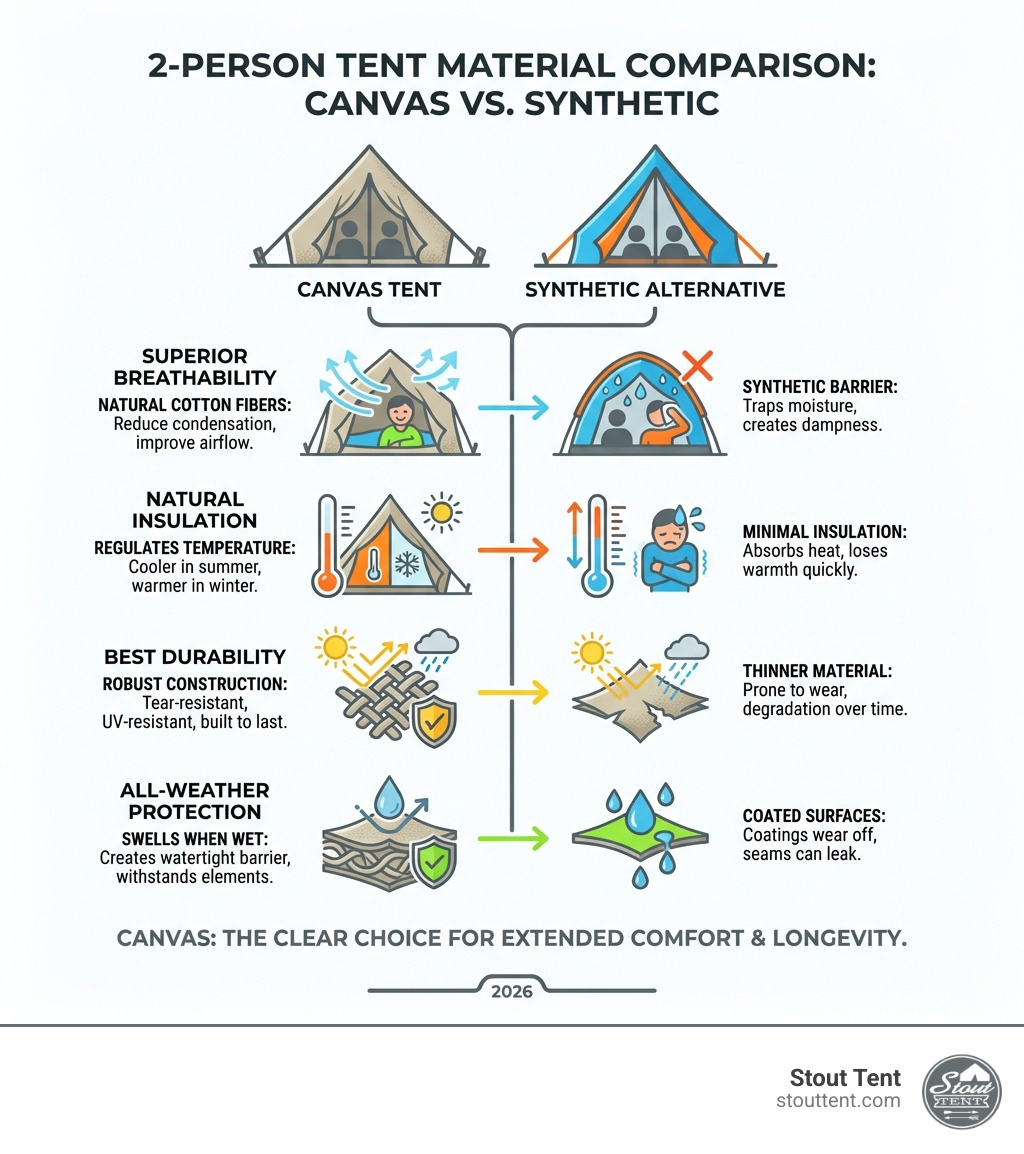
Why Choose Canvas Over Synthetic for Your Shelter?
When selecting a shelter for your outdoor adventures, the choice between canvas and synthetic materials is pivotal. For those prioritizing comfort, longevity, and a truly immersive experience, a 2-person canvas tent consistently outperforms its synthetic counterparts. Field use across hot, humid, wet, and cold conditions consistently shows why a 2-person canvas tent stays more comfortable inside than many synthetic options.

Superior Breathability
One of the most significant advantages of canvas, particularly for a 2-person canvas tent, is its exceptional breathability. Crafted from natural, breathable cotton, canvas tents allow air to circulate freely. This natural ventilation is crucial for reducing condensation, a common issue in many synthetic shelters. While synthetic materials often trap moisture inside, leading to damp interiors, the natural fibers of cotton canvas effectively manage humidity, supporting a drier and more controlled interior environment. This is especially beneficial in varied climates, providing excellent ventilation for any season.
Natural Insulation
Beyond breathability, canvas offers excellent natural insulation. The dense weave of cotton canvas provides a thermal barrier that helps regulate interior temperatures. In hot conditions, a 2-person canvas tent remains notably cooler than many synthetic shelters, as the material reflects sunlight and allows heat to escape. Conversely, in colder weather, canvas retains warmth more effectively, creating a cozy and comfortable shelter. This makes canvas tents highly adaptable and suitable for use in both hot and cold conditions, supporting comfort year-round.
Best Durability
A 2-person canvas tent built with professional-grade materials is renowned for robust construction and long-term durability. Designed for repeated deployment and built for hard use, high-grade cotton canvas stands up to the rigors of frequent setup and harsh outdoor elements. Many synthetic fabrics can degrade over time from UV exposure, while canvas is inherently more UV-resistant and less prone to tearing. Thick cotton duck canvas, treated with specialized finishes, is crafted for longevity, providing a shelter that will perform reliably for many seasons of use. This durability is a core advantage for operators who need consistent, repeatable performance.
Weather Resistance
The unique properties of canvas also contribute to its optimal protection from the elements. When cotton canvas gets wet, its natural fibers swell, creating a tighter weave that effectively seals out moisture and makes the tent watertight. This self-sealing characteristic, combined with specialized treatments, ensures that a 2-person canvas tent offers reliable protection against rain, snow, and wind without sacrificing breathability. This inherent design means canvas tents are not only highly water-resistant but also maintain a more stable interior climate, making them a dependable shelter in diverse weather conditions. Explore the full range of options available for your next adventure by reviewing more info about our canvas bell tents.
Essential Features of a Quality 2-Person Canvas Tent
Selecting a 2-person canvas tent requires a discerning eye for quality features that ensure both comfort and resilience. Recommendations in this guide are informed by hands-on sourcing and expert-tested analysis from extensive field deployments, with a focus on professional-grade materials and consistent performance.
Fabric and Material Weight
The foundation of any high-quality 2-person canvas tent is its fabric. Stout Tent uses 100% cotton canvas, often referred to as army duck canvas grade, known for its exceptional strength and tight weave. The material weight, typically measured in grams per square meter (gsm) or ounces (oz), significantly impacts the tent’s durability, insulation, and overall performance. For instance, premium 12 oz. canvas is heavier and slightly thicker than traditional 10 oz. canvas, offering improved insulation and durability. While some tents may feature 8.5 oz. canvas for walls and 10 oz. for ceilings, the focus here is on robust material weights, often around 285 g/m² to 320 g/m², for optimal resilience and thermal regulation. These professional-grade materials are selected for proven longevity and their ability to withstand rigorous use.
Waterproofing and Weather Treatments
A superior 2-person canvas tent is not merely cotton; it is expertly treated to be watertight while retaining its breathability. Stout Tent canvas undergoes specialized treatments that ensure the fibers swell to create a highly water-resistant barrier when wet. Beyond waterproofing, these treatments often incorporate mold and mildew resistance, critical for maintaining the tent’s integrity in humid environments. UV protection is also a key component, helping safeguard the canvas from sun degradation and extending its service life. Factory-applied treatments are essential to ensure a consistent, high-performance finish that allows the tent to remain watertight yet breathable. To learn more about tent models and their weather-resistant properties, explore our tent collection.
Ventilation and Airflow Design
Effective ventilation is paramount for comfort and condensation control within a 2-person canvas tent. Thoughtful design incorporates features such as mesh-covered windows and screened doors, often made with no-see-um mesh to keep insects out while maximizing airflow. Strategically placed vents further improve cross-ventilation, helping to manage interior temperature and prevent stuffiness. Many Stout Tent canvas bell tents feature a 360-degree mesh wall capability, allowing the lower portion of the canvas to be rolled up, changing the tent into a shaded canopy while maintaining an insect-free interior. This comprehensive approach to airflow supports a comfortable and airy environment, even on warm days.
Frame Construction and Hardware
The structural integrity of a 2-person canvas tent relies heavily on its frame construction and hardware. For canvas bell tents, this typically involves a robust central pole and an A-frame at the entrance. Professional-grade bell tents from Stout Tent feature a robust frame for the main structure, providing exceptional stability and resistance to strong winds. The hardware, including heavy-duty stakes and guy lines with tensioners, is designed for secure anchoring. Corrosion-resistant brass hardware for zippers and other components ensures smooth operation and long-term reliability, even in challenging outdoor conditions. This meticulous attention to detail in frame and hardware selection underpins the overall durability and safety of these tents.

Pitching and Site Preparation for Your Canvas Shelter
Setting up your 2-person canvas tent effectively is key to a comfortable and secure camping experience. The following recommendations are informed by hands-on sourcing and expert-tested analysis from extensive field deployments, ensuring an intuitive and reliable pitching process.
Site Selection
Before pitching your 2-person canvas tent, careful site selection is crucial. Choose a location with level ground to ensure a comfortable sleeping surface and proper drainage. Avoid depressions where water might collect during rain. Ideally, the site should be clear of sharp objects and overhead hazards like dead branches. For a lifted and exceptionally stable setup, many operators choose to pitch the canvas tent on a constructed deck. This provides a level surface and enhances drainage.
Intuitive-Pitch Process
A well-designed 2-person canvas tent should support an intuitive-pitch process, making setup straightforward even for one person with basic familiarity. The initial steps involve laying out the groundsheet to define your tent’s footprint. Next, stake down the floor securely, ensuring it is taut. Then, assemble the poles, which typically include a central pole and an A-frame for the entrance, and carefully lift the canvas into position. Finally, secure the guy lines to the ground with heavy-duty stakes and adjust the tensioners. This methodical approach supports safe and efficient pitching.
Tensioning for Stability
Achieving a taut pitch is essential for the stability and weather resistance of your 2-person canvas tent. Properly tensioned guy lines distribute stress evenly across the canvas, preventing flapping in the wind and ensuring the tent maintains its shape, even in gusts exceeding 60+ miles per hour, as observed with robust canvas models in the field. Regularly check and adjust the tensioners, especially as canvas can slightly stretch or contract with temperature and humidity changes. This proactive approach to tensioning helps keep your shelter steadfast and secure, providing consistent protection from the elements.
Takedown and Packing
Proper takedown and packing are vital for preserving the longevity of your 2-person canvas tent. The most critical step is ensuring the canvas is completely bone-dry before storage. Packing a damp tent can lead to mold and mildew growth, which can severely damage the fabric. Once dry, carefully remove all stakes and poles. Fold the canvas neatly, following its natural creases, to reduce unnecessary wear. Store the canvas, poles, and stakes in their respective breathable storage bags, protecting them from pests and moisture. Consistent, careful handling helps ensure your professional-grade canvas tent is ready for repeated deployments.
Long-Term Care and Maintenance for Your Canvas Tent
Maintaining your 2-person canvas tent is essential for sustaining its performance season after season. Operational experience managing extensive tent inventories for large-scale field deployments highlights the value of consistent, correct care routines.
Routine Cleaning and Storage for your 2-person canvas tent
Regular cleaning is a cornerstone of canvas tent maintenance. For routine cleaning, use a soft brush and clean water to remove dirt, dust, and debris. Avoid harsh detergents, as these can strip away the canvas’s water-repellent properties and treatments. After cleaning, it is critical to ensure your 2-person canvas tent is completely bone-dry before packing it away. Even a small amount of moisture can lead to mold and mildew. Store the tent in a breathable storage bag, ideally in a cool, dry place, to reduce moisture accumulation and allow appropriate air circulation. This straightforward routine significantly extends the functional life of your canvas shelter.
Addressing Common Issues: Mold, Mildew, and Stains
Despite best efforts, mold, mildew, or stains can sometimes appear on a 2-person canvas tent. Understanding the difference between mold and mildew is important for effective treatment. Prevention is always the best strategy, achieved through proper ventilation during use and ensuring the tent is dry before storage. For spots, start with water and a canvas-safe cleaner, then rinse thoroughly and dry completely before storage. Always test a small, inconspicuous area first. For stubborn stains, targeted spot cleaning is recommended, again avoiding harsh chemicals. For comprehensive guidance on dealing with mold in occupied spaces, the EPA guide to mold cleanup in your home offers valuable background information that can inform fabric care practices.
Re-treating and Repairing Your Canvas
Over many seasons of use, the factory-applied waterproofing on your 2-person canvas tent may require re-application. This is typically indicated if you notice water beginning to soak into the canvas rather than beading and rolling off. Use a high-quality, canvas-specific waterproofing agent and follow the manufacturer’s safety guidance; for general information on chemical product safety, refer to OSHA’s guidance on safety data sheets. For small tears or punctures, expert-tested repair methods involve using canvas repair patches and specialized adhesives, ensuring the repair remains robust and maintains the tent’s weather resistance. Regular inspection of zippers and other hardware, such as solid brass components, for smooth operation and any signs of wear is also important. Addressing these minor issues promptly helps prevent them from escalating into larger problems, preserving the structural integrity of your professional-grade canvas tent.
Frequently Asked Questions about 2-Person Canvas Tents
Operational teams and individual campers often share similar questions about running and using a 2-person canvas tent in the field. The responses below are grounded in extensive deployment experience and a detailed understanding of canvas tent performance.
How does a canvas tent perform in different weather conditions?
A 2-person canvas tent is designed for strong performance across a wide range of weather conditions, offering distinct advantages over many synthetic tents. In hot weather, the natural breathability of cotton canvas supports excellent ventilation, allowing for superior airflow that helps keep the interior notably cooler and reduces the stuffiness often associated with non-breathable fabrics. Bell tents with features like 360-degree mesh walls maximize this cooling effect.
In cold weather, the dense weave of canvas provides effective insulation, trapping warmth inside and making the tent significantly warmer than many synthetic counterparts. This natural thermal regulation supports comfort even in chilly conditions, with robust canvas tents used successfully in temperatures well below freezing.
Regarding wind stability, the inherent weight and robust construction of a 2-person canvas tent, combined with a well-designed frame and properly tensioned guy lines, provide strong stability. Many professional-grade canvas tents are expert-tested to withstand substantial winds when properly anchored, offering a secure shelter even in challenging gusts. In sustained rain, the unique property of cotton canvas to swell when wet creates a naturally watertight barrier, helping you stay dry inside without compromising the tent’s breathability. This makes canvas tents a reliable choice for protection from the elements in any season.
What kind of camping is a 2-person canvas tent best suited for?
A 2-person canvas tent excels in specific camping scenarios where comfort, durability, and a stable shelter are prioritized over compact pack size. They are ideally suited for car camping, where vehicle access allows for a more spacious and refined setup. For those establishing extended base camps, such as for hunting or scouting trips in the US Southwest, US Pacific Northwest, or other wilderness areas, a canvas tent provides a robust and consistent long-term shelter.
Furthermore, these tents are a preferred choice for curated glamping experiences. Their classic aesthetic, spacious interiors, and comfort-focused features make them well-suited for creating a luxurious and intimate outdoor retreat. While highly durable and comfortable, a 2-person canvas tent is not designed for backpacking-focused trips, as its strength and material weight prioritize stability and longevity over packability.
What accessories are recommended for a canvas tent?
To refine the functionality and comfort of your 2-person canvas tent, several accessories are highly recommended. A durable protective ground tarp placed under the tent floor adds an extra layer of protection against abrasion, punctures, and ground moisture, supporting the longevity of the floor.
For those camping in colder climates or desiring a warmer interior, a tent stove paired with a properly designed stove jack can be an excellent addition, provided that manufacturer instructions and safety standards are carefully followed; for broader background on fire safety fundamentals, see U.S. Fire Administration fire safety resources.
Interior floor coverings, such as coir matting or rugs, can significantly improve comfort and aesthetics, making the tent feel more like a furnished room. Finally, various gear-organization solutions, such as hanging shelves or internal pockets, help keep personal belongings tidy and accessible within your 2-person canvas tent, maximizing usable living space.
Conclusion: Your Guide to a Superior Camping Experience
Choosing a 2-person canvas tent is a decision to prioritize a camping experience defined by durability, all-season comfort, and consistent field performance. This guide has outlined the distinct advantages of canvas over synthetic materials, highlighting natural breathability, insulation, and robust weather resistance. It has also detailed the essential features that define a quality canvas tent, from material weight and expert waterproofing to thoughtful ventilation and professional-grade frame construction.
Understanding intuitive pitching, careful site selection, and diligent maintenance routines—including addressing common issues and performing targeted repairs—ensures your canvas shelter remains a dependable component of your outdoor operations. Whether for car camping, extended base camps, or curated glamping experiences, a 2-person canvas tent delivers a level of comfort and resilience that stands out in demanding conditions. Recommendations throughout this guide are informed by hands-on sourcing and expert-tested analysis from extensive field deployments, supporting confident tent selection and deployment.
For custom guidance on selecting the right professional-grade 2-person canvas tent for your needs, contact our team of experts today.