


Winter Camp Cooking 101: How to Setup a Portable Outdoor Kitchen in Sub-Freezing Weather
Cooking a hot family meal during a winter camping trip or late-season boondocking weekend is one of the most rewarding parts of off-grid life. However, sub-freezing temperatures introduce unique logistical challenges, from managing wind exposure and pressure drops in fuel canisters to streamlining dishwashing without freezing your water supply. This guide outlines how to set up an efficient, weather-resistant portable camp kitchen to keep your base camp well-fed and fully operational all winter long.
1. Strategic Layout: Wind Management & Shelter Proximity
-
The Challenge: High winter winds can extinguish stove burners, disrupt flame distribution, and cause frustration during meal prep.
-
The Solution:
-
The Wind-Break Perimeter: Position your vehicle or a heavy-duty canopy as a natural windbreak, placing your kitchen prep and stove tables at a right angle to prevailing winter gusts.
-
The 15-Foot Rule: Keep open-flame cooking setups safely away from your canvas tent fabric. While a proper canvas shelter handles interior heating safely when equipped with a wood stove (explore our expert layout advice in The Wood Stove Guide), portable propane or white-gas stoves belong outside or under a dedicated, fire-safe awning footprint to prevent flare-ups and condensation buildup.
-
Cold Weather Pro-Tip: If you are setting up camp in freezing environments or heavy winter weather, review our specialized regional strategies on Snowy Climates Like the US Northeast to ensure your base camp withstands heavy winter elements.
2. Overcoming Sub-Freezing Propane and Fuel Issues

-
The Challenge: Standard butane and propane canisters experience pressure drops in sub-freezing temperatures, leading to weak flames or complete burner failure.
-
The Solution:
-
Prioritize Propane over Butane: Butane liquefies and loses vapor pressure around 31°F. Standard propane performs much more reliably in freezing conditions.
-
Elevate Off Frozen Ground: Never place fuel canisters directly on snow or frozen earth, which rapidly draws thermal energy. Set canisters on a wooden board, an aluminum camp table, or use specialized low-temperature fuel blenders.
-
Pre-Warm Canisters: Keep your active fuel canister inside your sleeping bag or jacket pocket until you are ready to ignite your stove for optimal pressure.
-
3. Cold-Weather Gear Checklist for Your Kitchen Station

To build a bulletproof winter camp kitchen, upgrade from standard warm-weather gear to rugged, packable essentials:
-
Stable Metal Prep Tables: Uneven, frozen mud or snow requires adjustable-leg aluminum tables that won't warp, absorb moisture, or crack under heavy gear.
-
Cast Iron & Heavy-Duty Cookware: Retains heat significantly longer than thin aluminum, keeping food warm even after it's pulled off the burner.
-
Insulated Water Storage: Pack extra jugs and keep them inside your heated base camp tent overnight so you don't wake up to a solid block of ice in the morning.
Ready to Upgrade Your Cold Weather Setup? Explore our collection of rugged Bell Tents and heavy-duty Stove Kits designed to keep your family warm through every winter adventure.
4. Streamlined Winter Cleanup & Waste Management
-
The Challenge: Washing dishes in freezing water leads to iced-over gray water buckets and difficult cleanup routines.
-
The Solution:
-
Dedicated Hot Water Station: Maintain a separate dual-burner setup or a dedicated kettle solely for heating wash water.
-
Dry-Wipe First: Use paper towels to wipe heavy grease and food remnants from plates before introducing them to water.
-
Freeze-Resistant Gray Water: Add a splash of non-toxic RV antifreeze or immediately empty your gray water catch bucket to prevent it from freezing solid to the ground.
-
Winter camping and family boondocking don't mean you have to survive on cold meals. By factoring in wind profiles, proper fuel management, and rugged gear, your outdoor kitchen can stay the warm, functional heart of your campsite all season long.
For more comprehensive heating safety instructions, check out The Wood Stove Guide, and learn how to winterize your setup using our Snowy Climates Guide.
Read more
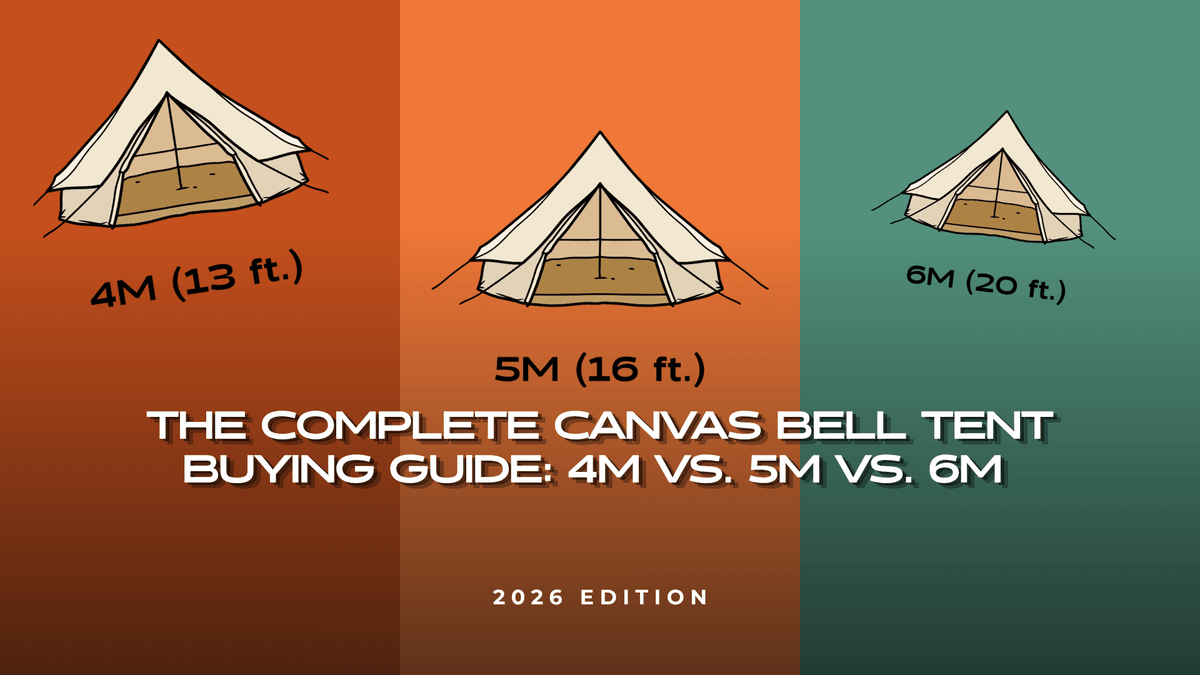
Looking for the right canvas shelter? Compare dimensions, square footage, and furniture layouts across our 4M, 5M, and 6M Bell Tents to find your ideal fit.

Discover why upgrading from a synthetic nylon tent to a heavy-duty canvas shelter delivers superior long-term ROI. Explore durability, severe weather performance, and wood-burning stove compatibili...