

Why Proper Canvas Tent Waterproofing Matters for Long-Term Durability
Canvas tent waterproofing protects your shelter from the elements and extends its functional lifespan for many years with proper care. Understanding the two critical processes—seasoning and waterproofing—ensures your tent performs reliably in all weather conditions.
Quick Answer for Canvas Tent Waterproofing:
- Seasoning – Soak a new tent 2-3 times to swell cotton fibers and seal needle holes naturally
- Waterproofing – Apply protective coatings when factory treatments degrade or after cleaning
- Re-treatment – Reapply every 3-18 months depending on use and climate exposure
- Maintenance – Always store completely dry in ventilated areas to prevent mold growth
A properly maintained canvas tent represents a significant commitment to durability and performance. Unlike synthetic alternatives that can deteriorate quickly under UV exposure, professional-grade cotton canvas combines natural water resistance with exceptional breathability. However, this performance depends entirely on correct weatherproofing procedures that work with the fabric’s inherent properties rather than against them.
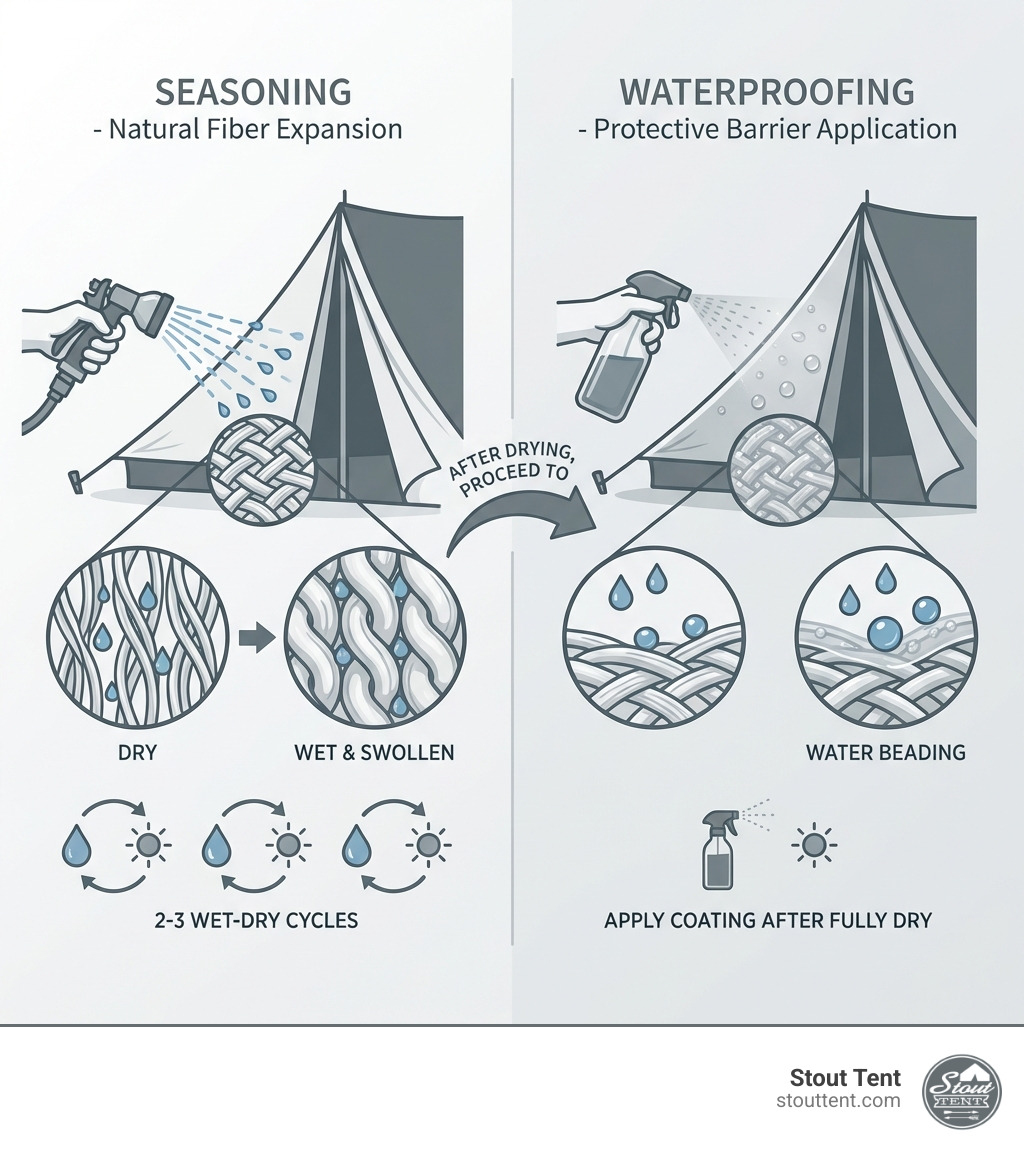
The distinction between seasoning and waterproofing often causes confusion among new tent owners. Seasoning activates the canvas’s natural defenses by causing cotton fibers to swell and close microscopic gaps in the weave. Waterproofing applies a chemical barrier that repels water and protects against UV degradation. Both processes are essential, but they serve different purposes and require different techniques for optimal results.
Understanding canvas tent waterproofing is critical for anyone operating a glamping business or managing outdoor hospitality sites. Expert-tested maintenance procedures protect your shelter from water damage, mold growth, and premature material breakdown. These practices are informed by hands-on sourcing and testing across diverse climates, from humid coastal environments to arid desert conditions, and align with widely accepted guidance on outdoor moisture management from organizations such as the National Park Service.
Stout Tent’s expertise in canvas tent waterproofing stems from deploying professional-grade shelters across six continents and developing maintenance protocols proven in real-world conditions. This guide distills that operational knowledge into actionable steps for protecting your canvas.
The Science of Water-Resistant Canvas
Professional-grade canvas tents are crafted from natural cotton fibers, which possess inherent properties that make them remarkably water-resistant. This forms the foundation for all maintenance procedures, ensuring your shelter performs reliably. To understand how to best protect your canvas tent, it’s crucial to first grasp the science behind its natural defenses. The material advantages of canvas are further explored in The Ultimate Guide to Comparing Canvas Tents.
At its core, canvas’s water resistance relies on a phenomenon known as fiber swelling. When cotton fibers get damp, they naturally swell, expanding to close any remaining microscopic gaps in the fabric’s weave. This creates a tight barrier that helps prevent water from penetrating, even under hydrostatic pressure (the pressure exerted by standing water). This natural mechanism also contributes to canvas’s excellent breathability, allowing moisture vapor to escape from inside the tent, which helps regulate internal humidity and supports ventilation principles consistent with ASHRAE comfort and moisture-control guidance.
Seasoning vs. Waterproofing: A Critical Distinction
The terms “seasoning” and “waterproofing” are often used interchangeably, but they refer to distinct processes vital for canvas tent waterproofing. Understanding the difference is key to proper tent care.
Seasoning is the initial process that activates a new canvas tent’s natural water resistance. It involves exposing the canvas to water, allowing the cotton fibers to absorb moisture and expand. This expansion effectively seals the tiny needle holes created during the tent’s construction. As the canvas dries, the fibers contract, but the physical changes initiated by the swelling create a much tighter, more water-resistant fabric. This process is similar in principle to how traditional wooden boats become more watertight after their planks swell.
Waterproofing, on the other hand, involves applying a chemical treatment to the canvas to create a hydrophobic barrier. This barrier encourages water to bead up and roll off the fabric’s surface. These treatments often include Durable Water Repellent (DWR) coatings, which improve the canvas’s ability to shed water and provide additional protection against UV degradation and mildew. While seasoning relies on the canvas’s natural properties, waterproofing adds an extra layer of defense, particularly for older tents or those exposed to harsh conditions.
Operations-focused protocols typically recommend seasoning a new canvas tent first to activate its natural properties. Then, if additional protection is desired, or if the tent’s factory-applied DWR coating begins to wear, a waterproofing treatment can be applied.
How Canvas Weave Contributes to Natural Water Resistance
The construction of professional-grade cotton duck canvas is a testament to its inherent water resistance. Canvas uses an exceptionally dense weave of fibers. This tight weave is the first line of defense, making it more difficult for water droplets to pass through. When water hits a properly tensioned canvas, surface tension helps droplets bead and run off, rather than soaking in.
This dense weave, combined with the fiber-swelling mechanism, provides a robust and reliable barrier against rain. Expert-tested construction ensures that even the microscopic gaps that might exist in the weave are effectively sealed once the tent is seasoned. This natural resistance is a hallmark of professional-grade materials and a key reason why canvas remains a preferred choice for durable outdoor shelters. If you’re experiencing leaks, troubleshoot the cause, which might include issues beyond just waterproofing. Find more information in the guide: Why is My Canvas Tent Leaking? Troubleshooting Leaks.
The Essential Guide to Seasoning Your Canvas Tent
Seasoning is not merely a recommendation; it’s a fundamental step for any new canvas tent, activating its natural water-resistant properties and ensuring it’s ready for its first adventure. This process is crucial to prevent leaks and is a core part of annual maintenance for your canvas tent. Expertise honed from extensive field use in diverse environments confirms the fundamental importance of proper seasoning. For a detailed look, refer to the guide on Seasoning Your Canvas Tent.
Step-by-Step Seasoning Process
Here’s an expert-tested method for seasoning your canvas tent:
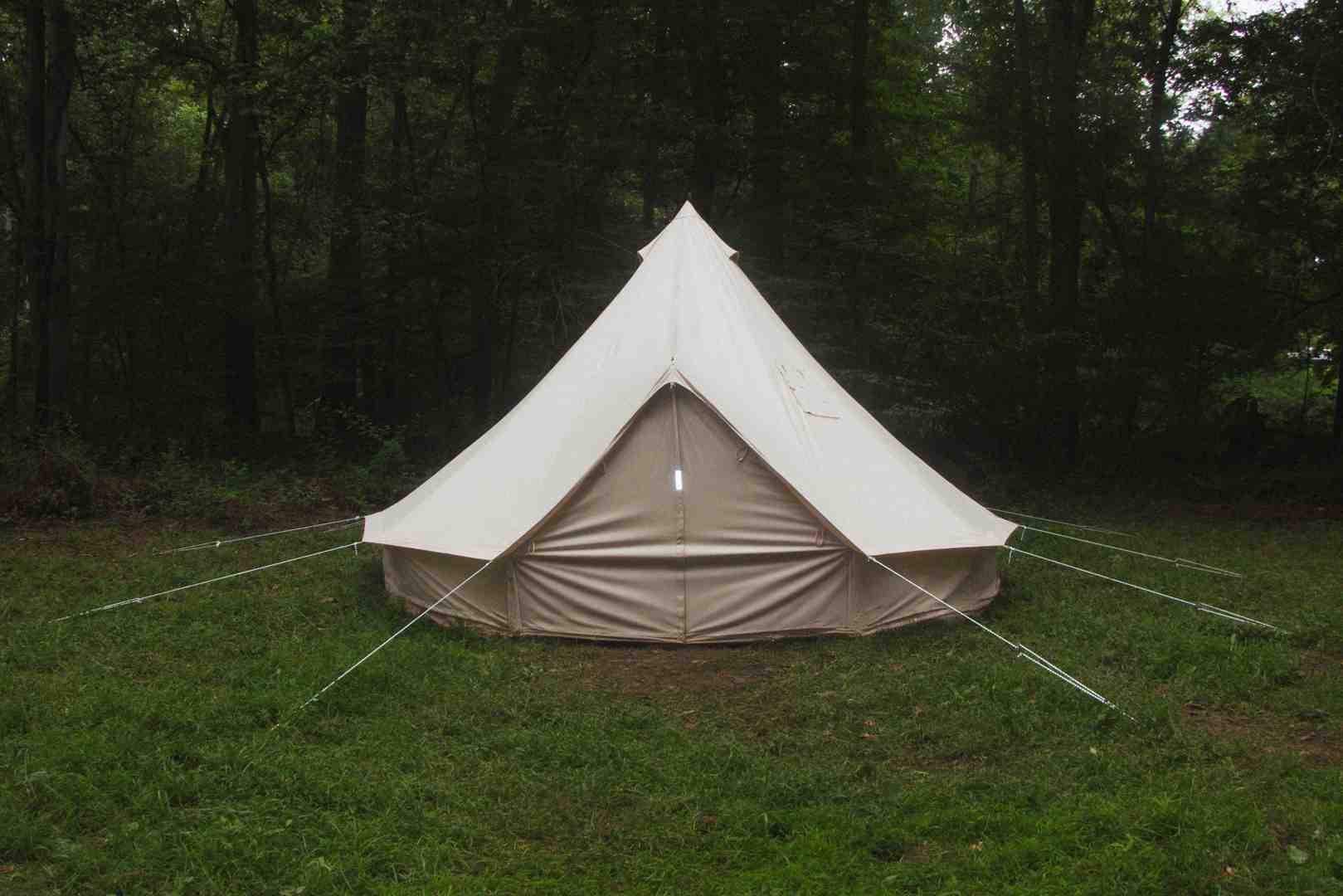
- Pitch the Tent Correctly: Set up your canvas tent completely in a sunny, dry location, ensuring it is taut and all guy lines are properly tensioned. This allows the canvas to stretch and settle, mimicking real-world conditions. Make sure all doors and windows are shut.
- Initial Saturation: Using a garden hose with a spray nozzle (avoiding high-pressure jets that can damage the fabric), methodically saturate the entire canvas surface with cold water. Pay special attention to seams, zippers, and stitched areas, as these are common points where needle holes are present. You should see the water initially bead and then soak into the fabric.
- Internal Inspection: Once the exterior is saturated, step inside the tent. Look for any pinpricks of light shining through the canvas, especially along seams. These indicate areas where water might penetrate.
- The Wet-and-Dry Cycle: Allow the tent to dry completely. This might take a few hours in direct sunlight and wind, or up to a full day depending on conditions. As it dries, the cotton fibers will contract, but the previous swelling will have tightened the weave and sealed those tiny holes.
- Repeat for Optimal Sealing: Repeat the saturation and drying process 2-3 more times. Each cycle further encourages the fibers to swell and settle, creating a more robust, naturally waterproof barrier. Field testing confirms that repeating this process several times yields superior results.
- Final Test: After the final drying cycle, you can perform a quick test by spraying specific areas or simply waiting for the next rainfall. If no leaks are observed, your tent is seasoned and ready.
Drying and Curing Times
The drying time after seasoning is critical. After each saturation, the canvas must dry completely before the next wetting. How long it takes for a canvas tent to dry depends significantly on environmental factors like sun and wind exposure. In ideal conditions with direct sunlight, it can take just a few hours. However, in cooler or more humid conditions, it might take a full day or even two.
It’s paramount to allow the canvas to dry thoroughly to prevent premature mildew growth. Operational experience in diverse climates, including the humid US Southeast and the arid Black Rock Desert Nevada, has shown that rushing this step can compromise the tent’s longevity. After the final seasoning cycle, recommendations informed by hands-on sourcing and testing suggest leaving the tent out to dry for at least one full day to ensure absolutely no moisture remains before packing it away.
A Comprehensive Guide to Canvas Tent Waterproofing
While seasoning activates the natural water resistance of your canvas tent, there are times when applying a dedicated waterproofing treatment is essential. This is particularly true for older tents, those exposed to harsh conditions (like prolonged sun in the US Southwest), or after thorough cleaning that may have stripped existing coatings. When the performance of your canvas tent waterproofing diminishes, it’s time for re-treatment. Extensive field operations confirm that proactive re-waterproofing is key to maximizing the lifespan of your canvas. Explore more about tent maintenance in the Canvas Tent Treatment guide.
Preparing Your Tent for Re-Waterproofing
The success of any waterproofing application hinges on proper preparation. The canvas must be impeccably clean and dry for the treatment to adhere effectively.
- Brush Off Loose Debris: Begin by thoroughly brushing off any loose dirt, dust, leaves, or bird droppings from the entire tent surface. A soft-bristle brush or even a leaf blower can be effective.
- Address Mold or Mildew: If mold or mildew is present, it must be removed before waterproofing. Use specialized, pH-neutral canvas cleaners designed to eliminate these growths without damaging the fabric. For a comprehensive guide, see Clean Canvas Tent Ultimate Guide. Harsh household detergents, bleach, or high-pressure washers should never be used on canvas, as they can strip natural oils and coatings, and damage the fibers. For an overview of mold, moisture, and building materials, consult guidance from the U.S. Environmental Protection Agency.
- Rinse Thoroughly: After cleaning, rinse the tent carefully with cold water to remove all cleaning solution residue. Any remaining soap can interfere with the waterproofing agent’s effectiveness.
- Ensure Bone-Dry Canvas: This step is non-negotiable. The canvas must be completely bone-dry before applying any waterproofing product. Moisture will prevent proper adhesion and can trap dampness, leading to future mold issues. Allow ample time for air drying, ideally in a sunny, well-ventilated area.
Choosing and Applying the Right Canvas Tent Waterproofing Product
| Treatment Type | Pros | Cons | Breathability Impact | Application Method |
|---|---|---|---|---|
| Silicone-based | Durable water repellency, strong beading, good for high-rainfall regions | Some formulas can slightly darken fabric; over-application may create a stiffer hand | Generally maintains breathability when applied as a surface DWR | Typically spray-on with pump or trigger sprayer for even coverage |
| Fluoropolymer-based | Excellent beading, often formulated specifically for breathable fabrics | Quality varies by brand; must avoid products not intended for cotton | Designed to preserve breathability when correctly applied | Spray-on application, sometimes followed by light brushing to work into fibers |
| Wax-based | Traditional appearance, tactile finish, strong barrier when fully cured | Heavier finish, can noticeably reduce breathability and attract dirt; may require heat activation | Can significantly reduce breathability if heavily applied | Brush-on or rub-on, sometimes followed by gentle heat to set |
Application techniques should prioritize an even, controlled coat over saturation. Use sprayers for uniform coverage on large panels and consider brush-on or roll-on methods for high-wear zones such as the lower wall and around doors. Pay particular attention to seams and stress points. For damaged areas that require more than simple re-treatment, reference the Canvas Tent Repair Guide.
Mitigating UV Damage and Its Effect on Waterproofing
UV radiation is one of the primary threats to both canvas fibers and surface coatings. Prolonged sun exposure can break down DWR treatments and slowly weaken cotton fibers.
Selecting treatments that include UV inhibitors helps slow this process and supports the broader sun-safety recommendations promoted in resources from the U.S. Centers for Disease Control and Prevention. In high-UV regions, adding a physical barrier such as a dedicated rain fly or sunshade significantly extends coating performance. The Stout Tent Sunshade for Bell Tents is designed to shield the roof panel, which is typically the most exposed area.
By combining UV-aware site selection (using natural shade where possible), UV-inhibiting treatments, and a purpose-built sunshade, you can materially extend the functional lifespan of your waterproofing between re-treatments.
If you want a maintenance plan tailored to your site and climate, contact Stout Tent for canvas tent waterproofing guidance and care protocols.