
Why a Log Burner for Bell Tent Transforms Your Canvas Shelter
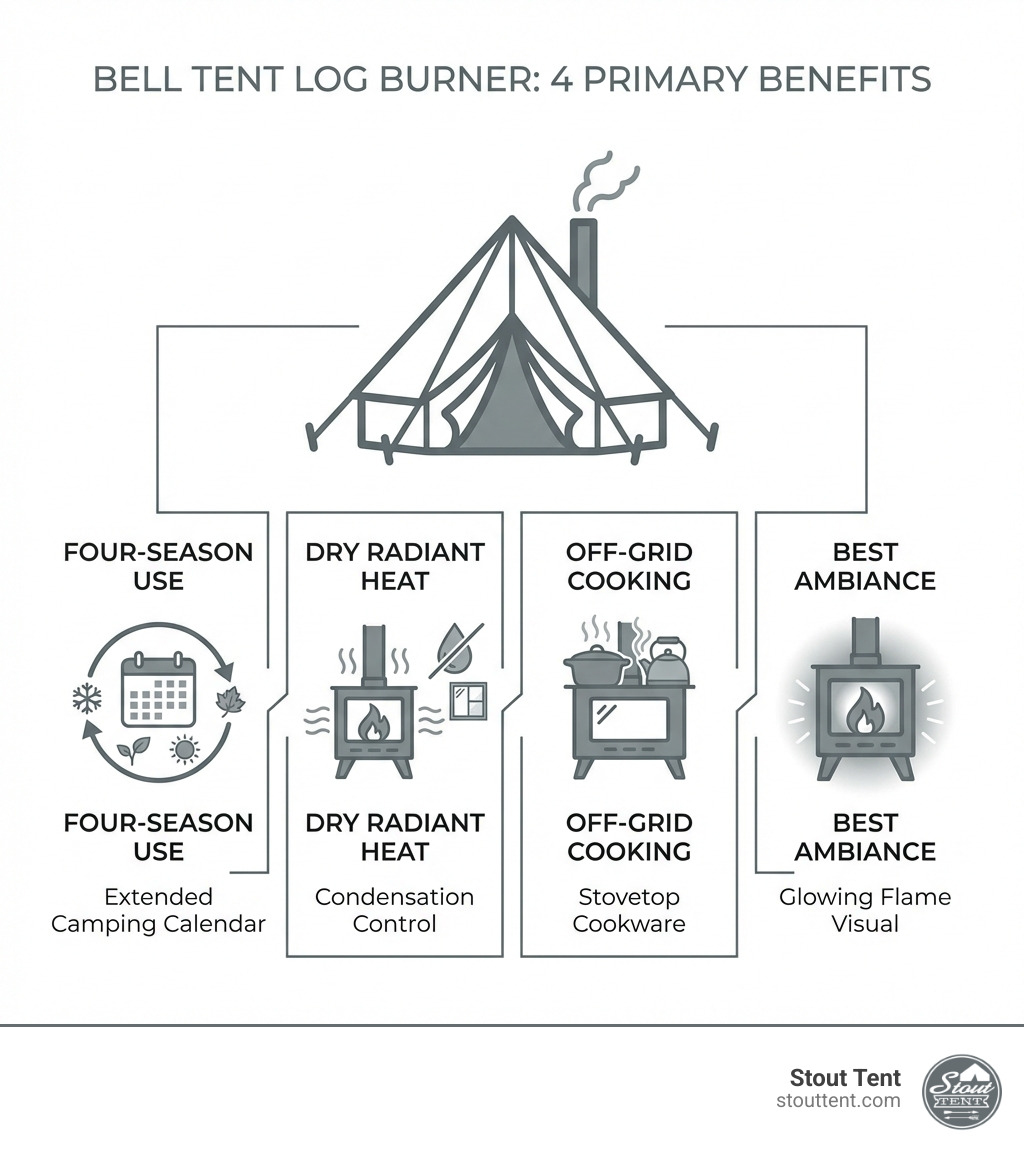
A log burner for bell tent setups enables four-season operation, providing reliable radiant heat, off-grid cooking capability, and the best ambiance of a real wood fire. Here’s what you need to select and safely operate one:
Quick Selection Guide:
- Heat Output: 3-4kW for most 4-6m bell tents
- Construction: Cast iron for heat retention; steel for portability
- Essential Safety Kit: Flashing kit (stove jack), heat mat, CO detector, spark arrestor
- Flue Diameter: Typically 60mm (2.4″) for portable models; 88mm (3.5″) for larger stoves
- Installation Requirements: Minimum 12″ clearance from canvas walls; proper flashing kit with high-temperature silicone seal
The crackling warmth of a wood fire inside a canvas tent extends the practical camping season well beyond summer, changing a bell tent from a seasonal shelter into a genuine four-season basecamp. A properly installed log burner provides dry radiant heat that combats condensation, serves as a reliable cooking surface, and creates the psychological comfort that only a real flame can deliver. For glamping operators and outdoor professionals, this capability allows for consistent utility across all seasons.
Yet the benefits of a tent stove are entirely dependent on correct selection and installation. An undersized stove fails to adequately heat the space, while an oversized unit can create safety hazards and consume fuel inefficiently. Poor flashing kit installation risks canvas damage or fire, and inadequate ventilation leads to dangerous carbon monoxide accumulation. This guide provides the operational framework for selecting a stove matched to your specific bell tent dimensions, installing it according to expert-tested safety protocols, and maintaining it for long-term reliability.
Extensive hands-on sourcing and testing experience informs these recommendations for selecting and safely operating a log burner for bell tent applications, ensuring both comfort and operational safety in settings from alpine hunting camps to year-round glamping sites.
Selecting the Right Log Burner for Your Bell Tent
Choosing the appropriate log burner for bell tent use is a critical first step towards a comfortable and safe outdoor experience. Our recommendations are informed by extensive field testing and operational expertise, ensuring that you select a stove that aligns perfectly with your canvas bell tent and specific needs. We prioritize performance, durability, and most importantly, safety, when evaluating any stove for use in a canvas shelter.
When considering a log burner, think about the size of your bell tent, the climate you’ll be camping in across regions like the US Pacific Northwest or the snowy climates of the Northeast, and your primary use for the stove. Whether it’s for warmth, cooking, or both, the right choice will significantly improve your experience. We stock and recommend only professional-grade materials and stoves that meet our rigorous standards.
Key Features to Evaluate in a Log Burner for a Bell Tent
When selecting a log burner for bell tent applications, several key features demand careful evaluation. These attributes directly impact the stove’s effectiveness, safety, and user experience. For a more comprehensive overview, check out our Tent Wood Burner Comparison 101.
- Heat Output Rating (kW): This is perhaps the most crucial factor. For most 4-meter to 6-meter bell tents, a stove with a heat output between 3kW and 4.1kW is ideal. For instance, a mini portable camping stove may offer up to 3kW of heat, suitable for smaller tents, while larger stoves can provide a more robust output of 4kW or more, making them excellent for larger spaces or colder conditions. An appropriately sized stove will efficiently heat your tent without overheating or requiring excessive fuel.
- Construction Material (Cast Iron vs. Steel):
- Cast Iron: Known for its excellent heat retention, cast iron stoves radiate heat evenly over a longer period, even after the fire has died down. This makes them highly efficient for sustained warmth. However, they tend to be heavier and less portable.
- Steel: Steel stoves are generally lighter and heat up more quickly. Their portability is a significant advantage, with some models designed to pack down compactly. Steel stoves are durable and offer good performance for camping scenarios where quick heating and portability are key.
- Portability: Given that bell tents are often temporary structures, the portability of your log burner is vital. Look for features like folding or adjustable legs, internal flue storage (where flue sections tuck neatly inside the stove’s body), and a manageable weight. For example, some portable models weigh only 10kg, including the flue, making them highly transportable.
- Safety Certifications: While specific certifications for tent stoves can vary, reputable manufacturers adhere to high safety standards. We always recommend stoves that include essential safety features and clear usage guidelines.
- Integrated Spark Arrestor: An absolute necessity for any tent stove, a spark arrestor is a mesh cap fitted at the top of the flue pipe. This prevents embers and sparks from exiting the flue and potentially igniting your canvas tent, a critical safety feature for canvas shelters. Quality tent stoves include a spark arrestor for canvas protection.
- Air-Wash Glass Door: A stove with a glass window on the door, often combined with an air-wash system, allows you to enjoy the mesmerizing glow of the fire safely. The air-wash system helps keep the glass clean by directing a curtain of air across the inner surface, preventing soot buildup and allowing for a clear view of the flames.
The Role of a Log Burner in Four-Season Camping
A log burner for bell tent setups fundamentally redefines the camping experience, changing it from a fair-weather activity into a truly year-round adventure. Our expertise in setting up glamping sites in diverse environments, from the mild winters of California to the challenging snowy climates of the US Northeast, has shown us the unparalleled value of a reliable heat source.
- Extending the Camping Season: With a log burner, the camping season is no longer confined to the warmer months. You can comfortably enjoy spring, autumn, and even winter camping in your bell tent. This means more opportunities to connect with nature, whether you’re exploring the landscapes of the US Pacific Northwest or experiencing the crisp air of the Black Rock Desert in Nevada during cooler festivals.
- Providing a Dry Heat Source to Combat Condensation: Canvas tents, especially in humid or cold conditions, can be prone to condensation. A log burner provides a dry, radiant heat that helps to evaporate moisture within the tent, keeping the interior drier and more comfortable. This is particularly beneficial in regions like the US Southeast, where humidity can be a factor even in cooler weather.
- Creating a Comfortable Basecamp: For those who pursue activities like hunting or winter sports, a heated bell tent serves as an invaluable warm basecamp. It offers a place to dry gear, warm up after a day outdoors, and relax in comfort, no matter how harsh the external conditions. This capability is central to our offerings for 4 Season Tents Guide and Are 4 Season Tents Warmer?.
- The Psychological Comfort of a Real Fire: Beyond the practical warmth, there’s an undeniable allure to a crackling wood fire. It creates a cozy ambiance, a focal point for gathering, and a sense of primitive comfort that improves the overall outdoor experience. This unique charm contributes significantly to the glamping aesthetic and the feeling of a “home away from home.”
The Definitive Guide to Safe Stove Installation
Proper installation of your log burner for bell tent is not merely a recommendation; it is a non-negotiable safety imperative. Our process-oriented expertise, honed through countless installations, emphasizes a methodical approach to integrating a wood burner into your bell tent. This section outlines the expert-tested methods to ensure your setup is both secure and safe. For a detailed visual guide, refer to our How to Install Stove resource.

Essential Safety Accessories for Your Bell Tent Stove
A safe log burner for bell tent setup relies on more than just the stove itself. A suite of essential safety accessories works in concert to mitigate risks and protect both your tent and its occupants. We consider these components integral to any professional-grade stove kit.
- Stove Jack / Flashing Kit: This is the critical component that allows the hot flue pipe to pass safely through the canvas roof or wall of your bell tent without igniting the material. Typically made from heat-resistant silicone or vulcanized rubber, a flashing kit creates a sealed, fire-resistant opening. Specialized options like the Winnerwell Flashing Kit are designed for this purpose. These kits are often made from materials that can withstand temperatures up to 572 degrees Fahrenheit (300 degrees Celsius).
- Heat-Resistant Mat or Hearth: To protect the tent’s groundsheet and flooring from radiant heat, embers, or accidental spills, a heat-resistant mat or hearth is essential. This creates a non-combustible barrier beneath and around the stove. Some stoves can be paired with a stove enclosure that includes a built-in hearth, negating the need for a separate one.
- A-rated Fire Extinguisher: Always have an A-rated fire extinguisher readily accessible inside your tent. According to the U.S. Fire Administration, this type is suitable for fires involving ordinary combustibles like wood and canvas. This provides immediate means to address any small fires that might occur.
- Carbon Monoxide (CO) Detector: A battery-operated Carbon Monoxide (CO) Detector is an absolute must when operating any fuel-burning appliance inside an enclosed space. Follow CO detector safety tips from the NFPA for proper placement and maintenance.
- Spark Arrestor: As mentioned previously, a spark arrestor is crucial for preventing stray sparks from landing on and potentially igniting your canvas tent. Most quality tent stoves include this as a standard feature, but always verify its presence and proper installation.
These components, along with the stove itself, form a complete and safe Stove Kit that we recommend for any bell tent application.
Step-by-Step Flue and Stove Jack Installation
Installing your log burner for bell tent and its flue system requires precision and adherence to established safety protocols. Our expert-tested method ensures a secure setup:
- Determining the Optimal Stove Position: Before cutting, decide where your stove will sit. For bell tents, a central position is often preferred as it allows the flue to go through the roof, providing superior heat distribution across the tent. Ensure there’s enough clear space around the stove (minimum 12 inches, or 30 cm, from any combustible materials like canvas walls or bedding) and that the flue path is clear of ropes or structural poles.
- Marking and Cutting the Stove Jack Opening:
- Once the stove’s position is finalized, assemble your flue sections and hold them in place to mark the exact point where the flue will exit the canvas roof.
- Carefully measure the diameter of your flashing kit’s inner ring.
- Using a sharp utility knife or circular cutting tool, precisely cut a hole in the canvas. It’s critical that this hole matches the flashing kit’s dimensions to ensure a snug, secure fit.
- Installing the Flashing Kit:
- Position the top half of the Winnerwell Flashing Kit over the cut hole on the exterior of the tent, ensuring it’s centered.
- Apply a bead of high-temperature silicone sealant around the edge of the opening on the canvas, both inside and outside.
- Secure the flashing kit in place, often using a combination of clamps and bolts that sandwich the canvas between the two halves of the kit. This creates a watertight and heat-resistant seal.
- Allow the silicone to cure completely as per manufacturer instructions before proceeding.
- Assembling Flue Sections:
- Starting from the stove, connect the individual flue pipe sections. Ensure each section is securely fitted, typically by twisting or slotting them together.
- The goal is to achieve a proper height above the roof (at least 1 foot or 30 cm) to ensure good draft and to safely disperse smoke away from the tent. For example, some portable stoves have a total assembled flue length of around 174cm, while larger models can reach heights of 280cm with the flue installed.
- Ensure the spark arrestor is securely fitted to the very top flue section.
- Ensuring All Components are Secure and Stable:
- Once the flue is assembled and passed through the flashing kit, check that all connections are tight.
- Inspect the flashing kit to confirm it is firmly attached to the canvas and that there are no gaps.
- Consider using guy wires to stabilize the flue pipe in windy conditions, especially in exposed locations like the Black Rock Desert.
- Double-check minimum clearances around the stove and flue.
Operating and Maintaining Your Bell Tent Log Burner
The true value and longevity of your log burner for bell tent setup are realized through diligent operation and routine maintenance. These practices ensure not only consistent performance but also the ongoing safety of your canvas shelter. Our operational guidelines are designed to maximize efficiency and extend the life of your stove, providing reliable warmth for years to come. We also recommend consulting the EPA Burn Wise best practices for general wood-burning efficiency.
Best Practices for Efficient and Safe Operation
Operating your log burner for bell tent efficiently and safely requires adherence to a few critical best practices. Our expert-tested methods are designed to protect your equipment and ensure a comfortable experience. For additional heating strategies, consult our Cheat Sheet to Tent Heat Solutions.
- Seasoning the Stove Outdoors: Before its first indoor use, it is crucial to “season” your stove. Fire it up outdoors and gradually bring it to full temperature. This process cures the paint, preventing strong odors and fumes from entering your tent during initial burns.
- Using Only Dry, Seasoned Hardwood: The type of fuel you use dramatically impacts efficiency and safety. Always burn dry, seasoned hardwood. Green or unseasoned wood contains moisture, which leads to inefficient burning, excessive smoke, and creosote buildup in the flue. Avoid burning trash, plastics, or treated wood, as these can release toxic fumes and damage your stove. Some multi-fuel stoves, for example, can burn wood, coal, or eco logs.
- Mastering Airflow Controls: Most log burners feature primary and secondary air intakes. Learning to adjust these controls allows you to regulate the burn rate and heat output.
- Primary Air: Controls the initial combustion, used for starting fires and adding new fuel.
- Secondary Air: Introduces air above the fuel, promoting a cleaner, more efficient burn by igniting unburnt gases. This also helps keep the glass door clean (air-wash system).
Proper control allows for long, slow burns that conserve fuel while maintaining comfortable temperatures.
- Never Leaving a Fire Unattended: A burning stove inside a canvas tent demands constant vigilance. Never leave your tent with a fire burning, especially if children or pets are present.
- Fully Extinguishing the Fire Before Sleeping or Leaving: Before retiring for the night or leaving your tent for any extended period, ensure the fire is completely extinguished. Close all air vents and allow the embers to die down. This eliminates the risk of stray sparks or an uncontrolled burn while you are not actively monitoring the stove. Always keep a fire extinguisher and a CO detector nearby.
Routine Maintenance for Longevity and Performance
Consistent maintenance is key to ensuring your log burner for bell tent performs optimally and lasts for many seasons. Just as we emphasize the care of our professional-grade canvas tents, we apply the same philosophy to stove maintenance. For general tent care, refer to The Maintenance Guide to Caring for Your Stout Tent.
- Daily Ash Removal: Allow the stove to cool completely, then remove ash from the firebox daily or after each use. Excessive ash buildup can impede airflow, reduce heating efficiency, and potentially lead to damage. Dispose of ash safely in a metal container away from combustible materials.
- Regular Cleaning of the Glass Door: If your stove has a glass door, soot and creosote can accumulate, obscuring the view of the fire. Use a damp cloth dipped in fine ash or a specialized stove glass cleaner to wipe away deposits when the stove is cold.
- Inspecting and Cleaning the Flue Pipe and Spark Arrestor: Creosote buildup in the flue pipe is a significant fire hazard. Regularly inspect the flue for black, flaky, or tar-like deposits. Clean the flue pipe and spark arrestor with a wire brush designed for stove pipes, especially before and after extended periods of use. This is crucial for preventing chimney fires.
- Checking Gaskets and Seals: Over time, the gaskets around the stove door and any other removable parts can wear out. Inspect these seals before each season to ensure they are intact and creating a tight seal. Worn gaskets can lead to inefficient burning and smoke leakage into the tent.
- Proper Off-Season Storage: When your camping season concludes, clean your stove thoroughly. Remove all ash, clean the flue and spark arrestor, and wipe down the exterior. Store the stove in a dry location to prevent rust. Applying a light coat of cooking oil to cast iron parts can help protect them during storage.
Beyond Warmth: Cooking with Your Tent Stove
One of the most appealing benefits of a log burner for bell tent is its dual functionality as a versatile, off-grid cooking surface. This capability truly transforms your bell tent into a self-sufficient haven, allowing you to prepare meals, boil water, and enjoy hot beverages, making it feel like a true home in the wild. Our Nomad View Woodburning Stove with Large Viewing Windows exemplifies how a stove can be both a heat source and a culinary station.
From Simmering Stews to Fresh Coffee
The flat top of a log burner for bell tent offers a surprisingly capable cooking surface for a wide range of culinary tasks.
- Utilizing the Flat Top for Pots and Pans: The top surface of most tent stoves acts as a direct heat source, perfect for placing pots, pans, and kettles. You can simmer stews, fry eggs, or sauté vegetables directly on the hotplate. Some stoves, like the Mini Portable Camping Bell Tent Stove, feature a removable top plate for direct heat to a pan or kettle. Accessories such as an extended hotplate can dramatically increase the cooking area, adding significant thermal mass to the stove and allowing space for a kettle, a cook pot, and even a griddle pan simultaneously.
- Identifying Temperature Zones: The heat distribution across the stove’s top plate isn’t uniform. The area directly over the firebox will be the hottest, ideal for searing or bringing water to a rapid boil. The edges and rear of the stove will be cooler, perfect for simmering, keeping food warm, or slow-cooking. This allows for multi-zone cooking, similar to a traditional range.
- The Simple Pleasure of a Kettle Always on the Boil: There’s a unique charm to having a kettle perpetually warm on the stove, ready for a cup of coffee, tea, or hot chocolate at a moment’s notice. This simple convenience significantly improves comfort, especially during chilly mornings or evenings. For a hearty meal idea, consider our Campsite Recipe: Dutch Oven Corned Beef and Cabbage.
Specialized Cooking Accessories for Your Log Burner for a Bell Tent
To further expand the culinary capabilities of your log burner for bell tent, a range of specialized accessories is available. These additions can transform your stove into a complete outdoor kitchen.
- Pipe Ovens for Baking: For those who love to bake, a pipe oven accessory can be a game-changer. These compact ovens typically attach to a section of the flue pipe, using the rising heat to bake bread, pizza, or even casseroles. The Winnerwell Woodlander Pipe Oven 3.5 is an excellent example, allowing you to enjoy freshly baked goods deep in the wilderness.
- Side-Mounted Hot Water Tanks: Imagine having continuous hot water on demand. Side-mounted hot water tanks attach to the side of your stove, heating water through conduction. The Woodlander Hot Water Tank Large is a popular choice, providing hot water for washing dishes, personal hygiene, or even a quick warm shower.
- Grill Attachments: Some stove systems offer grill attachments that can be placed over the firebox or even integrated into the flue pipe, allowing for open-flame grilling of meats and vegetables. This adds another dimension to your outdoor cooking repertoire, bringing the taste of a campfire grill indoors (safely, of course).
- Rear Flue Wedge: For stoves where maximizing stovetop cooking space is paramount, a rear flue wedge can be invaluable. This accessory allows flue pipes to be positioned closer to the back of the stove, liberating the entire top surface for cooking.
These accessories, combined with the inherent cooking ability of the stove’s flat top, turn your bell tent into a versatile and comfortable culinary outpost.
Conclusion
Integrating a log burner for a bell tent lifts the camping experience, offering reliable warmth and cooking utility that makes four-season adventures not just possible, but exceptionally comfortable. By prioritizing a methodical installation and adhering to strict safety protocols, you can create a secure and inviting hearth within your canvas shelter. Stout Tent’s professional-grade canvas tents are engineered for durability and are an ideal foundation for a safe and robust tent stove setup.
Ready to build a safer, stove-ready system? If you’re choosing a log burner for bell tent use—or want to confirm stove sizing, stove jack placement, and the right safety accessories—contact Stout Tent for a stove-ready bell tent setup