
Why Temporary Event Structures Matter for Successful Events
Temporary event structures provide the foundation for creating memorable experiences in locations where permanent venues don’t exist or don’t fit the vision. These portable structures transform fields, parking lots, beaches, and remote sites into fully functional event spaces, offering unprecedented flexibility for event producers.
What Are Temporary Event Structures?
Temporary event structures are portable, engineered shelters designed for events ranging from corporate functions to multi-day festivals. Professional-grade canvas tents, such as Bell Tents and Tipi Tents, offer a natural aesthetic combined with robust durability, making them a premier choice for creating unique venues.
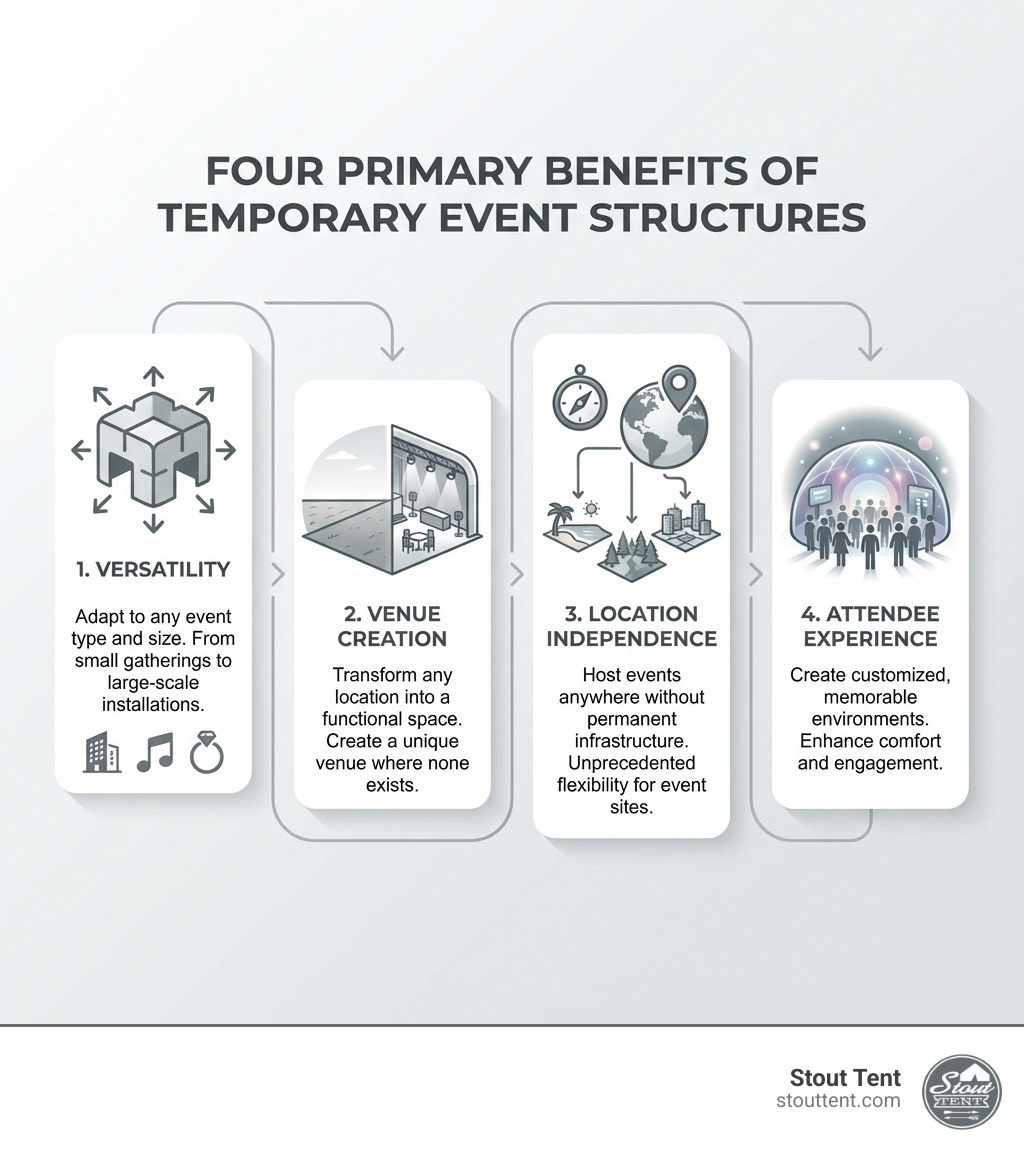
These temporary event structures serve four critical functions: they create versatile venues where none exist, establish location independence for event producers, improve attendee experiences through customized environments, and provide powerful branding opportunities. Unlike permanent venues with fixed layouts and availability constraints, these structures adapt to specific event needs. Event producers use them for everything from weddings and festivals to corporate product launches and emergency shelters. The structures range from simple canopies to sophisticated installations with climate control, custom lighting, and branded interiors.
Selecting a temporary event structure requires balancing durability, aesthetics, and operational reliability—validated through real-world deployments across varied climates and sites. This kind of expertise comes from extensive, hands-on experience sourcing, testing, and refining professional-grade canvas structures to ensure they perform consistently under demanding, real-world event conditions.
Key Factors for Selecting a Temporary Event Structure
Choosing the right temporary event structures is a decision that impacts every aspect of an event, from guest comfort to brand representation. The selection process should be approached with an operations-savvy mindset, considering several critical factors to ensure optimal outcomes. Recommendations should be informed by expert-tested methods and sourcing of professional-grade materials.
Firstly, the intended use dictates much of the structural requirements. A structure for a formal seated dinner will have different needs than one for a multi-day music festival. This includes everything from the overall aesthetic of the temporary event structures to the necessary infrastructure for climate control and catering.
Secondly, capacity requirements are paramount. The number of guests must be carefully calculated, considering whether they will be primarily seated or standing, to determine the appropriate size and layout of the structures. This ensures comfortable movement and adherence to safety regulations.
Site conditions present another significant consideration. Is the ground level or sloped? Is it soft earth, concrete, or sand? The terrain influences the type of anchoring systems required and the feasibility of certain temporary event structures. For instance, a canvas tent on a platform can adapt to uneven ground much more effectively than other options.
Durability and weather integrity are non-negotiable. The selected structures must be able to withstand diverse weather conditions, from the intense sun of the US Southwest to the unpredictable winds of the Black Rock Desert, Nevada, or the Pacific Northwest. Designs should be engineered to resist high winds and snow loads, ensuring guest safety and comfort.
Event Support is integral to planning the deployment of temporary event structures. Key considerations include the ease of installation and dismantling, the availability of specialized equipment, and the expertise of the crew. Efficient logistics are crucial for timely setup and site restoration.
Customization potential allows for the environment to be tailored to specific themes and branding. This includes options for interior finishes, flooring, lighting, and exterior branding. The ability to transform a basic structure into a unique, immersive experience is a key differentiator for high-quality temporary event structures.
Finally, installation logistics encompass everything from access for vehicles to the availability of power and water infrastructure. A thorough site assessment helps anticipate challenges and plan for a seamless operation, ensuring temporary event structures are deployed efficiently and safely.
A Guide to Professional-Grade Canvas Temporary Event Structures
This section provides an in-depth look at professional-grade canvas temporary event structures, enabling event producers to make informed decisions based on operational needs and aesthetic goals. Canvas tents, such as Bell Tents and Tipis, offer unique advantages, providing both durability and a superior attendee experience.
Canvas Tents (Bell & Tipi)

Canvas tents offer a natural aesthetic and unparalleled warmth that resonates deeply with events focused on connection and experience. These professional-grade canvas temporary event structures are not only visually appealing but also incredibly durable, designed to withstand the rigors of multi-day events and diverse weather conditions.
These structures are perfect for creating unique guest accommodations, VIP lounges, or intimate gathering spaces, especially within glamping villages for weddings or festivals. Our Durango Tipi showcases how these tents transform event landscapes. Crafted from heavy-duty canvas, these tents provide robust shelter, ensuring comfort and longevity. They are an expert-tested solution for events seeking a blend of rustic charm and professional reliability. For inspiring examples, see our guide to Glamping Weddings with Cause: We Can Events.
Navigating Logistics and Regulatory Compliance
Successful deployment of temporary event structures hinges on meticulous logistical planning and strict adherence to regulatory compliance. An operations-savvy approach ensures that every aspect, from installation to dismantling, is executed with precision and safety. Using expert-tested methods and an experienced Event Crew helps manage complex setups in diverse environments across the US.
The installation process for any temporary structure involves careful site preparation, precise assembly of components, and secure anchoring. Dismantling procedures are equally critical, focusing on efficiency, safety, and thorough site restoration to leave no trace. Site management during an event includes ongoing maintenance, safety checks, and rapid response capabilities to ensure a seamless experience for all attendees.
Understanding Permitting for Temporary Event Structures
Navigating the permitting landscape is one of the most crucial aspects of deploying temporary event structures. Local ordinances, building codes, and fire safety compliance vary significantly by jurisdiction, even within a single state like Washington or California. Proactive engagement with local authorities is essential to understand specific requirements well in advance of any event.
For instance, in Seattle, Washington, temporary structure permits are required for many large tents, stages, and pavilions. The Seattle Department of Construction & Inspections (SDCI) provides clear guidelines on when permits are needed, the duration limits (often six months maximum for tent permits, non-renewable), and the application process. These permits often have a streamlined review process compared to regular building permits, but still demand detailed plan sets.
Key considerations include:
- Occupancy Load: Ensuring the structure’s design and exits can safely accommodate the anticipated number of people.
- Fire Safety Compliance: Adhering to fire codes regarding materials, exits, fire extinguishers, and separation distances between structures. The U.S. Fire Administration provides comprehensive Fire Safety for Special Events guidelines that should be integrated into all planning.
- Structural Adequacy: Demonstrating that the structure is engineered to withstand anticipated loads, including wind and snow.
While specific regulations vary, the core principle remains consistent: public safety is paramount. Resources like the Seattle SDCI Tip #306 – Temporary Structure Permits can serve as a guide for best practices in various operating regions, ensuring operations are fully compliant.
Ensuring Structural Safety and Weather Integrity
The structural safety and weather integrity of temporary event structures are paramount, especially when operating in regions prone to severe weather, such as the coastal areas of the Pacific Northwest or the plains of the US Southeast. Professional-grade materials and expert-tested installation methods should be chosen for their resilience.
Critical elements include:
- Wind Load Ratings: All structures should be selected based on their engineered wind load ratings, which dictate the maximum wind speed they can safely endure. This is crucial for event planning in exposed locations.
- Anchoring Systems: Robust anchoring systems, whether heavy-duty stakes, water barrels, or concrete blocks, are essential to secure structures against uplift and lateral forces. Anchoring must meet or exceed engineering specifications for the specific site conditions.
- Material Specifications: Using materials like high-grade aluminum, steel, and heavy-duty canvas is recommended for their strength, durability, and resistance to environmental degradation. Professional-grade canvas tents, for example, are known for their exceptional longevity.
- Weatherproofing: Beyond structural stability, weatherproofing is key to guest comfort. This includes waterproof fabrics, integrated gutter systems, and effective sealing against rain and moisture.
- Climate Control: For extreme temperatures, integrating heating, ventilation, and air conditioning (HVAC) systems ensures a comfortable interior environment, regardless of external conditions.
- Ground Preparation: Proper ground preparation, including the use of subflooring or a custom portable base, can improve stability, drainage, and overall comfort, especially for canvas tents.
Continuously monitoring weather forecasts and having contingency plans in place, aligning with best practices from organizations like FEMA for Severe Weather Event Planning, is necessary to ensure the safety and success of every event.
Enhancing Events with Customization and Branding
One of the most compelling advantages of temporary event structures is their inherent flexibility for customization and branding. Unlike fixed venues, these structures provide a blank canvas for crafting environments that perfectly align with an event’s theme, purpose, and brand identity. Expert execution ensures that every detail, from the overall layout to the subtle nuances of lighting, contributes to an unforgettable experience.
Customization options are extensive:
- Interior Layouts: From open-plan ballrooms to multi-room configurations with lounges, dining areas, and backstage facilities, the interior can be designed to optimize guest flow and functionality. The Durango Event Tent Floorplans and Layouts illustrate this versatility for Tipi tents.
- Flooring Options: A variety of flooring can be installed, from neat carpeting and polished hardwoods to rugged interlocking tiles, catering to both aesthetic preferences and practical needs.
- Climate Control: Integrated HVAC systems ensure optimal temperatures, providing comfort in the heat of a California summer or the chill of a Washington winter.
- Lighting Design: Strategic lighting can dramatically alter the mood and atmosphere, from ambient washes to focused spotlights and dynamic effects that improve performances or presentations.
- Walls and Ceilings: The choice of wall panels (clear, solid, or custom-printed) and ceiling liners allows for complete aesthetic change, creating an immersive space.
Creating Immersive Brand Experiences with Temporary Event Structures
Temporary event structures are powerful tools for brand visibility and marketing efforts. They offer a unique opportunity to create immersive experiences that deeply resonate with attendees, far beyond what a standard venue can provide.
- Brand Visibility: Custom graphics, wraps, and banners can transform the exterior of a structure into a massive, eye-catching advertisement. Inside, branded elements can be integrated into every surface, from walls and floors to furniture and décor.
- Experiential Marketing Integration: These structures are ideal for experiential marketing, allowing brands to create interactive zones, product demonstration areas, or themed environments that engage consumers directly. This approach helps build a strong brand presence.
- Creating a Destination: By building a unique and memorable space, temporary event structures turn an event into a destination. Whether it’s a dedicated brand activation zone or a fully themed environment, the structure itself becomes part of the event’s appeal, drawing attendees in and encouraging social sharing. The Durango Promo exemplifies how Tipi tents can serve as powerful brand platforms.
These structures are more than just shelters; they are dynamic canvases for creativity, allowing a brand’s narrative to be extended into a tangible, interactive space.
Conclusion
The world of temporary event structures offers unparalleled flexibility and creative potential for event producers. Professional-grade canvas tents, with their natural elegance and robust design, present distinct advantages for a wide range of applications. The key lies in matching the right structure to an event’s specific objectives, capacity needs, and aesthetic vision.
A commitment to durability and ensuring an exceptional attendee experience sets professional-grade temporary event structures apart. A successful event is built on a foundation of reliable, expertly deployed, and beautifully customized environments. By prioritizing structural integrity, weather resilience, and meticulous logistical planning, event organizers can transform any location into a memorable destination.
Ready to plan temporary event structures that fit your site, timeline, and compliance needs? Contact our team to map the right setup for your event.