

Why Choosing the Right Heater for Tent Use Matters
A heater for tent use transforms cold-weather camping from an endurance test into a controlled, comfortable operation, but only when selected and operated correctly. The right approach combines professional-grade materials, expert-tested heating solutions, and disciplined safety protocols.
Quick Safety Checklist:
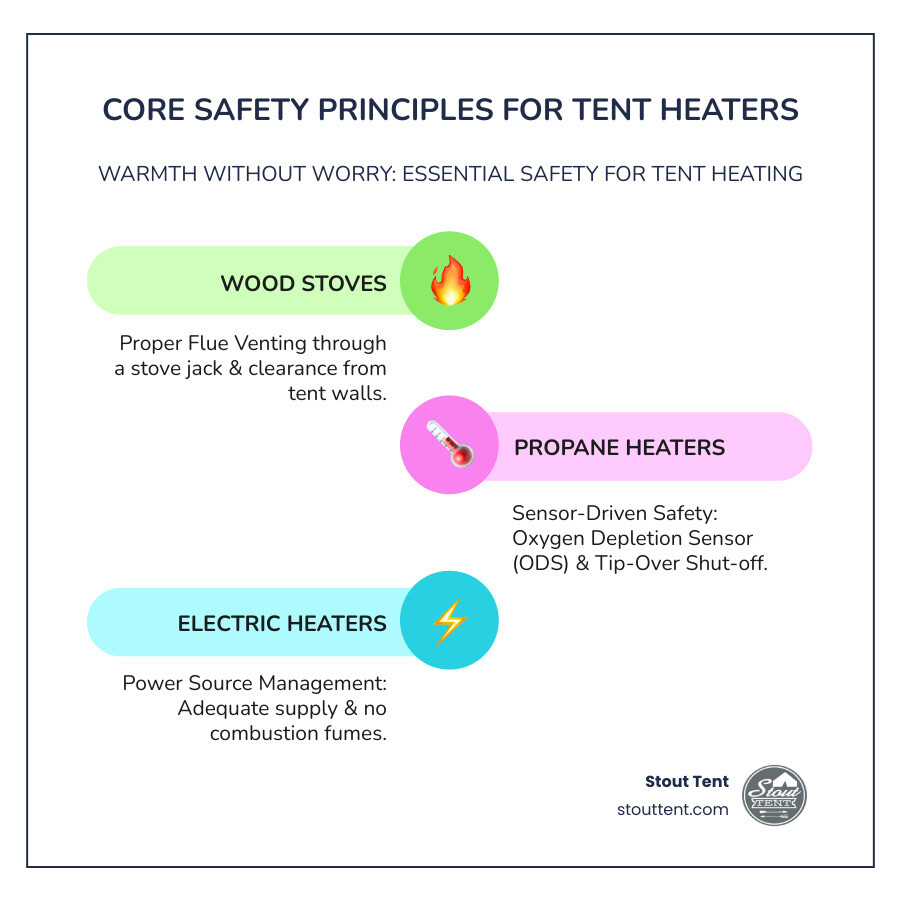
- Wood Stoves: Require proper flue venting through a stove jack and clearance from tent walls
- Propane Heaters: Must include an Oxygen Depletion Sensor (ODS) and tip-over shut-off
- Electric Heaters: Need adequate power supply and produce no combustion byproducts
- All Types: Require working carbon monoxide detectors and proper ventilation
The wrong heating solution can create dangerous conditions—carbon monoxide buildup, fire hazards, or inadequate warmth that undermines the entire setup. The right one delivers reliable comfort while keeping occupants safe. Professional-grade canvas tents designed for four-season use pair naturally with appropriate heating systems, but the heater itself must match your tent’s size (in square meters), your power availability, and the environmental conditions on site.
Stout Tent recommendations are informed by hands-on sourcing and testing of heater for tent use systems across diverse climates and operational scenarios. This process involves working directly with clients to identify reliable solutions that perform in real-world conditions. This guide distills that process-oriented expertise into practical recommendations for safe, effective tent heating.
Prioritizing Safety: Essential Protocols for Tent Heating
When bringing any heat source into an enclosed space like a canvas tent, safety is paramount. Recommendations in this guide are grounded in hands-on sourcing, expert-tested configurations, and a focus on operational reliability for those relying on professional-grade materials in demanding environments. The primary risks are carbon monoxide (CO) poisoning and fire, both of which can be mitigated with strict adherence to safety protocols.
Carbon monoxide is a colorless, odorless gas produced by incomplete combustion. It can incapacitate and kill without warning. To prevent CO buildup, a carbon monoxide detector is a mandatory, life-saving device for any enclosed, heated space. A battery-powered CO detector, tested before each use, is non-negotiable when operating a heater for tent use. For comprehensive guidance on prevention and exposure limits, review authoritative resources such as the Centers for Disease Control and Prevention CO Poisoning Prevention page.
Fire hazard mitigation involves maintaining a clear zone of at least 36 inches around any heater. This means ensuring no flammable materials—sleeping bags, clothing, tent walls, or gear—are within this safety perimeter, a standard aligned with guidance from organizations such as the U.S. Fire Administration. Proper heater placement is crucial; it should always be on a stable, non-flammable surface, away from tent walls and any other combustibles.
Adequate ventilation is another cornerstone of safe tent heating. Even with heaters that claim to be “indoor safe,” continuous airflow is essential to prevent oxygen depletion and to flush out any potential CO. This is particularly true for propane heaters, which also produce water vapor as a byproduct of combustion, leading to condensation and a damp, colder interior if not properly ventilated. For a deeper operational framework on maintaining warmth safely in canvas tents, explore the Stout Tent guide on how to Stay Warm in a Tent. Additional background on ventilation and indoor air quality standards can be found through the Occupational Safety and Health Administration and National Fire Protection Association resources.
Evaluating Your Options: Types of Heaters for Tent Use
Choosing the right heater for tent use depends on your specific needs, the environment, and your access to resources. The options below are evaluated with an operations-focused lens to understand their strengths and limitations in real deployment.
Wood-Burning Tent Stoves: The Classic Solution
Wood-burning tent stoves offer a traditional and highly effective way to heat a canvas tent. They provide a radiant, dry heat that can quickly warm a large space, making them a reliable choice for cold-weather camping in regions like the US Pacific Northwest or the snowy climates of the US Northeast.
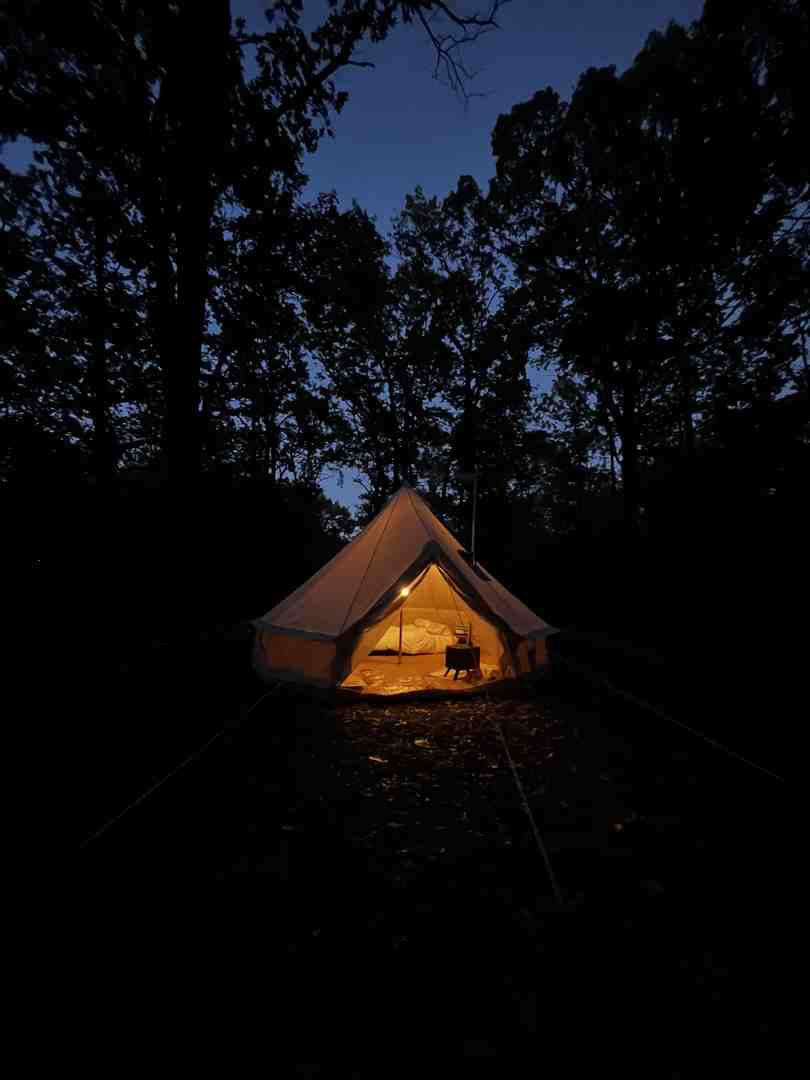
These stoves work by burning wood inside a firebox, with smoke and exhaust vented safely outside through a stove jack. The metal body of the stove radiates heat, creating a comfortable interior. Many models, like the Winnerwell Woodlander Wood Burning Stove, also feature a flat top surface that doubles as a cooking area, allowing you to boil water, cook meals, or simply keep a kettle warm.
The key to using a wood stove safely and effectively is having a tent equipped with a stove jack. Stout Tent professional-grade canvas bell tents are designed to be stove-jack ready, allowing for secure installation and proper ventilation. For detailed guidance on setup, refer to the Ultimate Tent Stove Guide and instructions on How to Install Stove.
Fuel sourcing and preparation are critical. You’ll need access to dry, seasoned wood, cut into appropriate sizes (for example, approximately 1 inch in diameter, 6 inches in length for optimal burning in some models). This can be a consideration for remote locations where reliable fuel planning is part of trip logistics. Maintenance involves regular cleaning of the stove and flue pipe to ensure efficient operation and prevent creosote buildup, which can be a fire hazard.
Propane Heaters: Portable Power
Propane heaters are a strong option for their portability and ease of operation, particularly for car camping or situations where wood collection is impractical. They fall into two main categories: catalytic and radiant. Radiant heaters, like many Mr. Heater models, use an open flame to heat a ceramic plate, which then radiates warmth. Catalytic heaters, on the other hand, use a flameless chemical reaction to generate heat, making them generally safer for enclosed spaces as they typically produce less carbon monoxide.
These heaters offer high BTU (British Thermal Unit) outputs, capable of quickly warming spaces. For instance, a Mr. Heater Little Buddy is a 3,800 BTU heater that can heat up to approximately 8.8 m², running for about 5 hours on a 1 pound propane cylinder. The larger Mr. Heater Portable Buddy MH9BX offers 4,000–9,000 BTU, heating up to about 20.9 m² and running for 3 hours on max BTU or 6 hours on min BTU from a 1 pound bottle. Larger tank-top heaters, like the Mr. Heater 10,000–15,000 BTU model, can run for extended periods on a 5– to 20–pound propane cylinder, providing sustained warmth for larger bell tents used in the US Southwest or Black Rock Desert.
A significant consideration with propane heaters is the moisture production as a byproduct of combustion. This can lead to increased condensation inside your tent, making it feel damp and colder once the heater is turned off. Proper ventilation is absolutely crucial to manage both moisture and any potential CO buildup.
Altitude also impacts propane heater performance. Many models are equipped with an Oxygen Depletion Sensor (ODS) that automatically shuts off the unit if oxygen levels drop too low. This is a vital safety feature, but it can also mean that heaters may not function reliably at higher elevations, typically above 7,000 feet, which is a common occurrence in mountainous regions of California, Washington, or the US Southwest. Additionally, all propane heaters suitable for tent use should have a tip-over safety switch, which cuts off the fuel supply if the unit is accidentally knocked over, limiting fire hazards.
Electric Heaters: The Modern Approach for a Heater for Tent Use
Electric heaters offer a distinct advantage: they produce no indoor combustion, meaning no carbon monoxide, no fumes, and no added moisture. This makes them inherently safer for enclosed spaces like tents, provided you have a reliable power source. They are also typically quieter than their combustion counterparts, supporting a controlled and restful environment.

The main challenge with electric heaters for tent use is their dependence on a substantial power source. Without access to a traditional power outlet, you’ll need a portable power station or a solar generator. The power demands of electric heaters can quickly drain even high-capacity batteries. For example, a 100-watt electric blanket can drain a 500 watt-hour portable power station in just five hours. However, larger units, such as a 1,500 watt-hour solar generator, can power a 100-watt blanket for two nights on a single charge, or a 250-watt cubicle heater for six-and-a-half hours on high (225 watts) or 15 hours on low (100 watts). These high-capacity systems are increasingly viable for extended cold-weather comfort.
For those seeking electric heat, low-draw options like heated blankets are particularly effective. They warm you directly rather than trying to heat the entire air volume of the tent, making them operationally efficient for personal comfort. Small, low-wattage space heaters designed for cubicles or small rooms can also be effective in a well-insulated canvas bell tent, providing ample warmth without excessive power draw, especially when paired with a robust portable power station. This type of configuration, when expert-tested and properly specified, can create a significant temperature difference, even in chilly outdoor conditions.
Selecting the Right Heater: Key Factors to Consider
Choosing the optimal heater for tent use involves a careful balance of heating capacity, safety features, and environmental considerations. Operational experience providing professional-grade materials for diverse settings, from the Black Rock Desert to the US Northeast, underscores the importance of disciplined, data-informed choices.
Matching BTU Output to Your Tent
BTU, or British Thermal Unit, is a measure of thermal energy, indicating the amount of heat a heater can produce. One BTU is the amount of heat required to raise the temperature of one pound of water by one degree Fahrenheit. For tent heating, matching the BTU output to your tent’s size is crucial for efficient and effective warmth.
Professional-grade canvas bell tents offer robust material performance, providing superior insulation compared to many synthetic alternatives. This means they retain heat more effectively, potentially allowing you to use a slightly lower BTU heater than you might in a less insulated shelter. For a comprehensive understanding of how canvas tents hold heat and how various heater types integrate with them, review the Stout Tent guide on How Do You Heat a Canvas Tent?.
As a general guideline, consider the following (tent footprint shown in square meters):
| Tent Size (m²) | Recommended BTU Range | Suitable Heater Types |
|---|---|---|
| Up to ~8.8 m² | 3,000 – 5,000 BTU | Small propane (e.g., Mr. Heater Little Buddy), Low-wattage electric |
| ~8.8 – 20.9 m² | 5,000 – 9,000 BTU | Medium propane (e.g., Mr. Heater Portable Buddy), Medium electric, Small wood stove |
| ~20.9 – 41.8 m² | 9,000 – 18,000 BTU | Large propane (e.g., Mr. Heater Big Buddy), Larger electric, Medium wood stove |
| ~41.8+ m² | 18,000+ BTU | Large wood stove, High-output propane |
These are general recommendations. Factors like outside temperature, tent insulation performance, and desired interior temperature will influence your actual needs.
Critical Safety Features for Any Heater for Tent Use
Regardless of the type of heater for tent use you choose, certain safety features are non-negotiable. These mechanisms are designed to prevent accidents and protect occupants.
- Tip-Over Protection: This mechanism automatically shuts off the heater if it’s accidentally knocked over. Given the dynamic environment of a tent, especially with people moving around or in windy conditions, this feature is critical in limiting fire risk.
- Oxygen Depletion Sensor (ODS): Found in most modern propane and other combustion heaters, the ODS monitors oxygen levels in the surrounding air. If oxygen drops below a safe threshold, indicating a lack of proper ventilation or a malfunction, the sensor will automatically shut off the heater.
- Automatic Overheat Shut-Off: This feature prevents the heater from reaching dangerously high temperatures, which could damage the unit or ignite nearby materials.
- Cool-Touch Housing: While not a shut-off mechanism, cool-touch exteriors reduce the risk of accidental burns, a valuable feature especially if children or pets are present.
It is also important to be aware of product safety disclosures. For instance, in California, products may carry Proposition 65 warnings regarding exposure to certain chemicals. All product warnings and instructions provided by the manufacturer should be reviewed and followed as part of your safety plan.
The Impact of Altitude and Environment
Geographical location, whether you’re camping in the high desert of Nevada or the mountains of Washington, significantly impacts heater performance and operational planning.
High altitude, typically above 7,000 feet, presents unique challenges for combustion heaters. Reduced oxygen levels can interfere with the proper functioning of Oxygen Depletion Sensors (ODS), causing propane heaters to shut off prematurely or simply not ignite. This is a safety mechanism, but it means that some combustion heaters may not be reliable in these conditions. When planning trips to higher elevations, such as those found in parts of California, it is essential to confirm the maximum operational altitude for your specific heater model.
Battery-powered heating solutions also face environmental considerations. Batteries do not perform well in sub-freezing temperatures; their efficiency can significantly decrease, and their capacity can be temporarily reduced. To combat this, insulating your power sources is recommended. Keeping portable power stations inside the tent, or even in an insulated cooler within the tent, can help maintain battery temperature and optimize performance. For more structured preparation guidance for cold conditions, consult the Stout Tent overview of Recreational Winter Camping Essentials. Additional technical context on cold-weather battery behavior and safe use of fuel-burning appliances in enclosed spaces is available through agencies such as the U.S. Department of Energy and the Consumer Product Safety Commission.
Operational Best Practices: Maintenance and Storage
Ensuring the longevity and safe operation of your heater for tent use requires diligent maintenance and proper storage. This approach aligns with the same standards applied to professional-grade materials used in Stout Tent canvas shelters and related gear.
Routine cleaning procedures vary by heater type:
- Wood Stoves: Regular cleaning of the firebox, flue pipe, and spark arrestor is essential to prevent creosote buildup, which can lead to chimney fires. Inspect for rust or damage before each use.
- Propane Heaters: Keep the radiant surface or catalytic pad free of dust and debris. Periodically check the burner ports for blockages.
- Electric Heaters: Dust buildup can be a fire hazard and reduce efficiency. Ensure air intakes and outlets are clear and free of obstructions.
Safe storage and transport of propane cylinders are critical. Always store propane tanks upright in a well-ventilated area, away from direct sunlight and heat sources, and never inside your tent or vehicle. When transporting, secure them to prevent rolling or tipping, following established propane cylinder safety protocols. Inspect hoses and connections on propane heaters regularly for any signs of wear, cracks, leaks, or degradation. Even a small leak can pose a significant danger.
Proper off-season storage is key to ensuring reliable performance year after year. Store all heaters in a dry, protected environment to prevent rust and damage. For propane heaters, disconnect and store cylinders separately. For electric heaters, ensure batteries are charged to a recommended storage level (often 50–80%) to maintain their health, following manufacturer guidance. By applying these operational best practices, your heater remains a dependable component of an expert-tested, professional-grade camping setup for repeated, long-term use.
Conclusion
Choosing the right heater for tent use is about more than staying warm; it is about executing a safe, controlled, and reliable cold-weather setup. This guide has outlined the characteristics of wood-burning stoves, propane heaters, and electric solutions, along with the safety features and environmental factors that govern their performance in canvas tents.
By prioritizing carbon monoxide detection, maintaining clear safety zones, ensuring adequate ventilation, and matching BTU output to tent size (measured in square meters), you create a structured framework for safe heating. Integrating expert-tested equipment with professional-grade materials and disciplined maintenance practices ensures that your tent and heating system perform consistently across seasons and locations.
For tailored guidance on specifying the right heater and canvas tent configuration for your environment and operational needs, contact the Stout Tent team at https://stouttent.com/contactus/.